Author Archives: jazzyfille

Unknown's avatar

About jazzyfille

A distant drumbeat, powerful music, a religious procession, and the pungent aroma of spices......all beckon me to distant lands and I follow, jubilantly and expectantly with a sense of wonder at the beauty of life.

A Close Encounter of a Special Kind/Santeria

img_4271

Elegua

“My husband is a Babalawo (Santeria priest) and if you want a consultation with him, it costs $10.  He is in the middle of doing a healing ceremony to Elegua for a visiting Cuban American woman from Miami. You are welcome to watch.” And so my adventure began.

I had been winding my way through the streets and alleyways of Havana on the lookout for stores selling “Religious Articles”.   My mission was to find a Santeria ritual.  In Colonial times the Yoruba people, who were brought to the New World as slaves, were not allowed to build temples or reproduce images of their gods, or “Orishas”.  They had no choice but to syncretize their gods with those of the Catholic Church.  Santeria is practiced throughout the Caribbean, and in Cuba its influence is strongly felt. Elegua is the most important Orisha, because he is the one who communicates with the other gods, and is the pathway to the past and the future.

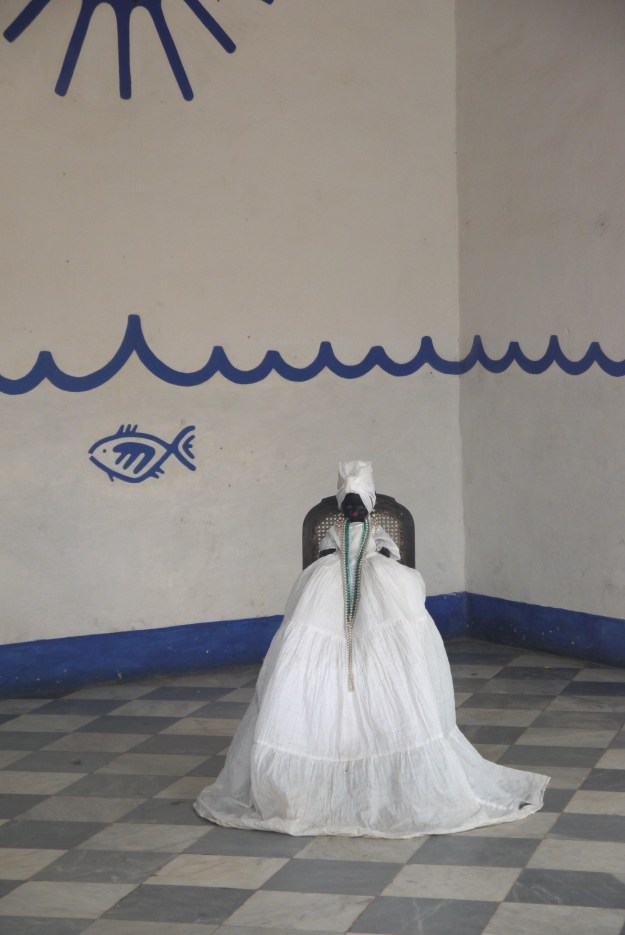
Initiates, or Iyawo, are dressed in white and are a familiar presence on the streets of Cuba. In order to become a Santero (priest or holy one),  a one year commitment is made to be  symbolically born again into a new life.  There are prohibitions and restrictions on behavior, food, dress and contact with others, making it a year of purification and rejuvenation. Although religion was not forbidden in Fidel’s Cuba, practitioners could not join the Communist party or practice openly until recently. While many of the ceremonies are secretive,  it became my good fortune that strangers are often welcomed to observe or participate.

We took a ferry to the Inglesia  de Nuestra Señora de Regla, across the bay from Havana, which was purported to be a center of Santeria .  Outside the church, fortune tellers and Santeros were selling shells and other objects to be used as offerings for La Santissima Virgen de Regla , the Black Madonna, or Yemaya  in Santeria(Goddess of the Sea, and patron saint of the sailors). Back in Habana Vieja  a young woman who was the proprietress of a Yoruba shop gave me my first introduction and invitation. “My husband is a Babalawo (Santeria priest) and if you want a consultation with him, it costs $10.  He is in the middle of doing a healing ceremony to Elegua for a visiting Cuban American woman from Miami. You are welcome to watch.”

We walked down narrow streets until we came to a dark hallway with stairs leading up to a row of apartments.  Were we crazy to be following a stranger to an unknown destination?  It felt right and I was excited. When we arrived at the doorway, a middle-aged woman was standing outside, and the Babalawo (Priest) had a chicken in his hand and was twisting its neck.  Blood was streaming on the ground, next to cracked-open coconuts, and a bottle with liquid in it (which I later found out was honey). “Mom, don’t look.  I’ll tell you when it’s okay.” My daughter Naomi was being protective of me, knowing that I hate the sight of blood. The Babalawo was chanting prayers as he poured blood, honey,and the juice from the coconuts, first on the ground and then over the bowed head of the woman.  He was a slim man of about thirty years old, and wore a knitted skullcap.  My heart was in my mouth, and I couldn’t speak other than to nod to Naomi that I  was alright. I opened one eye now and then to see the heart of the chicken being plucked out and placed on the head of the woman.  She was in her late forties and had purple streaks in her short hair.  As the blood dripped down, a kerchief was tied to her head to hold the heart in place.   She told me that she would have to remain like this for about four hours until she could remove the kerchief and the heart.  More prayers were chanted and then we all went inside.

I explained that I did not want to go through the ceremony to become an initiate and that I was only in Havana for a few days, but was  interested in learning more about Santeria.   I  told him that in my extensive travels around the world I have always been seeking out ritual and ceremonies, to deepen my understanding of people and their spirituality . Norberto (the Babalawo) showed me around and  patiently explained all the figures and objects in the house, letting me know that he made the religious objects himself. It was made clear that everything was sacred and that I was not permitted to take pictures, not even of him or Yanara, (the woman being healed) although she told me I could.   The conversation was conducted in Spanish- with Norberto talking so quickly in his heavy Cuban accent that I only understood fifty percent of what he was saying.  Yanara didn’t speak English, although she had been living in Miami for twenty years, but somehow she understood my fractured Spanish and would relay my questions to Norberto in a manner that he understood. “I’ve been coming down here almost every year, and Norby is like my son.  I always come for a cleansing and healing, to keep my equilibrium”. 

When we left I was touched that he refused to accept any money from me.  “I did not give you a consultation.  Explanations are no charge.”

I was numb for many hours afterwards.  The power of what had just transpired was palpable. My body felt as if it had been placed in a netherworld, thoughts and feelings were swirling around.  This was the Cuba I had been searching for.  This was the meaning that had evaded me the past week.  Joseph Campbell,the noted writer on Mythology and Religion explained the function of mythology this way:

Awakening a sense of awe before the mystery of being
Explaining the shape of the universe
Validate and support the existing social order
Guide the individual through the stages of life
p1090695

Yemaya


Cuba on My Mind


P1090645.jpg

Plaza de la Revolucion

Delta Airlines flight 488 from New York touched down in Havana at noon on January 7, 2017, carrying myself,my daughter,Naomi, and a few dozen other tourists who were taking advantage  of the recent opening of flights between the USA and Cuba. The airport was small and dingy and the heaviness of the humid air permeated my skin.  Off came our down jackets and scarves. We looked around for a sign with our name, hoping that the pre-arranged taxi driver was there to pick us up. Nothing.  Meanwhile, I  searched anxiously for something resembling a toilet.  The tired-looking woman attendant at the entrance had a small dish with coins, and motioned for me to drop some in, but I had no Cuban money yet, so I  timidly slinked inside.  The toilet had no seat,there was no toilet paper,the flusher didn’t work, and it was obvious I wasn’t the first person to use it that day. It didn’t take long for me to realize that this was going to be an eye-opening experience.

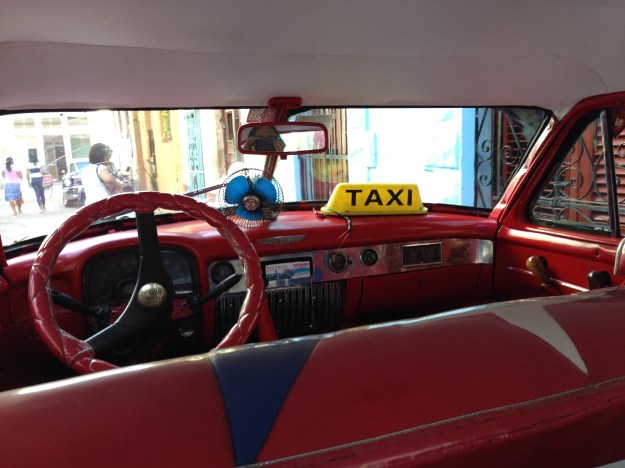
A solidly built man in his forties, with dark skin and a big grin, dressed casually in long  tan pants and a  loose shirt, waved a piece of paper with “Deborah” written on it.  As he ushered us to his 1950’s era taxi, painted red, and upholstered with the Cuban flag, he whisked out a bottle of  Havana Club rum, took a few swigs, and offered us a drink.  When we politely refused, he looked at us incredulously and said “Are you sure you don’t want some? Bienvenidos”. Welcome to Havana!

img_4315

Our Taxi

On the way in from the airport we passed signs and Billboards with political slogans and pictures of Fidel or Che Guevara.The city itself looked like a mix of  magnificent deteriorating colonial buildings and a war zone.  In each doorway people were either chatting with passersby, or sat at a small table selling bits and pieces of fruits, vegetables or other essential items.The streets were alive with animated conversation, whistles,  loud music, and the mood was definitely upbeat.

But what were those lines everywhere? Cubans earn between $15-$20 a month, with top salaries of $40 for doctors, engineers or other professionals.  Health care and education is free and each person receives a ration book for food supplies. There are two types of stores,  ration stores and CUC stores (where you can try to buy whatever you cannot get with rations). and two currencies –  Cuban pesos for locals, and CUC (Convertibles pesos) for use by tourists, and in non-ration locales. When the bakery had bread, for example,- a big line would form. Nobody  goes hungry, but the choices of food available are meager, and both ration and CUC bodegas, or supermarkets, have  mostly bare shelves.  It became obvious to me that there are two realities of life here- one for locals and another for tourists.

I hired a private tour guide for three days to help me navigate my way through Havana and get as much out of the short visit as possible. Mila was 34 years old, recently married,had a Masters Degree and had been teaching Spanish to Chinese exchange students at Havana University.  Although university education is free, the government decides what you may study.

“When I got married,the government gave us a free night in a hotel, a case of beer and a photographer to record the marraige. That’s the closest a Cuban will get to going on a vacation.  But’s it’s not like that anymore, they cut it out.  

When the contract ended with the Chinese government I lost my job at the university. I’m happy to be working as a tour guide now because I want to save money to have a child.  It’s hard convincing my brother that he should go to university because he feels it’s pointless.”

The US embargo, called “El Bloqueo”, the blockade, in Cuba, has definitely had an enormous impact on the country but that can’t account for  all the problems and poverty I saw. Many people loved Fidel, but resented their limited opportunities for advancement. I came with an open mind and few expectations, only wanting to experience the vibrant culture of arts, music and dance, but left with a feeling of disappointment.   I see a two  tier system evolving, not unlike the situation before Fidel took power fifty years ago.  The cruise ships have returned,and students on Spring Break can find a cheap vacation.

It’s been difficult for me to digest and understand my feelings about Cuba.  As a western traveler I am obviously wealthier than the locals. But the feeling of optimism I have encountered over my many journeys these last twelve years in Asia, is conspicuously lacking in Cuba.  In those countries (particularly India) the knowledge that education and family planning can enable one to rise out of poverty, gives people a greater sense of hope.  That’s why my focus has been with nurturing and supporting educational opportunities for girls. I realize my observations are colored by the disappointments I experienced due to the short period time I spent there, the difficulty in establishing meaningful contacts with people in the arts as I had hoped, and the lack of decent infrastructure.


I know many Americans will be flocking down to Cuba to see a country that has been forbidden to visit legally for fifty years. Sadly, I feel that this influx is too much, too soon and will destroy the beauty of Cuba’s identity and culture.  My advice is to be sensitive to the culture, enjoy the music and the outgoing, warm, friendly people and try to understand the history.


Go Tell it on the Mountain/Navidad Estilo Mexicano y Gringo


IMG_7789The tradition of Posadas has a long history in Mexico, originating with the Spanish who conquered the country in the 1500’s with the intention of converting the local Indian population to Christianity, by any means necessary. “Posada” means “dwelling” in Spanish, and re-enacts the journey made by Mary and Joseph from Nazareth to Bethlehem in search of a place for Jesus to be born.  The “novenario”lasts nine days (corresponding to Mary’s nine months of pregnancy) and starts on December 16, ending at Midnight mass on December 24.  As with many Hispanic fiestas, the rich symbolism draws on both Catholic and pre-Colombian indigenous traditions.
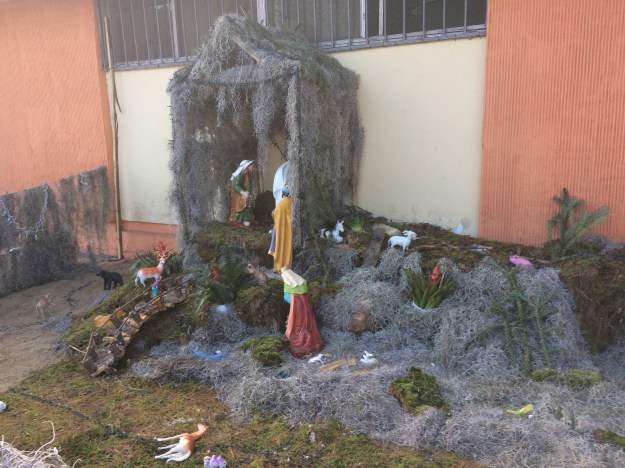
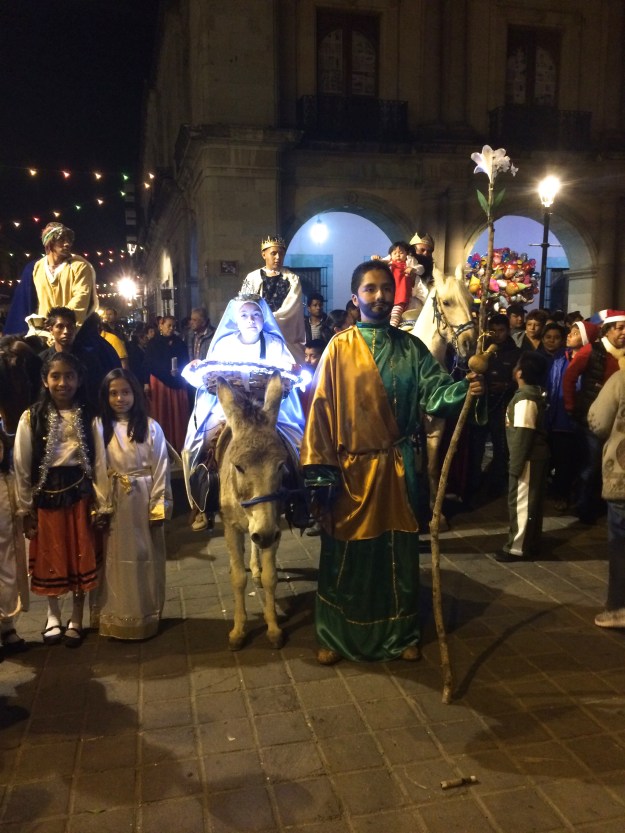
Posadas take place on the streets of Oaxaca nightly during this period, and we were excited to be invited to one that was sponsored by the owners of the restaurant across the street from our apartment. An elaborate nativity scene had been set up on the street in front of the restaurant, guarded at night by seven or eight “Policia Vial” armed with AK-47s.

IMG_7877
A typical posada is a procession led by children or young adults dressed as Mary and Joseph, mounted either on horses, donkeys or in an open pickup. These can be simple affairs or full-blown floats with neon lights flashing, and little girls dressed as angels waving beatifically to the crowd. Three homes are chosen as stops along the way, and prayers are sung to ask for shelter, as in the traditional Nativity story. The families inside  the first two houses respond by saying that there is no room. Finally, at the third home they are welcomed inside and  traditional foods and drink are provided to everyone- Tamales,Posole and Menudo.  At the end of the evening, sometime near midnight, Seven pointed star Pinatas ( representing the seven deadly sins)  are smashed by the children- – and God’s sweetness , in the form of candy, rains down on the innocent children.
IMG_7879

On Christmas Eve we rushed back from the Zocalo ( the town square), where we had all been consuming a fair share of Margaritas and Mojitos, to make sure we arrived by 8pm when the festivities were to begin.  A band was setting up the loudspeakers, the restaurant was getting the huge pots of food ready and chairs were set up around the Nativity scene.  Children were sitting on the ground.  An old woman with a wizened brown face was seated in a wheelchair with a microphone in her hand, leading the singing of “Go Tell it on the Mountain” in Spanish, and the crowd joined in enthusiastically.  A second, younger woman, dressed conservatively in a white blouse and modest skirt, took the microphone and proceeded to exhort the children.  “Christmas is not the day that Santa Claus comes, No, No.  It is the day our savior was born. Santa Claus is not Christmas.”  Prayers went on for another twenty minutes, led by a serious -looking man standing next to her.  He was a bit older, with a stern,concentrated expression, never looking up from his prayer book. He was undeterred by the fact that the microphone crackled and then went dead.  This was for me a much appreciated heavenly intervention, since the microphone was much too loud and the prayers droned on too long.

IMG_7847


Where were the horses, the procession, the dancing and craziness that I’ve come to expect from these types of ceremonies?  Obviously this was not going to be happen. Plates of food  were passed around, first to the children and then the adults.  I decided to go up to my room to sleep and not wait for the breaking of the piñata and the dancing.

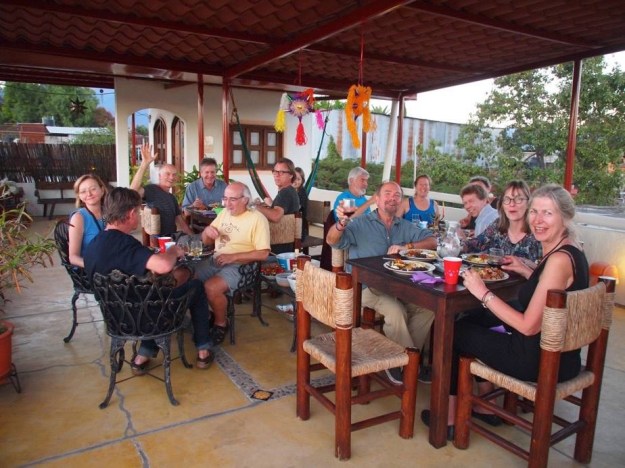
The next night was our own Christmas fiesta  on the rooftop of our apartment complex with fourteen of Richard and Esthers friends from Vancouver,New Zealand and Germany who had come to Oaxaca to celebrate their 35th anniversary with them.  The meal was a group effort with Chanukah latkes(made by me), Stuffed Chile Poblanos (Esther),Roast Chickens from the mercado, roasted veggies and a delicious chocolate cake from the bakery (courtesy of Devorah and Franco).

IMG_7890

Ingrid and Devorah had the brilliant idea of having a gift exchange .  But this was no ordinary gift exchange- this one had elaborate rules and regulations.  We were all given numbers and picked the gifts which were displayed in order of our number. The twist was that each consecutive person could choose either to “steal’ the gift chosen by the previous person, or choose a new one. Immediately I rebelled- I did not like this idea and I couldn’t concentrate on all the do’s and don’t of this “ritual”.  Ingrid kept on saying” Don’t worry, this will be fun!”, and Devorah was nodding furiously trying to convince us, each time a new “rule” was explained. 

My head was getting dizzy.  This was fun?!  Okay. Be a good sport and just accept. I was number 3 and when my turn came I carefully  and anxiously opened my gift box wrapped in tin foil, and to my dismay, inside was a black Rubik’s cube.  What?  Now I was really grumpy.  Who would buy such a weird gift?  Apparently others felt differently, and as the game proceeded it was stolen from me  almost immediately, while I got to “steal” a cute hand painted wooden cat. The group dynamic became more and more animated as the popular gifts ( the Rubik’s cube; a Day of the Dead doll, Catarina, with articulated body; Day of the Dead pink scull candle; and Day of the Dead Tin Musician figure) were eagerly traded back and forth.  Esther was the loudest, most dramatic,  and kept us all wishing it would move along because she took forever to choose her gift -which was promptly stolen in the next turn by Paul.  At this point we were all yelling, laughing, guarding our gifts from sight lest anyone try to steal them. (Unless of course you didn’t want it, then you held it out in full display). Back and forth it went- gifts being “robbed” and “stolen” at a rapid pace and me wondering when it would all finally end.  I DID NOT want anyone taking my little cat- and I DID NOT WANT any of the Rubrik cubes or the mug with marshmallows .  (Which was apparently was safe since Caroline was a marshmallow fanatic and she was the owner of that particular gift)

I must admit things got a little of of hand with the cajoling,grabbing, and hiding- prompting one  Canadian guest to complain to the apartment manager the next day “I didn’t know Canadians could act like that!”

In today’s world there is no room for cultures to collide. The Mexican people have been so warm and welcoming to us. I pray for more understanding and inclusiveness in the New Year.

Prospero Ano  y Felicidad a todos!

Gerald’s Thoughts on the India Journey

This was written by my husband, Gerald:

“It Depends Which Day You Ask”.  This was the answer we received from one of the Non Resident Indian doctors working at the Gandhi ashram, when we asked how they felt about their experience there.  And in many ways, that is how this journey went for me.  This was my eighth time in India, and coming so close on 2014’s fabulous visit, that was a tough standard to look up to.

We began in December in Goa, and sitting on the beach watching the sunset,drinking a cold Kingfisher beer, it felt like we had never left.  After following the incredible Theyyam ritual in Kerala, we arrived in Ahmedabad, where I had volunteered to teach art to children at Manav Sadhna, the foundation based on Gandhi’s vision “Love All,Serve All”.  The people I met there, dedicated, selfless completely devoted to improving the lives of those less fortunate, have made a strong (and hopefully lasting) impression on me.  Through the art, I was able to bring some light into these children’s lives, and give them a sense of achievement.  The last day there when I set up an exhibition of the work they had done, seeing their faces was quite wonderful.  But the city we were staying in (Ahmedabad) was truly one of the most awful places I have ever spent time in.  And bit by bit I lost my desire to go out and explore after the day’s teaching.

Leaving Ahmedabad for Udaipur, our favorite city in India, was like escaping from jail.  So many friends there and so many good memories.  And then finally, somewhere new, where we hadn’t been before, the source of the Ganges at Haridwar and Rishikesh in the foothills of the Himalayas.  Incense burning,bells ringing,chanting of mantras,wandering Sadhus,all the India I love.  For me, travel is still “discovery” of new places and peoples and there was less of it on this journey.  What makes India so glorious are the “wow” moments, and perhaps because so much of this journey was going back to places we had been, there were fewer of them than last year.

We returned to our beloved Goa for the final days, to warm up, eat the great food, enjoy the company of old friends and indulge in the warm waters of the Arabian Sea.  And each day I asked myself,if my wondrous journeys to India had run their course.  Somehow it felt like working on my collage, when a certain point comes when adding more papers no longer improves the overall piece.  I always tell my students that you need to know when to let go.  For the first time, I did not come home counting the days until my next visit.

And yet…as I am working on my book of drawings and watercolors,the passions and energy of this fabulous country and culture stir inside of me.  I can still taste all the wonderful spices,and see the smiles of all the many friends we have made there over these years.  So, who knows?  There is still the East to explore,the mountains,the tribal areas,the totally different cultures.  Are there still “wow” moments waiting for me?  Who knows?  Will I go again?  It depends which day you ask.

Namaste


Sadhus on Parade


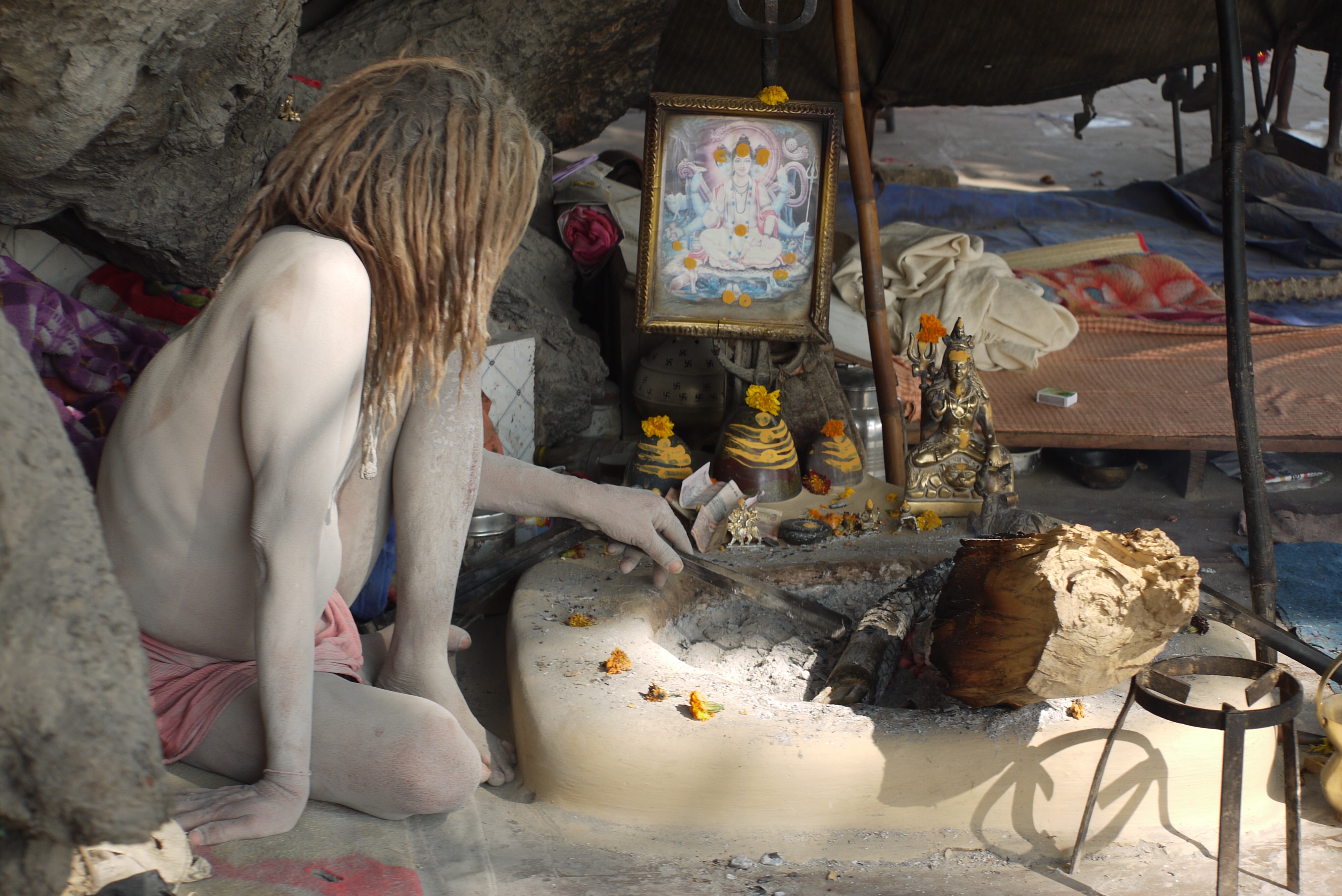
sadhu covered in ashes

Rishikesh exploded onto the Western scene when George Harrison and the Beatles came here to gain enlightenment at the Maharishi Mahesh Yogi’s ashram in 1968.  We know at the outset that it will be more tourist oriented than Haridwar,but our first impression is one of extreme disappointment. On the narrow, unpaved lanes on the way to our guest house we pass rubble, varying sized mounds of cow dung and dog poop.

After dropping our bags in the room,we head out to explore the town. Sandwiched between posters advertising ” emotional block treatment” and ” Bliss of Breath”, are the “German Bakery” shops. (Dating from the hippie days in Katmandhu, they specialiize in western favorites such as chocolate cake and apple pie) Advertisements for yoga classes, yoga teacher training courses, meditation,Ayurveda and esoteric treatments are papered on entrances,walls and poles. Too many Westerners here for my taste.  I want Sadhus! Sadhus are a uniquely Indian phenomenon. Men, often highly successful,renounce their worldy possessions and wander.They depend on the generosity of others to survive , and are considered holy men.

We beat a hasty retreat to the rooftop terrace of our guesthouse overlooking the Ganges, with a spectacular view of the mountains.


Today is another day and a completely different picture emerges. On our way to eat breakfast down the hill from our guesthouse ,we pass one of the many ashrams. Big cars are parked inside and a beehive of activity is going on. Turbaned sadhus clothed in saffron colored robes are mingling with devotees dressed in white. I look for someone who might speak English and ask what is going on. “Guru happy birthday.  Rich people bring donations. After Satsang everyone come eat.”

After eating  breakfast my mood changes. We wander through town, passing Kashmiri souvenir shops selling pashminas and jewelry,and  more German Bakery signs.  Further along, the scene becomes more Indian- stalls frying spicy aloo tiki (mashed potato patties), chai wallahs (tea sellers), and women selling a kind of fruit like a guava.

As we walk back, I notice that all the sadhus coming in our direction are carrying big bundles and packages. First I joke that it must be sadhu shopping day, and then it hits me. They must be giving out food at the “birthday guru’s ashram”.  I almost trip over myself trying to get there before I miss the action.

Crossing the footbridge over the Ganges, my eyes pop out of my head. I can’t believe what I am seeing. Hundreds of sadhus are lined up against the wall leading to the entrance of the ashram. Mixed in among them are spaced out beggars- smoking hashish through a pipe.


Hauling the goodies


I can hardly contain my excitement as I inch my way through the crowd.  The grizzled faces and tattered clothing tell the story of a hard life. These men(and the rare woman) are less fortunate than the ones I saw with the packages on the way here, and they are relegated to the back of the line.  I would love to photograph each medieval face- but it’s not possible. The suffering is too raw and personal. The ashram has a security guard with a stick to control the crowd should things get out of hand.  If I give just one person some money there would be a riot.

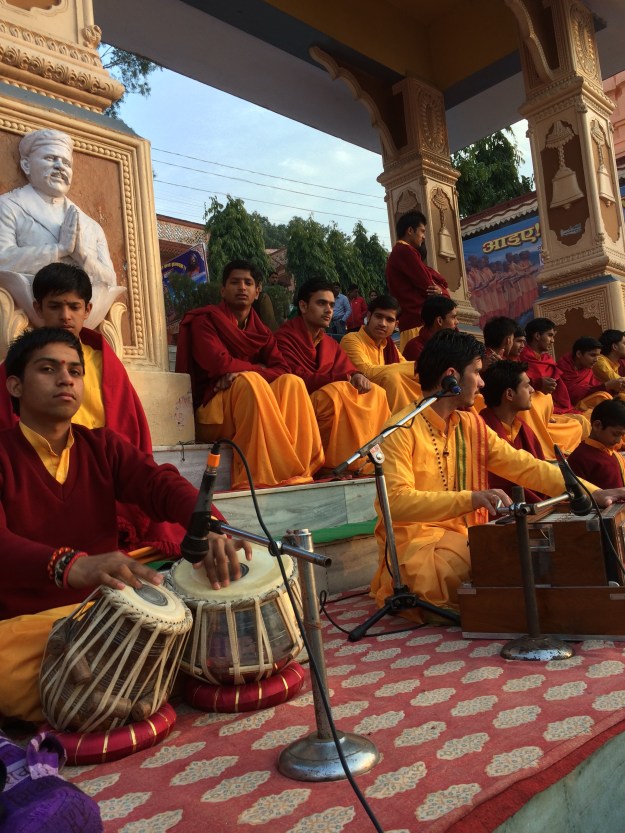
Every evening on the Ganges there is a ceremony called Ganga Aarti, to bless the sacred river.  We were warned that the one here in Rishikesh was small and geared to foreign tourists and western ashram people-but decide to go anyway. Organized by Pramath Niketan Ashram, the service is conducted by the novices, and like the one in Haridwar, is intimate and moving.  The faces of the young men and boys, some in deep meditation and prayer create a strong sense of community with the assembled group.

As we walk back to the guest house when it ends, we can see the flickering lights and hear the chanting of other Ganga Arti that are going on across the other side of the river.

Another day in Incredible India.

IMG_5841


Om Hari Om/”Can You Hear Me Now?”

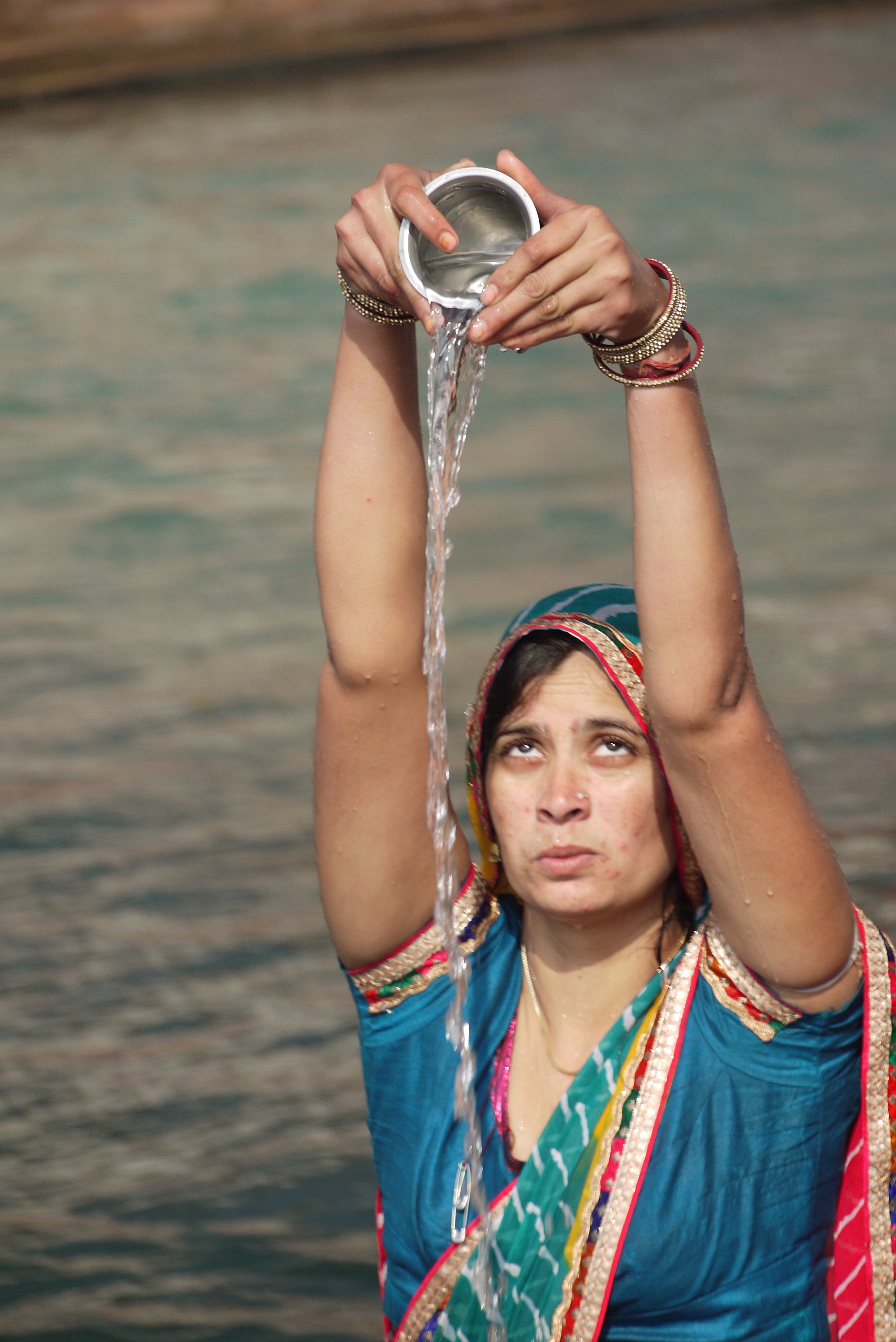
Pouring the holy Ganges water and doing puja

Ritual bathing in the Ganges

Haridwar is a  place that brings out the best that India has to offer. Peaceful and spiritual are the words that come to mind. It is a holy city situated in the foothills of the Garhwal  Himalaya and close to the source of the Ganges River. The rushing green waters tumble out of the mountains,carrying India’s life source through to Varanasi towards the Bay of Bengal .Pilgrims come to place the ashes of their loved ones in the river,or to bathe in the hallowed waters of Maa Ganga. Mother India is a loud country, from Bollywood music to loudspeakers chanting vedas and mantras in shrines.Other than ashrams, which  can also be quite noisy, there are few places where you can walk the streets and hear yourself think. I’ve been to Varanasi, and since it is a cremation site as well as the holiest city in India,the intensity of that place can be overwhelming. Here I can inhale slowly and breathe freely.

This is not a tourist town and is geared toward Hindus fulfilling their religious obligations.  When you see Indians traveling, they are always in groups, because they travel with their extended family- parents, children, and  both sets of grandparents . Privacy is an unheard of concept here, and certainly not one to be desired.To be alone translates to loneliness and one is pitied for not having friends and family. The first question asked of Westerners is “Are you married?” and if not, “Why not?”Men stroll the streets arm in arm, without the contraints of seeming unmanly. I feel that this strong connectedness is what gives people a feeling of optimism and joy. That combined with their belief in reincarnation-that the next life can be free of this life’s challenges if one has accumulated enough good Karma.

Our hotel was formerly a private home, or haveli, built in 1916 by a wealthy Hindu family.We are greeted with a necklace of tulsi wood and a list of the included activites at the hotel.

Havan at Haveli’s Ghat 8:00 am.     ( prayer service with a pandit, or priest)

Astrologer/Palmist for consultation  3:30 pm.

Evening Tea                           4:30 pm.   ( a chance to socialize with the other Hotel guests)

Evening Aarti at Haveli Ghat.    4:45 pm ( short prayer service with lighted candleabras)

Escorted Evening Aarti at Har ki Pauri. 5:00 pm

Bhajan Sandhya. 7:30-8:30 pm.         ( Devotional music and chanting with tabla and    harmonium)

There is a mix of guests staying at the hotel-Indians, non-resident Indians, and foreigners. Lisa comes from N. Carolina and is here to scatter the ashes of her deceased husband who died suddenly of a heart attack at the age of fifty,and to perform the traditional funeral rites he requested. We notice her sitting alone in a corner and invite her to join us at Tea Time.  A Gujarati couple from Ahmedabad , with their two grown sons are  sharing the table with us.  They are also here to scatter ashes and do the ritual bathing in the Ganges. The elder son, 26 years old, is chewing a big wad of paan (red beetle nut)  and his teeth and lips are stained a disgusting red.  I can’t bear looking at him so I concentrate my attention on the parents. At the morning ritual the mother guided us along and showed us when we should take the holy water, wash our hands,inhale the smoke, and in general try to follow the prescribed rituals.

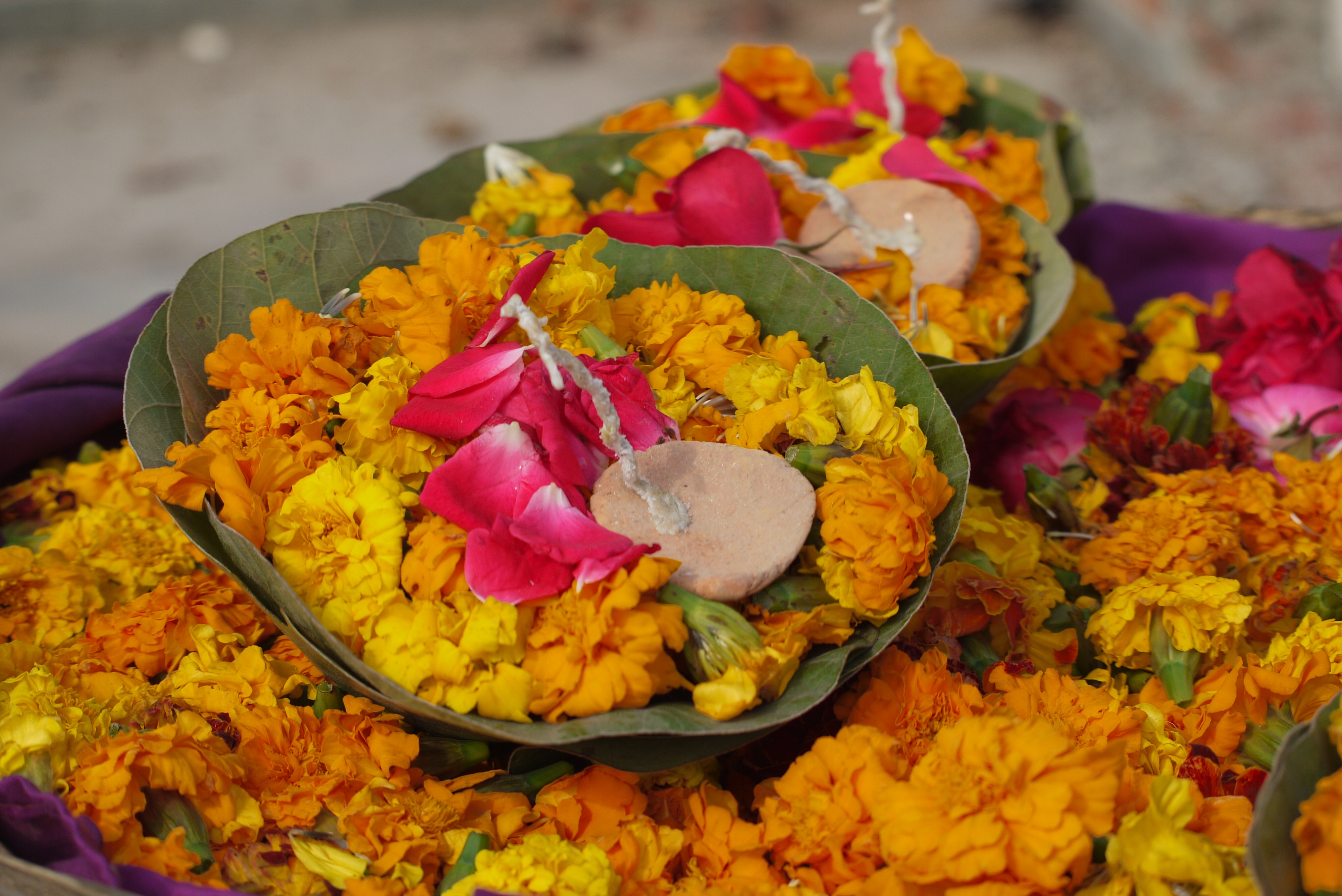
At 5:00 we gather in the lobby in front of the reception desk to wait for the Brahmin who will escort us to the evening Ganga Arti.  Chanting, fire, pouring of milk in the Ganges, bells clanging- all of this is part of this  daily evening ritual which takes place on innumerable rows of steps, known as ghats,  on the banks of the Ganges. All to sing praises of Maa Ganga. Lisa, Gerald and I, the Amdavadi family,  an Indian family living in Minnesota with their two grown sons from Chicago and New Jersey, and last but certainly not least, the Brazilian man,Claudio and his twelve year old daughter, Gabriele,  are patiently waiting in the lobby the hotel. Gabriele looks like an 18 year old super model and is spinning around on her new Hoverboard that she bought in Delhi. At first it seems an unwieldy group, as we are more used to doing things on our own. However, when we arrive ,we are escorted to a special section with prime viewing position, and we truly appreciate the extra attention.Mrs. Amdavadi helps me stay firmly on the slippery steps by the river. One false move and the fast moving current will pull me away in a New York minute.  Chains are fastened along the banks as an anchoring device to hold onto while going in the water. Lisa and I decide to purchase “diyas”, the small banana leaf boats filled with marigolds, roses and a ghee candle, as an offering of prayer for the departed and those loved ones in need of healing. Paan mouth’s younger brother offers to take photos with his Iphone as we place them in the water.
.

Diyas or prayer offings

India is a country of paradox and contrast.Ancient traditions are passed down through the generations-but along the way they adapt to the modern times, sometimes too much so.  During the evening services, temples and shrines  light up with garish neon lights,spinning in circles,shooting out like fireworks- a mini Las Vegas. And the cell phones! Nothing is too holy or sacred that it should disturb or disrupt a call. Priests are busily stoking ashes, or  cracking coconuts as part of a solemn ceremony with one hand,and with the other they are on the phone.  I saw this with marriage ceremonies, blessing rituals- even my hairdresser while washing my hair ,continued talking non stop to her boyfriend for over an hour. “Customer hair wash” she yelled into the phone as she massaged my head vigourously with her free hand. I went for my Astrology consultation at the hotel and the young man told me he is studying for an MBA, but he comes from a line of astrologers through the male line, and he wants to continue using his knowledge and gift.  He told me we could SKYPE if I had any questions for him when I got home.

Edit

Pandit

Puja on the ghats

I learned something this evening- how good it feels to be in a group. Some people I really
liked, others less so, but it didn’t really matter, the experience was the same. The sense of community and spirituality we feel here in Haridwar will remain etched in my heart as a memorable moment on this trip.

.

The Magical Mystery Tour


IMG_3939

Lake Palace Hotel

Bheru on his special name day in Udaipur


“Allah u Akbar, Allah u Akbar, Ashadu al la illaha ill Allah……”.

What a difference a day makes! Last week I was miserable in Ahmadebad and now it is 6:15 in the morning and the soulful strains of the Muslim call to prayer drifts in through the window of my room.  I love waking up to this.  Udaipur is in the heart of Rajasthan and is as wonderful as Ahmedabad was horrible.  It is the city of Octopussy fame, where the James Bond movie was filmed in 1981. Palaces,fanciful,flowery Mughal designs painted on walls, shrines with incense burning, bells ringing- the stuff of fairy tales.  This is the India I love.  The India of Rudyard Kipling’s Maharajahs and mysterious, bejewelled women hiding behind silky sarees, is easily summoned up in the imagination.

Wandering  narrow lanes in the early morning- before the sleepy city comes to life at 10 or 11 am- I watch the light reflected on the spectacular Lake Palace Hotel, as the sun slowly makes its way over the peaks of the Aravalli mountains which surround Lake Pichola. I check out my beloved Bheru shrine- a god favored by rural Rajasthani women.  Sometimes he is represented by an amorphous mound of tin foil, but today is his special day. An older man, the guardian of the shrine, is busy painting a smiling face with a mustache and a turban on the form.  A piece of flowery blue fabric has been draped around his “body” and garlands of marigolds and roses are hanging around his neck. I admire his work, and he smiles in recognition and pride.  I pass by several times a day to pay my respects.

The vegetable sellers are busily arranging their carts with cauliflower,carrots,eggplants.peas,tomatoes and other various fruits in season. Scooters and motorcycles are crowding around the popular food stalls selling warm breakfast snacks of samosa,and katchuri. (a type of  small,puffy bread stuffed with potatoes and drenched in an eye poppingly spicy  curry sauce. Shopkeepers are setting up their displays of copper pots and utensils, as they light incense in front of their small shrines to ensure a succesful and peaceful day.


 I have been to Udaipur four times and it remains for me the most beautiful and magicial city in India.

Between Heaven and Hell/It Depends On Which Day You Ask

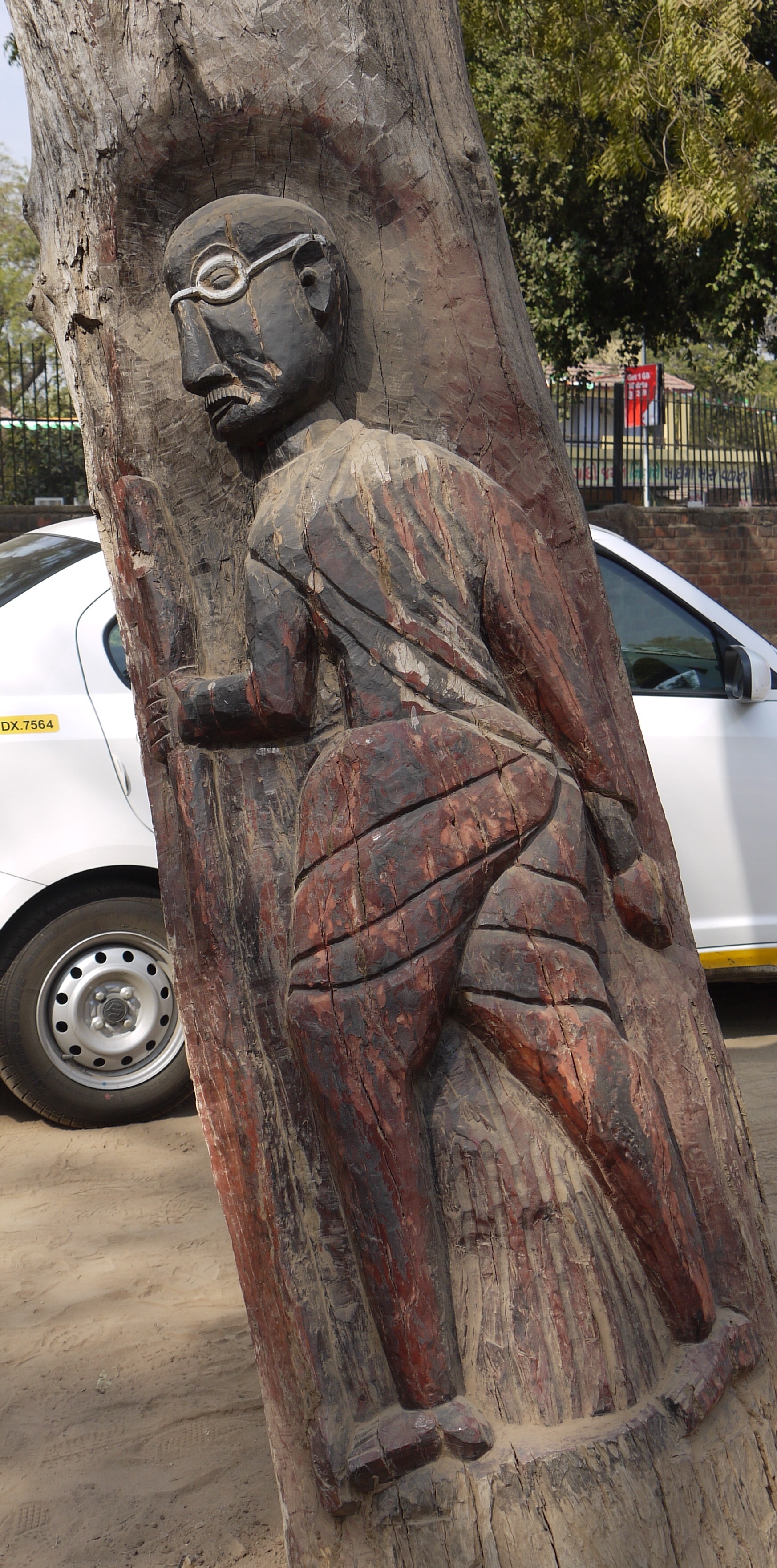
Gandhi sculpted in a tree at the ashram

“It depends on which day you ask”  was the response from Veena, (an Indian-American volunteer from Berkeley),when asked how she would rate her experience working as a doctor for Manav Sadhna this past year. It certainly could be said about so many things in India. I would be lying if I said that the three weeks spent in Ahmedabad working with the children at Manav Sadhna went by quickly. The last week I was counting the days until our departure.  We hated the city- the choking fumes of pollution, the rubble, the slums, and the complete chaos.  There doesn’t seem to be any redeeming factors to counter the negativity.

The flip side is the incredible experience of working with people so totally dedicated to compassionate service and non violence. This is no ashram with holy people; it is everyday people putting into practice their convictions in the most humble manner without ego, only service. Each day begins with communal prayer and sharing.Virren gave up a lucrative career in the US and decided not to marry and have a family, in order to follow his heart and be fully committed to serving others.  He earned enough money  in the USA which enabled him not to have to worry about working anymore.  Similar stories were repeated many times.

What is so startling to me is the number of young people, born in the UK or US who come  as repeat volunteers to Ahmedabad each year during school vacations to serve at Manav Sadhna.  Esham is an 18 year old ,born in England of Gujarati parents ,who first visited India as a fifteen year old with the program, Discover India.  He was so taken with what he experienced, that he started his own charitable foundation to build sports fields in the slum areas of Ahmedabad.  Britain awarded him honors for his work.  His father was born in Uganda, but grew up in the UK when his family and all people of Indian ancestry were kicked out by the dictator, Idi Amin in 1972.  Esham’s wish for his 18th birthday was to bring his father to experience Manav Sadhna, and see Gujarat for the first time. During the summer break, the ashram is filled with young Indians from abroad, who have never grown up or lived in India, but feel a strong pull.  I met three or four 18 year old girls,on winter break from University.  All of them expressed the same sentiment.  “When I leave, all I think about is when I’m coming back next”. Nimmo is a 37 year old hip hop singer who grew up in LA and moved to Ahmedabad permanently six years ago. He is in the process of helping set up an arts center and tours around the world sharing his message of love and cooperation, through his music.

I loved how I felt at the ashram and the relationships with the volunteers and the children I worked with, but I could never go back to Ahmedabad.  Its hard for me to understand the powerful magnet that attracts these young people come back to such a place. I know it will take some time to fully absorb what I learned and I am grateful for the time I spent there. So ,yes it depends what day you ask for my answer about my Indian adventure, but it is not yet over.  After Rajasthan we are headed for the Himalayas and the sacred cities of Haridwar and Rishikesh.

Go Fly a Kite

International Kite Festival

Our final day in Ahmedabad is Uttarayan- the  Kite Flying Festival.  Actually there are two festivals-an International one which goes on for four days along the Sabarmati Rivefront and displays impressive kites from countries around the world, and the local one which is celebrated on January 14  by every Amdavadi, young and old, rich and poor alike.

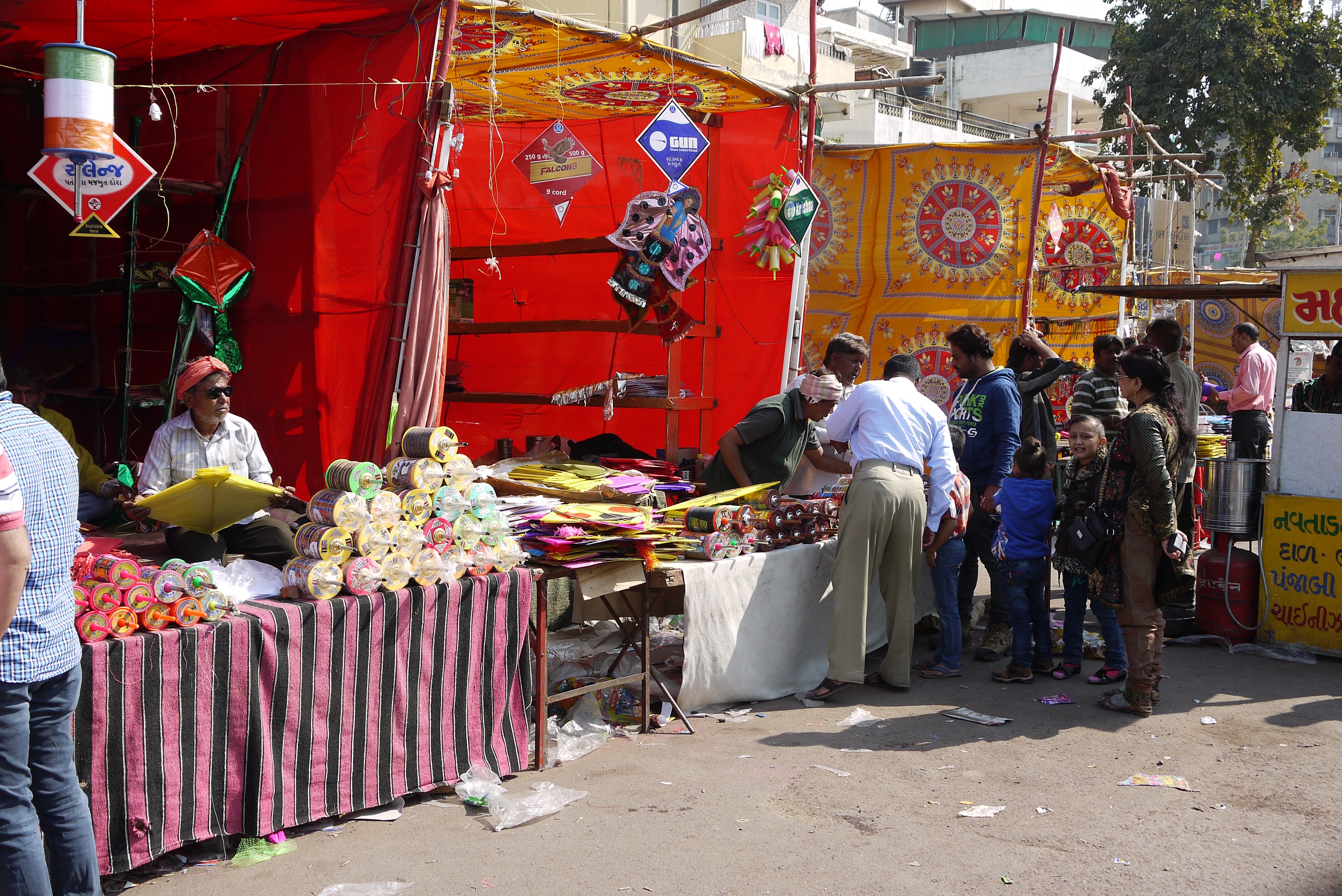
Schools are closed, shops and banks are shuttered, and the whole city comes to a standstill and flies kites during Uttarayan. Streets are empty  of rickshaws and traffic (thank god) and  the action is centered around the kite markets. Sellers of string are on the street with vats of dyes in vibrant colors.  These are not ordinary kites as we know them.  They are made out of small pieces of colored tissue paper and cost only a few cents each and are meant for one time use only. Families buy fifty or sixty of them, depending on their finances.  The strings are coated with crushed glass and the goal is to cut other peoples kites and see how long you can keep yours up in the air.  Of course this makes the whole event not only fun, but dangerous as well.  The number of people and birds injured each year by having their necks and throats cut by the strings is well documented in the local papers.  The govenment tried to ban the sale of these “Chinese strings”, with no luck. Days before the actual festival children are on the rooftops of buildings, and kites can be seen caught in the trees.

Kite string sellers

Dyeing the strings

Virren, the director of Manav Sadhna, has invited the staff and volunteers to the rooftop of his home for a kite flying party. “Come sometime after 10:30 in the morning”. When we arrive at 11:00 a.m. (the first guests) he is up on the roof, dressed in jeans and a plaid shirt.  “ I’ve been here flying kites since 7:00 a.m.”. He is 52 years old, lived in the USA for 26 years, and is now permanently settled in his hometown of Ahmedabad.  Dancing around like an excited little boy, he moves with precise steps to and fro, manoevering the flow of his kite. Throughout the afternoon  more and more guests arrive- Indians, Westerners, NRIs ( non resident Indians)-and each tries his/her hand at kite flying. In the corner is a stack of more than fifty kites of all colors and sizes. There is very little wind, so his valiant efforts at trying to teach me how to fly a kite is hopeless.

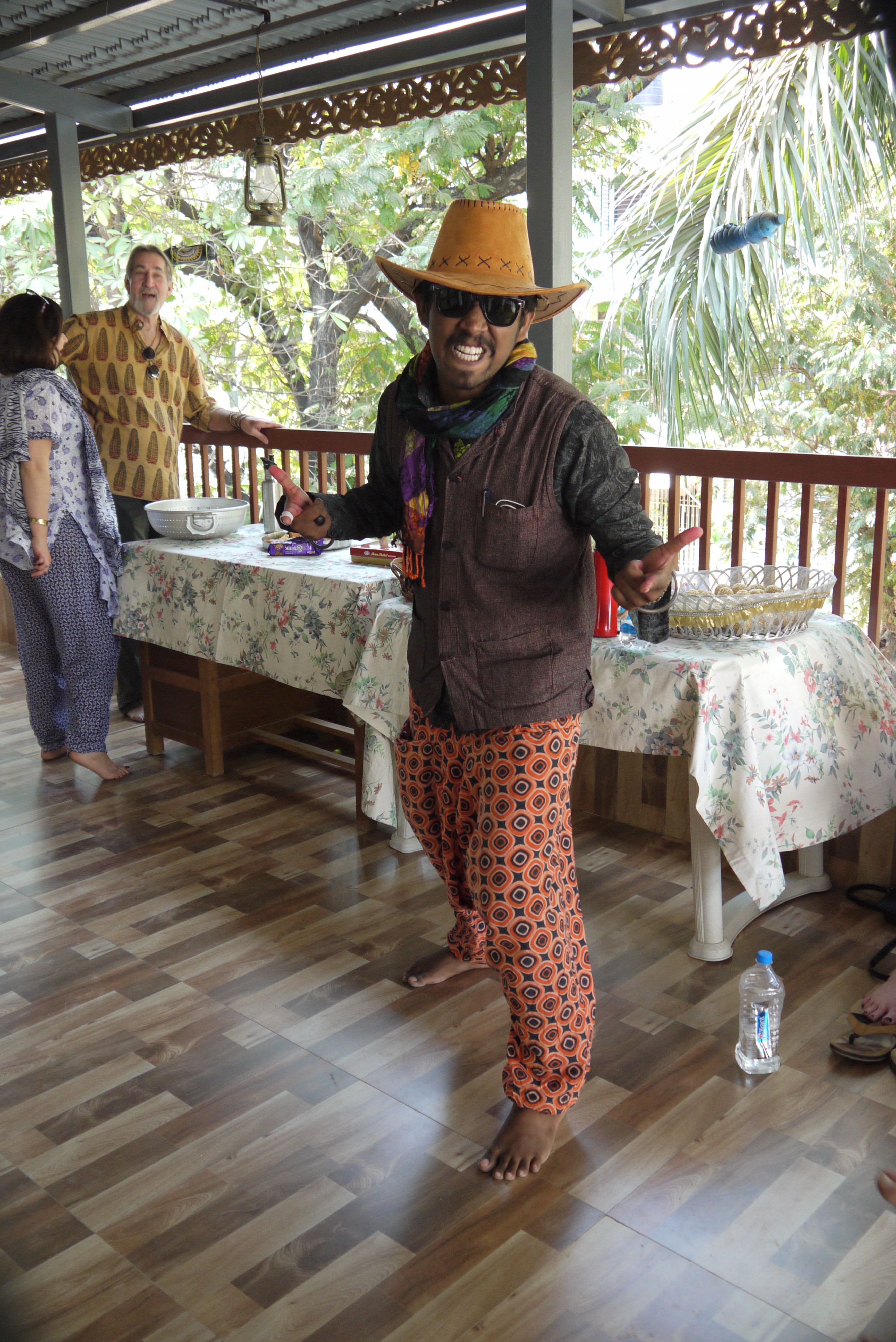
With a leather cowboy hat to protect his head from the blazing sun, Virren doesn’t give up on his own kites  Each time another kite is “cut” he whoops and hollers with his friends.  One person holds the spool of string, judging when to wind or unwind, while the kite flyer pulls the string up or down depending on the direction of the wind. Every rooftop is filled with people, flying kites, eating and drinking, having fun.  Many have loudspeakers with Gujarati Bollywood music blaring.  After all, what’s an Indian party without lots of noise! A food table has been set up, buffet style, with special treats like “jalebies”- a flour dough shaped like a pretzel and fried,with lots of sugar.

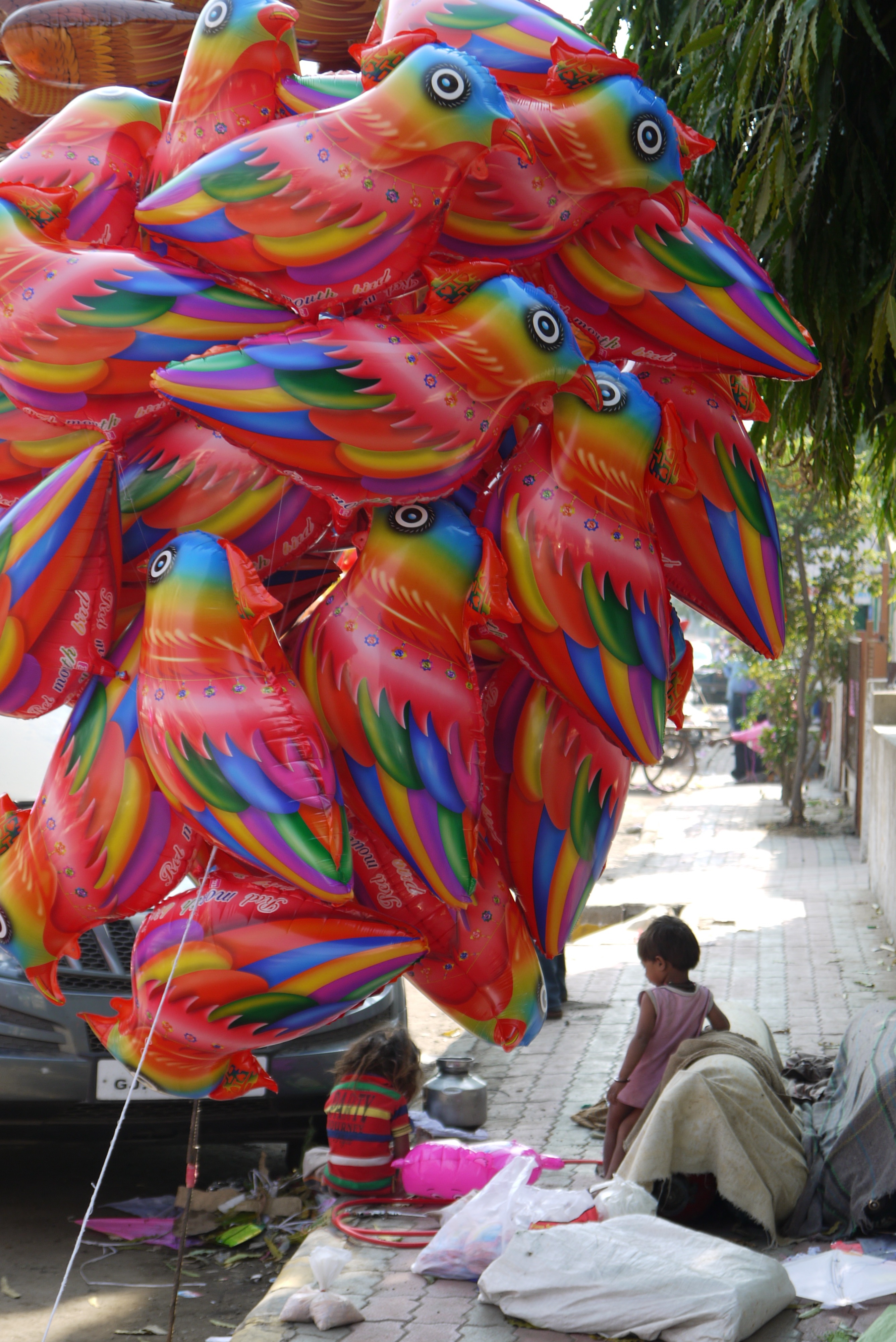
We decide to take a short break and check out the kite market around the corner. The scene is hectic with a carnival-like atmosphere.  Hawkers are walking around with balloons of varying shapes and sizes attached to a long pole-  Bollywood stars, parrots,hawks and crocodiles.  We choose a parrot and a hawk,  and watch the brisk sales as cars pull up to buy balloons and kites. And then we go back to the party.

Balloon extravaganza

Brisk balloon sales

As night settles in, the mood changes. Paper lanterns with flames inside(yet another illegal, dangerous activity) float through the sky.  It looks like stars and moon beams-hundreds of them- accompanied by bursts of fireworks. All this we  see from the large panoramic window of our hotel room. The day has been a wonderful ending to our time at Manav Sadhna.  For a short while, nothing else matters and all is well is the world.

Everybody loves to party at Virren-bai

Loban-“Performed by the Inmates of the Asylum under the Direction of the Marquis de Sade”*

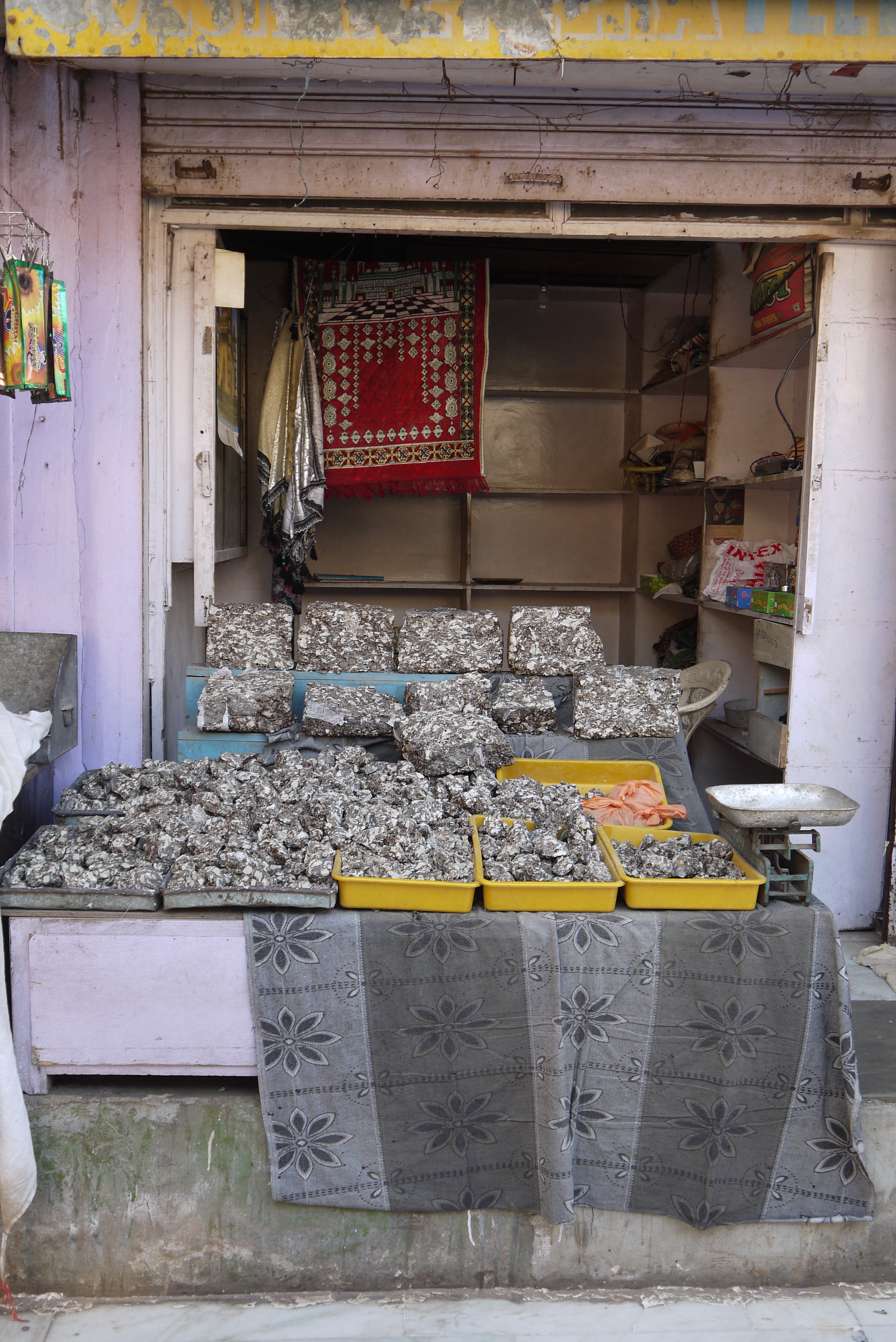
Loban Incense stall

Don’t stare at anyone while they are in a trance, and no photography is allowed, it’s too intrusive”.  These are the directives given to me on the phone by Vanita, an Indian woman from Mumbai, doing a PH.D. on the psychology of trance in India.  Shaikh, our resourceful driver/guide from last year, escorted her and two visiting professors from the UK, to the Loban ritual the night before. She is staying in the village of Unawa, famous for the shrine of Hazrat Sayyad Ali, called “Mira Datar”(Mira=The Brave One, Datar=Giver or Bestower)  to study this surreal ceremony. I had been to one such “event” on our last trip- thanks to Shaikh,who understands my fascination with all things bizarre and mystical. Mira Datar is one of the most famous shrines where this ritual is practiced, and both Muslims and Hindus come from near and far for healing.

From their website:

This shrine is known for driving out evil forces and healing the ones,especially the women who are possessed by demons and evil Jinns. Over the centuries, the mentally affected or “possessed” Indian women have found a sanctuary here. The fame of this Dargah is spread far and wide and people of all religions,caste and creed visit the shroud year round with offerings and fulfillment of their vows.  Roses and incense are offered.
Mira Datar in Unawa,Gujarat


Loban is actually the name of the incense used to purge bad spirits from the body.  We know it under the name of Copal. Our arrival in the town takes us back one thousand years.  Streets are mounds of dirt and rubble.  Ragged beggar women and children roam the alleys with their hands out, murmuring unintelligible sounds. The air is heavy with the pungent aromas of smoke and grilled meats.  Booths are set up with huge woks filled with bubbling oil to fry the samosa. Although I  have been craving meat, since Gujarat is mostly a vegetarian state, I am not tempted to try any of the dishes being hawked. Everything feels dirty and unclean.

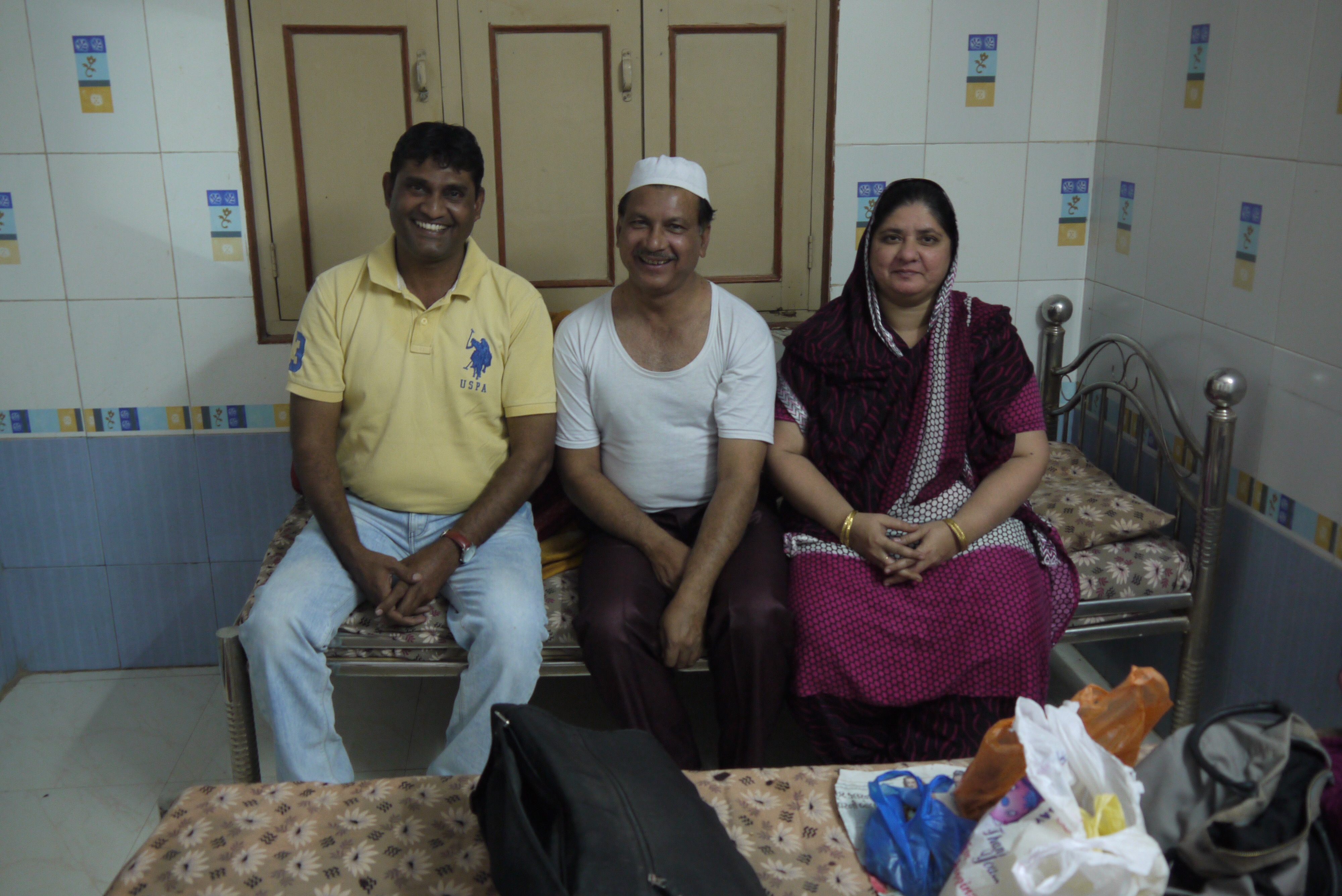
There is a ring of small guest houses encircling the main area. Pilgrims come from all over India, and those with more money stay in one of these hostels- designated by religion.  One for Muslims, another for Jains, Hindus,etc. Shaikh’s brother -in -law and wife have travelled overnight to visit the shrine and we go to their room for a visit and a rest.  The room and stairwell are immaculate.  Inside a tiny room are two simple beds and a small bathroom.  The floor and walls are tiled. A room costs 50 rupees ( 80 cents). He is a structural engineer and head of a large international firm.  When I ask why he has come so far to visit this shrine, he replies simply “I come from time to time to feel good”.

Shaikh with his family at the hostel


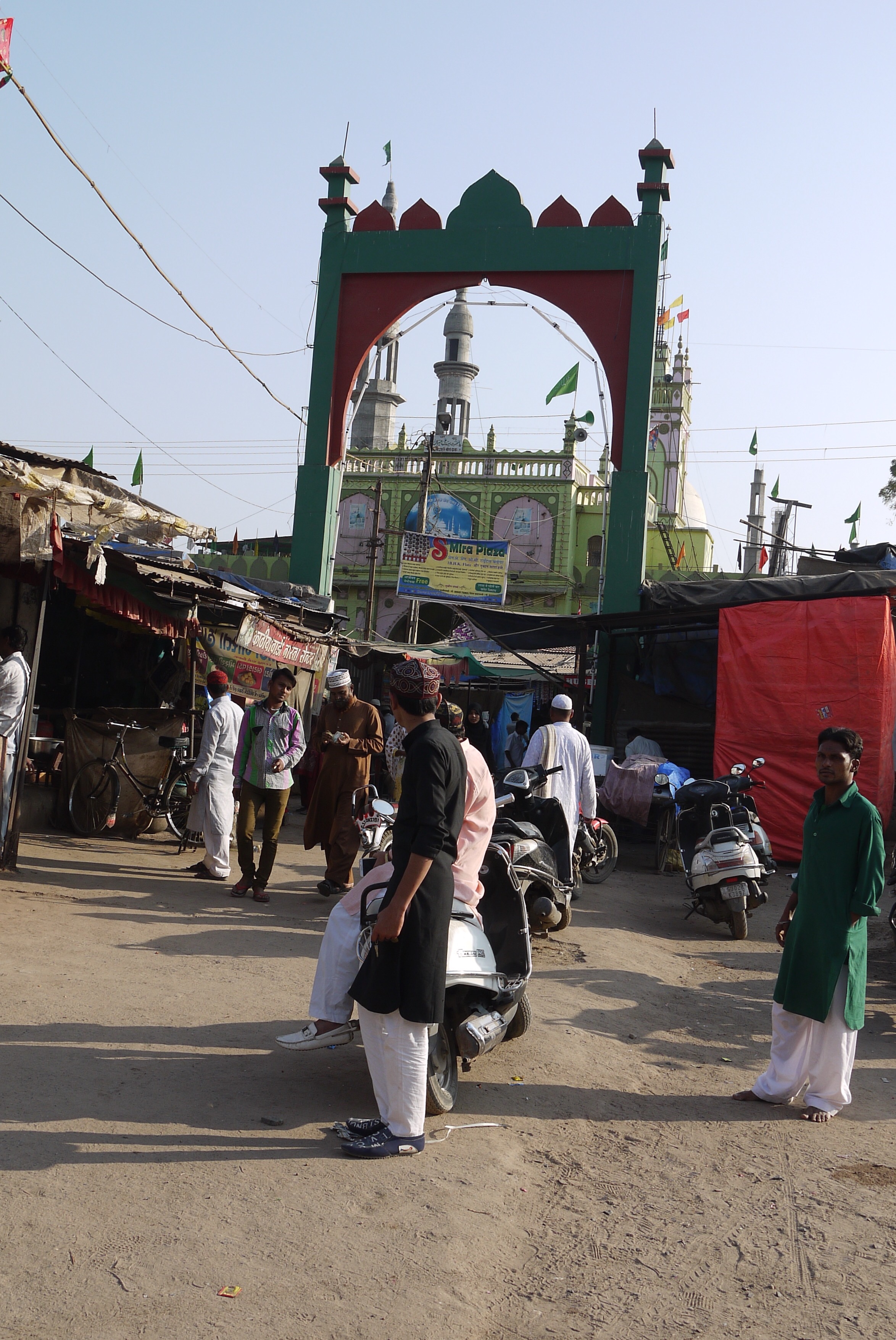
The entrance to the shrine and mosque

A tall gate marks the entrance to the sacred area leading to an impressive mosque. We remove our shoes. All along the passageway are sellers of incense, talisman, jewelry, trinkets and souvenirs. When we arrive inside the compound ,Shaikh takes us up a narrow,steep stairway. On the way up a group of young, well dressed girls comes hurtling down the steps, as if they have seen a ghost.  At the top of the stairwell I understand why.

Women of all ages dressed in tattered clothes,hair loose and disheveled,are walking briskly around a large dome in the center of the room with a crazed vacant stare. They are screaming, banging their heads on the stone, falling down, trying to attack other women, climbing up the wall, always circling,circling.  A family member stands near each woman ready to step in and protect their loved one from harm to themself or others.It is believed that circling the “chakki” (dome) seven times will remove evil spirits.

I am fascinated and mesmerized by the scene and at the same time a deep sadness comes over me. What must these families go through when they are at home and how do they manage to take care of these women? How many remedies have they tried, and do they really expect that a miracle will occur? I read on the website about the 10 foot snakes that came out of a man’s body in 1973, after he spent weeks praying and crying at the shrine to get relief from his terrible stomach pains.  Back downstairs we look for a spot to sit and wait for the ritual to begin. More and more people arrive and the crowd swells to well over a thousand.

One man has his hands and feet in chains- being led by two other men. A woman is doing somersaults on the cement floor and screaming- around and around they go, while the mosque fills up for evening prayer, women on one side, men on the other.  There are nine doors made of sterling silver in the inner sanctum where groups of people are being blessed under a small green holy coverlet.  I am seated next to a young woman from Mumbai.  She is obviously mentally disturbed and rambles on to me in English about her problems and how she was married and in engineering school, “but things are hard, people expect things” and she is unhappy.  Shaikh finds out from her mother that they have tried everything- expensive psychiatrists, medication, clinics, but nothing has worked.  They are hoping something will happen tonight.

Precisely at six thirty the imam starts chanting the prayers and the smell of the Loban permeates the enclosure.  We stand and watch the ritual unfold . There are no longer random ,wandering crazy people ;most of the women seem to have worn themselves out and are quiet.  Three or four khadim ( holy men who are descendants of the family of Hazrat Sayyad Ali) walk through the crowd while people push to get close enough to inhale the smoke. It is believed that inhaling the holy smoke can cure illnesses and bring good fortune.

It is now seven o’clock and the crowd disperses. I am mentally and physically exhausted and feel like I’ve been through a time machine. One of the amazing things about India is the juxtaposition of the modern world with primitive ritual.  Where else would you find sophisticated professionals mingling with simple villagers to talk with gods or exorcise spirits?

*nb- this is a reference to the play by Jean Anouilh “The Persecution and Assassination of Jean Marat as Performed by the Inmates of the Asylum of  Charenton under the direction of the Marquis de Sade”.  It was performed on Broadway in the 1970’s and was a masterpiece.