Category Archives: India

A journey to the Pushkar Camel Fair- a lifelong dream fulfilled for my husband, Gerald, and scratched off his bucket list

The Wedding


image

Decorations for the engagement party

Dressed in jeans, with a baseball cap covering his shaved head, Dixon introduces himself to us at the engagement party.  “I hear you’re from California.  I studied oenology  at Napa college for four months a few years back.” That’s India. Just when you think you’ve heard or seen everything, you haven’t. Wine and India are not two words you expect to hear in the same sentence.

Dixon worked many years on Carnival Cruise ships and was paid by the company to take the course. “Wine Professor “is his new title and he teaches classes for hotel personnel in wine appreciation. “I’ll be the MC at the wedding” he tells us.
image

When we arrive at the church, the pews are already full to capacity- women elegantly dressed in their best saris and satin dresses and men wearing black suits and ties. Gerald is in his safari shirt and cargo pants and I am wearing my wedding attire and  the silver, sparkly heels Francis’ wife lent me for the occasion. We discretely seat ourselves in the back, and listen while the ceremony is conducted in Concani ( the local language).The church is beautiful.  It is a large white building with stained glass windows and chandeliers.  The congregation is alternately deep in prayer or singing hymns along with the choir.

img_0015

After the ceremony people line up outside the church to greet the newlyweds. At the far end of the courtyard it appears that after the guests congratulate the couple, they are receiving something. We are motioned to join the line.  I’m feeling a bit excited about the prospect of getting a “wedding treat”. It turns out to be a box of mango juice and a hot dog bun filled with shredded lettuce and mayo. So much for local delicacies.

Greeting the bride and groom
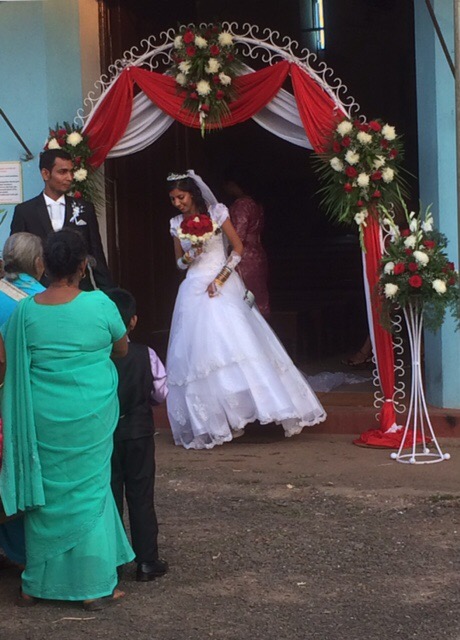
The bride and grrom arrive

The invitation states “reception commences at  seven thirty  in the evening at Dr. Neville’s Wedding Hall” but we are told that IST ( Indian standard time) dictates that guests  start arriving closer to nine. Nonetheless, we arrive promptly at 7:30 pm and enter an enormous outdoor wedding venue, lit up like Disneyland. Tables and chairs are set up around a lake with fountains and lush landscaping.

image

True to form,  with the band playing “Rhinestone Cowboy”,people start trickling in  at about 9:00. “Ladies and Gentlemen, please come onto the dance floor and welcome Mr. and Mrs. Cordozo appearing for the first time as a married couple.” It is Dixon with a microphone, standing in the center of the open space. I don’t recognize him at first,dressed in his snazzy suit and dapper hat. From there it all proceeds as on a cruise ship, with Dixon exhorting us  to clap, cheer and dance, first the Mexican Hat dance, then the Bunny Hop and eventually some Goan dances. The place is rockin’. Once the music starts ,I get up and step out onto the dance floor, forgetting about my growling stomach. The music is mostly pop and some Goan contemporary, and alternates with the MC announcing what exactly we should be doing. ” Happy to see California doing our Goan dancing”, I hear from the microphone while I dance with Francis, his wife and daughter.


When the announcement comes that the buffet room is open, it is almost 10:30pm.  The food looks impressive and abundant, but unfortunately isn’t  much better than the pre dinner appetizers of little white bread peanut butter and jelly triangles and minced meat rolls which looked like miniature dog turds.

Round midnight I need to rest my weary bones ,  so I drag myself off the dance floor,and look for Gerald, who is sitting at a table and chatting with some local guests.

Its been a great evening and we decide it’s probably time to go.  Another glimpse into incredible India.
 

Whose life is it anyway?

image

While buying train tickets to our next destination in Kerala, I bump into Catherine, a long time British ex-pat we met last year. “If you want a good story, go down to the end of the beach to the “maharajah’s place”, she grins mischievously.

The face of Goa has changed dramatically since independence from Portugal in 1961. Goans were offered the possibility of a Portuguese passport, and many jumped at the chance.  Catholics now account for only 25% of the population, down from 60%, due to the diaspora of Catholics, and the increase of Hindus and Muslims with their large families.  Cruise ships,the Merchant Marine and the Emirates offer high paying jobs, which is reflected in the unusually small size of Goan families. (Men are away  for long periods of time.)

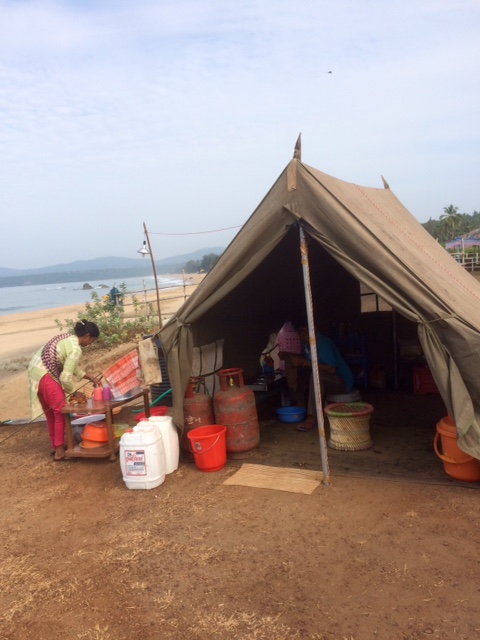
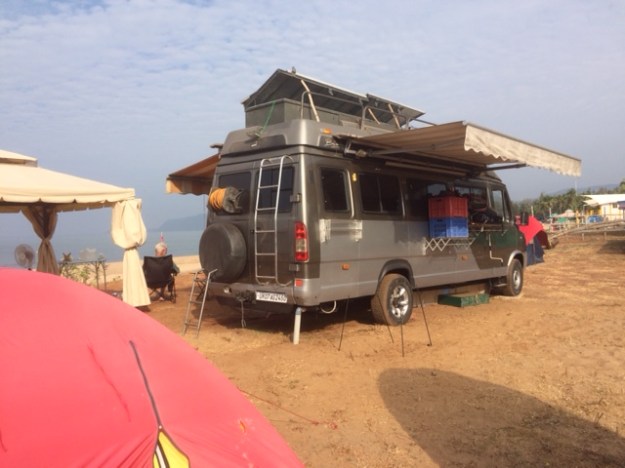
For our morning walk we decide to check out the “maharajah”. At the end of the long sandy stretch of beach  there is a small cove, and we see a cluster of tent structures and a trailer. A man and a woman are busily washing and cooking inside a “work tent”.  They are obviously the servants. In front of the elaborate trailer with solar panels on the roof, sits a neatly bearded man with a gold earring in his left ear. He looks relaxed and carefree in his lounge chair.

image

The servants working

As we hesitantly approach, he beckons us to come closer. ” I’m Nenni”, he says with a broad grin as he extends his arm for a handshake. Rather than being the “maharajah” himself , he is the driver. “It took us nine days to drive down here from the north. My boss arrives tonight. He is from a royal family, you know. He owns many agricultural farms and businesses. Every year he comes down with his wife and stays for three months”.  We get a tour of the complex.  The blue oblong tent is the outside shower for the servants.  Inside the trailer there is a bedroom with flat screen tv, fully equipped bathroom and shower, and room for lounging.  The outside is fitted with fold down shelving, and storage bins. The dining gazebo is covered in white canvas material, and an electric fan is is blowing the air around the neatly set table. There are two other tents which are for the servants.

Shower tent

Shower tent

image

dining gazebo with ocean view

NENNI’S STORY

Nenni is a man in his early forties and was born as the only son into a Sikh family. At the age of 17 he decided he wanted to go abroad to work, so he cut off his hair, and removed his turban.  Sikhs have a religious obligation to be unshaven and let their hair grow, covered by a turban.  His fear was that he would be mistaken for a Muslim, and  he wanted to avoid being conspicuous.  Because of this act of rebellion he was disowned by his family. After some years living in Europe, he returned home and was accepted back, and  soon a marriage was arranged. ” We just didn’t get along, so I got a divorce.  Now I will get married next week to a Hindu lady.  I am happy and will open my own chicken restaurant in my village”.  When I asked if he had children, he replied that he has two but doesn’t see them often as they live with their mother far away.  We left with handshakes and hugs all around and our promise to visit him and eat at his restaurant when we pass through that area at the end of our journey.

Marriage Goan Style

” Whose wedding are you going to?”asked the young shop girl with a twinkle in her eye. I had already been asked the same question twice before as I scoured the shops of Agonda for a “wedding envelope”(used to place money as a gift for bride and groom). Agonda is a village in  southern Goa, which has managed to maintain its small town character and warm,family atmosphere, despite the influx of tourists to this wonderfully idyllic seaside. It is predominantly Catholic, which is evidence of the Portuguese occupation from the early 1600’s until as late as 1961. The church and its activities play a central role in the daily life.

At first glance one would think that the women are all pregnant – -a small “bump” protruding from their flowered, waisted house dresses. Upon further inspection it appears to be a body type rather than a condition. Their wavy, black hair is tied back into a bushy ponytail , and their smiles are broad and welcoming. Almost everyone has Fernandes as a surname and is somehow related to one another. The few Hindus that remain wear traditional saris  or salwar kameze(a long tunic top with pants), but for others this has been long ago  been replaced by western wear, due to prolonged contact with missionaries.

“My cousin’s daughter is getting married next week and the brides family is having a luncheon here on Sunday, do you want to come” asked Francis, our chef friend. (I wrote about him last year-The Sailor and the Saint). I’m always up for a wedding, but that also presents the challenge of finding clothes and shoes for the occasion. When you travel with only a carry on bag, there’s not much room for such luxuries. I did bring my “acceptable” wedding outfit, hoping  that I would get the opportunity to wear it, but I forgot my bling flip flops. I figure no one will look at my feet anyway.

Sunday arrives and Gerald asks if he has to wear long pants. It is hot and humid and he’d much rather wear shorts. I say that out of respect he should. I put on some make up, my best Indian costume jewelry, a blue paisley skirt and my clunky black Tevas.

Decorations for the engagement party

Decorations for the engagement party

We arrive early, hoping to get a good seat, Francis says they are expecting almost 200 guests. The night before, the restaurant was a flurry of activity as the “aunties” decorated the courtyard with sparkly,gauzy fabric and greenery and the men started setting up the chairs. Of course we are the first ones to arrive,in time to watch the last minute preparations.

image

the “aunties” overseeing the food preparation

As people start to trickle in, Gerald turns to me and says sadly “All the men are wearing shorts!” And yep, it’s true. There is a sprinkling of men in long pants, and women in satin dresses, but for the most part it’s casual. I’m told that the wedding party on Tuesday night will be a formal affair and despite the heat, the men will be wearing suits and ties.

image.jpg

women and children section

A table has been set up where the westerners congregate, and the rest of the chairs have women and children in one section and men in another. There is a dj playing pop music and drinks are served. I decide to have a Feni, a local brew made from cashews, and quite potent. I meet the bride, who is an atypically thin young woman of thirty. The marrying age here is between twenty five and thirty-much later than the rest of India. Appetizers of marinated beef, roasted pork and chicken are passed around while we wait for the buffet.
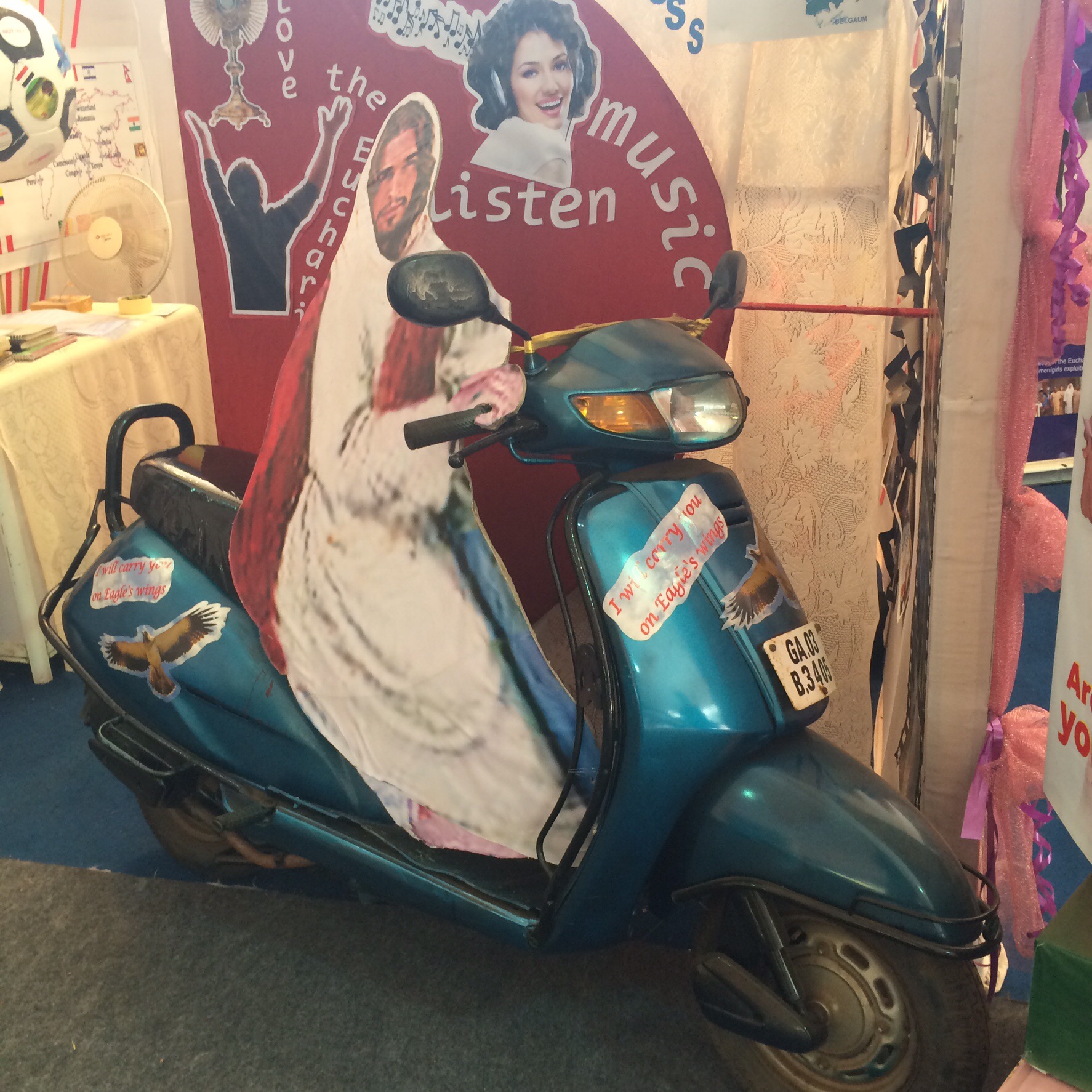
image.jpg

Jama or “Emy” the bride-to-be

At the right moment all the aunties and family members line up around the buffet table and we stand as prayers are recited.  When the time comes to start eating,I am amazed at the restraint and calm that follows.  After eating, people get up and leave immediately, until all that is left are a few western stragglers.

image.jpeg

It’s been quite an un-Indian experience without the wildness and ritual of a Hindu engagement party .  Tomorrow night is the wedding in a village 35km from here and we will see what happens.


“I’ll Never Do It Again” Redux

Some people say that the letters I N D I A mean “I’LL NEVER DO IT AGAIN”, and yet here I am,ready to embark on my fifth (or is it sixth?) journey to that fascinating and infuriating land of enchantment. I must admit that after each one of my first three sojourns I returned with that same sentiment. While I’m there, days pass when I want to tear my hair out, or just find a nice, quiet place to chill. And then something happens…..a colorful procession replete with music and ritual, a delicious meal,-fragrant with pungent spices, or maybe just an invitation to visit someone’s home.

This last trip I was fortunate to enter the mysterious world of Theyyam in northern Kerala. I was “seized by the gods” in their full glory of painted bodies and faces,as they immersed themselves in the spirit of a  god, dancing and moving as one possessed. It was this mesmerizing experience,which takes place at sunrise and sunset during the months of December- February that draws me back. As soon as we returned from our last trip in December 2015 I was planning the next.

Pullurkali

Pullurkali

Yes, we will also be volunteering to work on an art project with scavenger children at Manav Sadhna, Gandhi’s ashram. How that will turn out, I know not.

We are also planning to go up to the mountains at Nainital and see tigers at Corbett National Park. How that will turn out, I know not.

Many friends are as anxious for our return as we are to rekindle their friendship. Gerald is excited about teaching more collage workshops at the Universities in Ahmadabad and Udaipur. How that will turn out,I know not.

IMG_2238

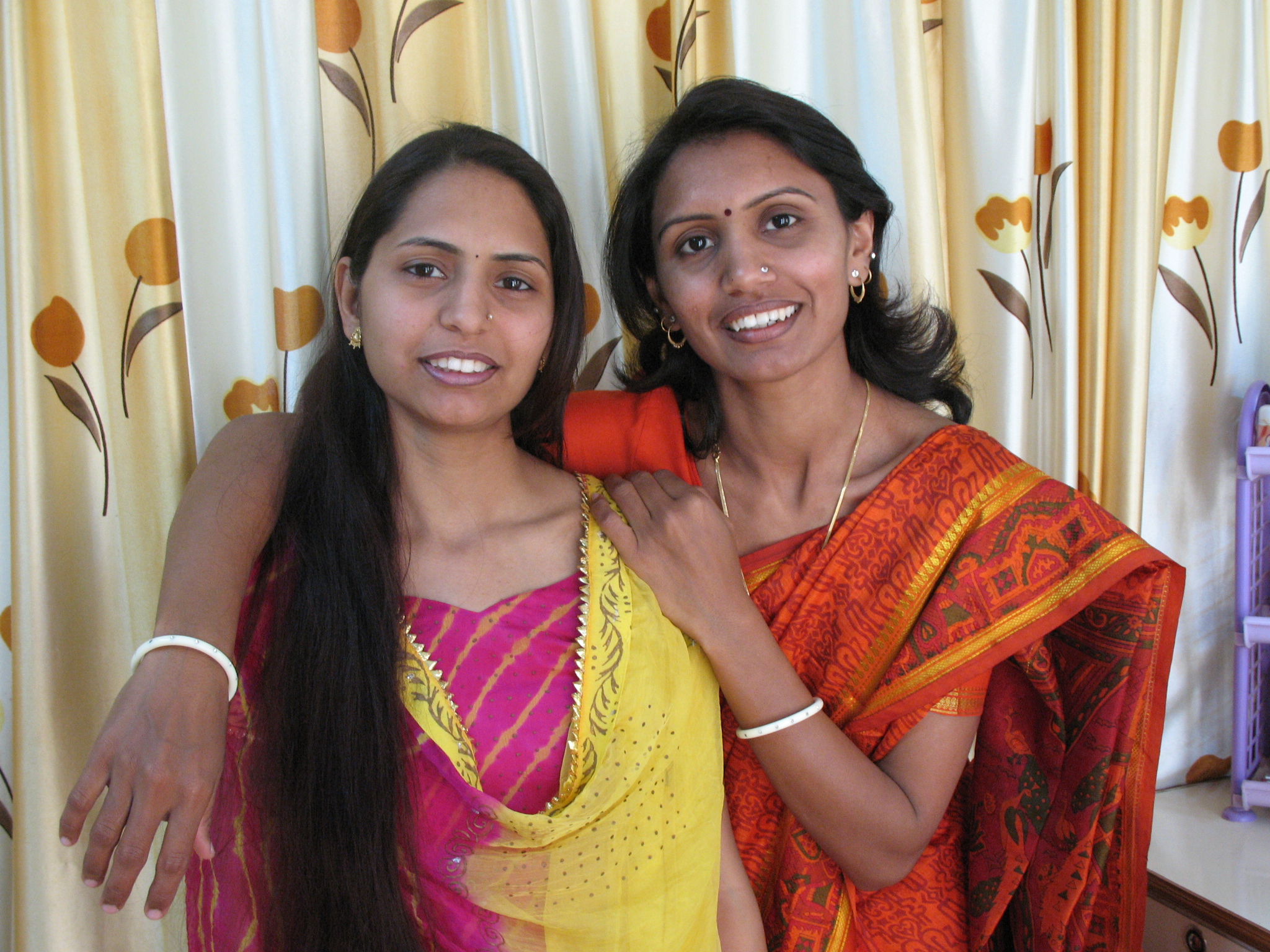
Shalena and her sister- my delightful Hairdresser in Udaipur

IMG_2160

Raji- the Puppetmaster of Udaipur

Francis at work

Francis- our master chef in Goa, at work

What I do know it that we are embarking on another adventure, and that is good.

Namaste

“In India, Anything is Possible”

We’ve returned back to the USA, but the emotions and impressions still linger.  I am sharing G’s last thoughts about the trip, because they reflect my own.

We arrived in Delhi after a thirty two hour trip, during the festival of lights, Diwali.  The owners of our guesthouse, Devna and Atul, immediately invited us to celebrate this wonderful holiday with their family.  The next evening in Jaipur, the director of an Artists Residence, whom we had never met, invited us to her home for dinner.  At our hotel in Pushkar, they managed to find me a real birthday cake and two bottles of beer, even though eggs and alcohol are forbidden in that “holy” city.  When we arrived in Udaipur, a city where we have visited many times, we were welcomed by our hotel owner/friend as long lost friends, with garlands of marigolds.  We ran out of evenings to accept all the dinner invitations from various friends.

This is the India I love-the people so open,welcoming and gracious.  There is nowhere that I have been like it.  And then there are the events-“The Greatest Show on Earth”. Diwali is the Festival of Lights and buildings are ablaze with lights, fireworks are exploding, and everyone is wearing their finest clothes, in this country of dazzling colors.  The Camel Fair in Pushkar, an annual extravaganza of camels, horses, and colorful tribesmen, was the impetus for this journey.  A few days later in Udaipur  it was Muharram, a major Muslim holiday commemorating the death of Hussein Ibn Ali, grandson of Mohammed; and celebrated with a procession of giant floats, late into the night. Then came the Full Moon Festival,Kartik Purnima.  In Palitana we sweated our way up thirty six hundred steps, a solid two and one half hours, to the great Jain temples-the pilgrims do it ninety-nine times in fifty days. We saw Asiatic lions in Sasan Gir National Park, were invited to a Maharajah’s palace in Wankaner, and crossed the caravan routes of Rabari nomads in Kutch.  In Goa it was the festival of St. Francis Xavier and in Kerala there was an arts Biennale, and the incredible Theyyam spirit rituals in local villages.  In India, the hits just keep on coming.

This was my seventh time here, and the country has become a part of me,- and in some small way I am a part of it.  The outrageous colors,the amazing history and culture, the fabulous food and above all the wonderful people I have met, have made this trip my best since my six month journey of discovery in 1976.  On the US Customs form we fill out upon return there is the question”Have you been in close proximity to livestock?”  In India that happens every day on every street.  But I still answer “no”, to avoid being quarantined.  If one of the questions was “Have you been in close proximity with the wonders of life?”, my answer would be an unequivocal “YES”.  For in India, truly, anything is possible.

NAMASTE

Seized by the Gods

image

Pullurkali

December 13

The sound of the waves crashing on the shore lulls me to sleep, but it is a fitful sleep. I am anxious for the day to begin, and wake up before the 3:00 am alarm.

We are in Kannur, six hours up the Malabar Coast from Kochin, and known for Theyyam ritual. It is performed during the annual festival of village temples in the region. Dancers who become “possessed” by a particular deity go into a trance and take on their persona. Once the deity has entered the body of the Theyyam dancer, the priest and the temple are blessed, thus purifying it for the coming year. This ritual is important for the spiritual and physical well being of the community, and the whole village pays for the temple and its maintenance

Theyyam is a unique supernatural event which allows villagers to have direct personal contact with a deity. It is interesting that only the “Untouchable ” caste is permitted to perform this ritual. Training starts at an early age,and is passed down through the male line in the family.

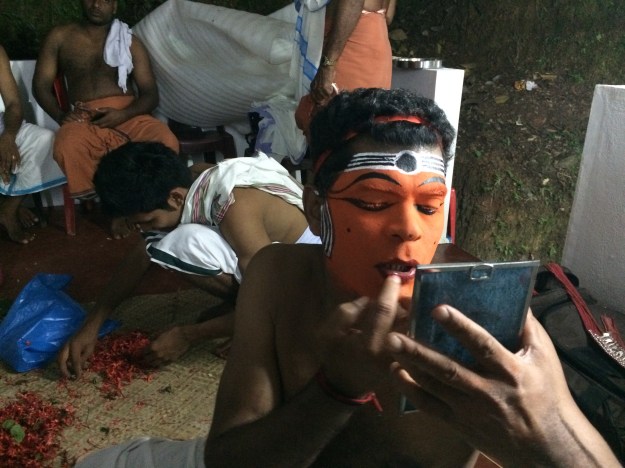
The ritual requires enormous physical and mental stamina. Elaborate headdresses can be over thirty feet tall, makeup can take from three to four hours to apply and metal anklets weighing two to three pounds each, are worn.

IMG_3724

Preparing the make up

We arrive at 4:30 am and everyone is fast asleep in the courtyard surrounding the temple, where the ceremony will take place. There is a tent structure set up- called “the green room”,considered a sacred space for the dancers to prepare themselves. I peek in and one of the performers, with face make-up,is snoring loudly.

P1060733

calm before the storm

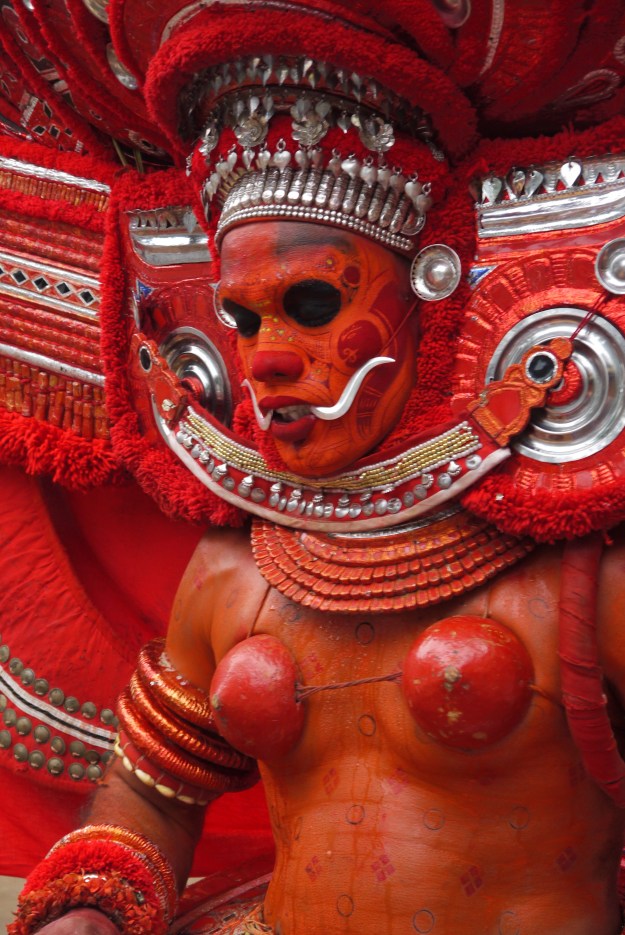
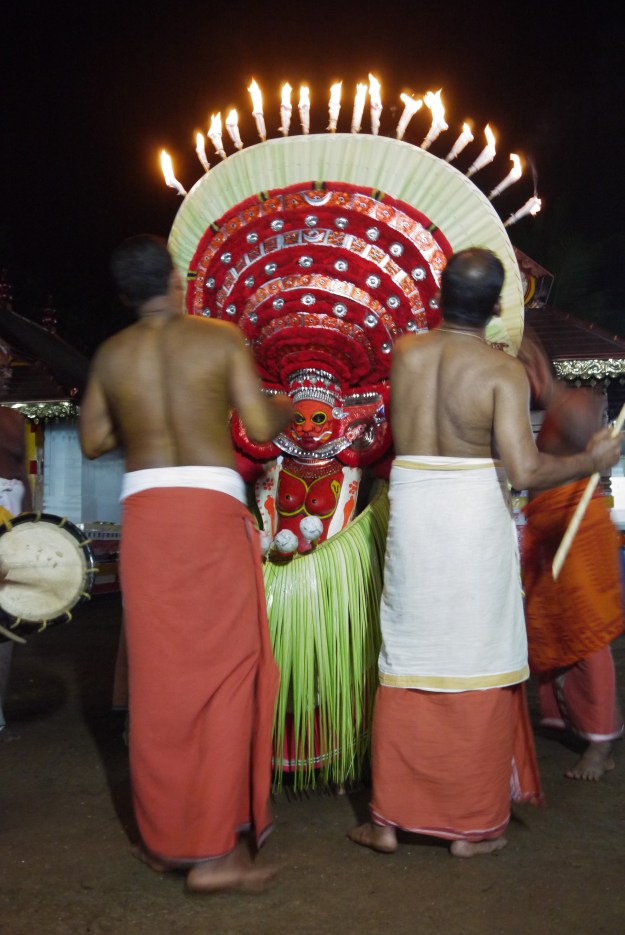
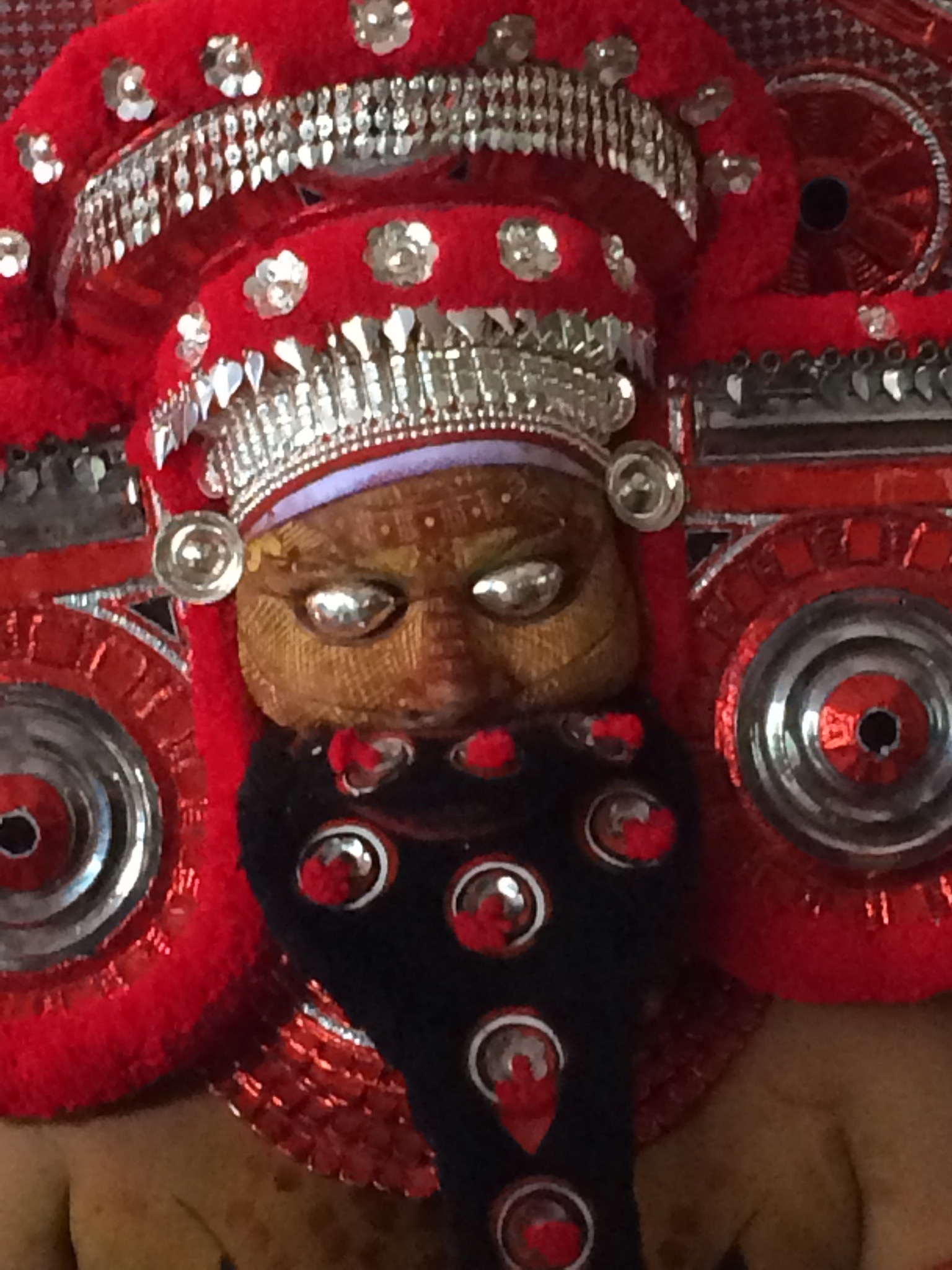
After thirty minutes the frenzy of preparation begins. There are to be three deities manifested today and two are goddesses. The drumming begins and out comes a fierce looking Pullurkali (Kali),with an enormous headdress sporting sixteen flaming torches and four more are hanging from the grass waistband of her skirt. Dancing starts off slowly with drummers and dancer encircling the two shrines. The face has metal fangs on each side, which look terrifying, and I find myself recoiling when “she” gets too close. The ritual goes on for about one hour and at the end, villagers line up to talk with the deities, ask questions and get blessed.

image

Goddess Pullurkali

image

Villagers lining up to speak to the deity

image

The. Goddess Pullurkaii with flaming headdress

Very few villagers have come at such an early hour, yet the air feels charged with energy.

We arrive at the next village at 5:00 pm (rituals start at sunrise and sunset), just in time for an unseasonal monsoon downpour.

When the rain ends twenty minutes later, the temple attendants clean out the water that has accumulated in the courtyard, with thick burlap bags. Many more villagers are here for this ritual then were this morning, and the mood is quite festive. An ice cream truck has arrived and parks on the temple grounds. Women and children are dressed in their finest clothes.

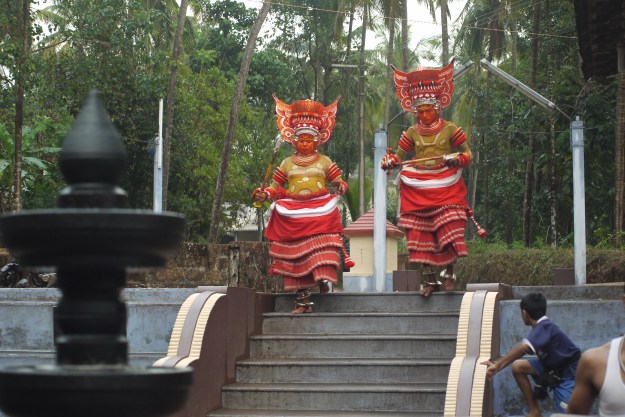
Tonight the deities are Ilamkaruvam (Vishnu), and Poothadi (Shiva).The dancing is more vigorous with both dancers battling each other with bow and arrows and sticks. Body make up is applied as well as on the face.

image

Deities Ilankaruvam and Poothudi

Turmeric, rice paste and lime are mixed to make the colors, and the paint is applied with a coconut palm reed as a brush.

The next morning we go to a simple roadside temple and it is the most personal. Watching the villagers line up to speak to the “gods” with such earnest expressions is an awe inspiring experience.

Illamkaryvam and Muttapan

Illamkaryvam and Muttapan

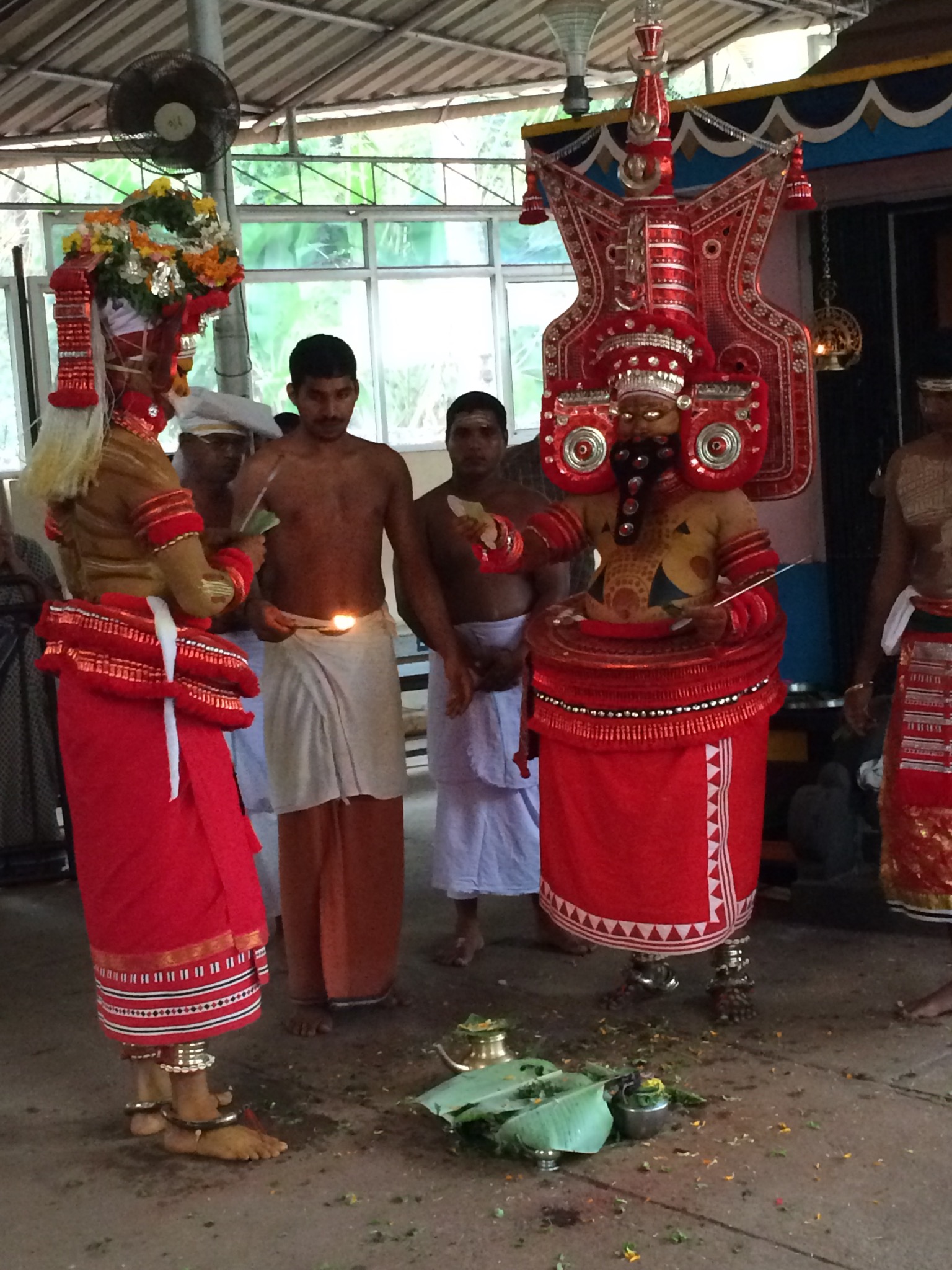
The God Thiruvappan

The Deity Thiruvappan

Tonight is our last ritual in yet another village. Lights are strung up around the temple grounds and garlands of marigolds hang from the buildings. It is obvious by the level of decoration that this is a wealthier community. We are offered food and snacks and told they are expecting five hundred people. Tomorrow is the climax of the three day ritual, but unfortunately we have to go back to Kochin.

A line of villagers forms on both sides of the seated deity, asking for blessings and advice, men on one side women on the other. Meanwhile, Golikan,(another deity)with long,black hair flying around, appears, held upright by an attendant on each arm. Immediately he starts dancing in front of the fire of burning branches- spinning and yelling. He moves so quickly it is hard to keep him in sight. I am mesmerized.

IMG_3740

Golikan at night

Illanparuvam and Poothoodi

Illanparuvam and Poothoodi

We are warmly welcomed to participate,  people wanting us to come back for the big twenty four hour finale. Of all the things I have experienced in my life so far, this has to be one of the most spectacular and fascinating.

Incredible India!

Spirits in the Night/Shirtless in Kochin

December 10

Mr. Walton, our venerable guesthouse owner,was deep in conversation with a young journalist from Bombay as we arrived. “Tonight is the Negro spirit candle lighting.  It is something you should see. He then gave her a printout of a newspaper article describing the ritual.  My curiosity was piqued.

Portuguese colonialists maintained a brutal stronghold on the native population in Kochin starting in the mid 1500’s, and in 1663 were attacked by the Dutch.  The wealthy, in an effort to preserve their treasure, came up with a sadistic scheme; build niches in a cement wall, put African slaves with the gold in them, and then mortar it closed .

Centuries later, a mythical figure, Kapiri Mattupan, became the incarnation of these martyred slaves.  People of all religions pay homage and ask favors of the spirit by lighting candles and leaving offerings at small shrines in the city on Tuesdays and Fridays.

We look for a rickshaw driver willing to take us to the place described. At first he looks at us with a puzzled expression when he sees our directions, but when we say “Kapiri Muttapan”, he gives a knowing smile.

It is now 6:30pm and the sun has set.  In the darkness we see a very small shrine built into the wall. No one is there, but seven or eight candles are burning inside, and fresh flowers.  I get out of the rickshaw, light the candle I have brought with me, and say a silent prayer as I place it beside the others.  Meanwhile, a group of women pass by and acknowledge the shrine with bowed heads, and touch their lips and heart.

image

Kapiri Muttapan Shrine in Kochin

With a little prodding from me, our driver asks the ladies where they are going,all dressed up.  We learn there is a Shiva festival starting at a nearby Hindu temple  Off we go.

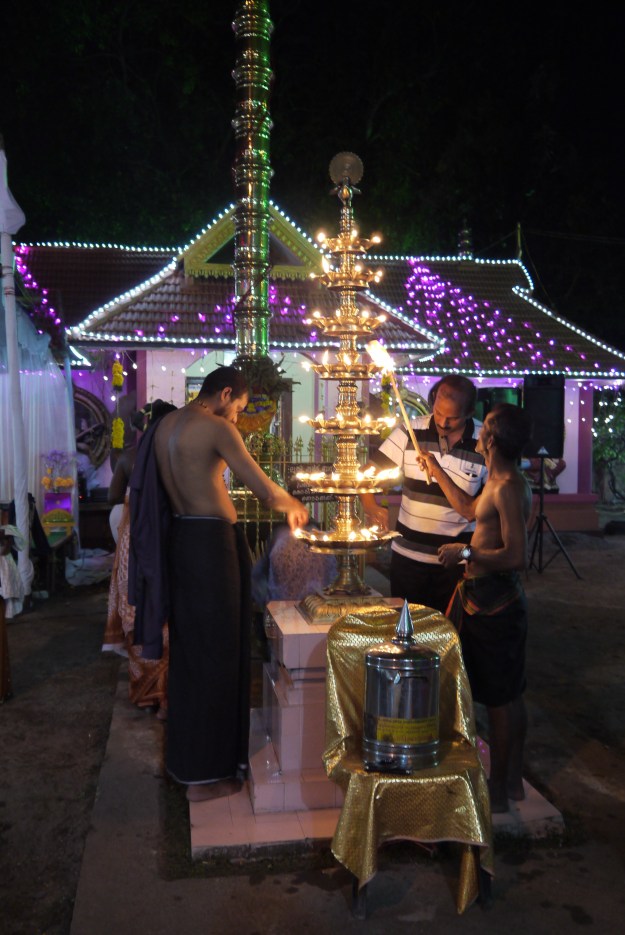
The temple is ablaze with neon lights and a big crowd has gathered in the courtyard.  One of the Brahmin attendants motions for us to take off our shoes and enter. A huge brass candelabra tower is being lit with ghee lamps.  I walk inside toward the shrine, but when G follows, they point at him and say “no”.  After many gesticulations on their part, and questioning looks on ours, we realize the problem.  Men have to remove their shirts!

image

Lighting the tower at the Shiva temple

Huge drums are beating wildly and a long horn-like instrument is being played.  An attendant rings a bell as we all wait for the shrine door to open.  I am pushed forward in order to have a better view. When the frenzy of music comes to a climax, the door opens.  Again the ladies push me near the priest so I can get blessed with the holy water. In the courtyard a stage has been set up and two tabla players and singers have started a performance of religious songs. A woman who speaks some English tells me that in a few hours the men will pierce their checks and tongues with nails.

It’s been quite an evening already, and the thought of such  a sight doesn’t thrill me, as much as I like unusual rituals.  Also, the singing is screechy and monotonous. I want to go back to the tranquility of our little cottage

Just another day in India.
The Sailor and the Saint

December 7

We’re in Goa now, worlds away from the craziness that is India.  Days pass like molasses slowly dripping from a jar. Our activities are walking the beach,swimming and EATING. When a long time Goa traveler tells us about the “best place to eat in Agonda”, we are right on it.

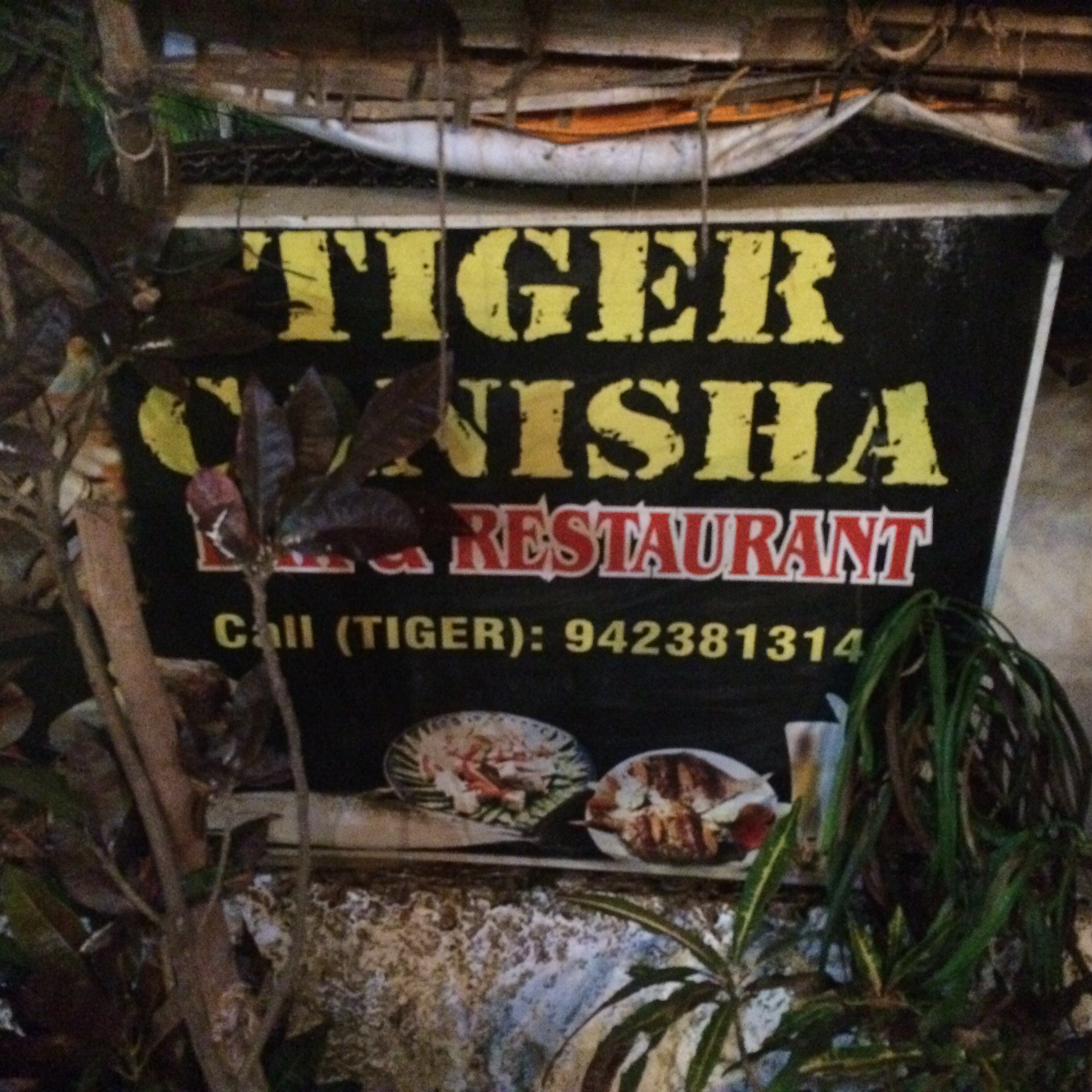
Francis was a cook in the Merchant Marines for 17 years,and now has his own restaurant, TIGER CANISHA.

TIGER CANISHA Restaurant in Agonda

TIGER CANISHA Restaurant in Agonda

From the moment we bite into his Fish Ambotik (flavored with tamarind, dried mangosteen rinds and exotic spices) we are hooked.  We now have a purpose.  Each day Gerald and I mull over the choices of Goan specialties, and decide what we will eat the next day. Sometimes we just let Francis improvise, always with incredible results.

Francis at work

Francis at work

Agonda is a small, tightly knit village of fisherman, and families cater to the influx of tourists by opening up their homes as restaurants and guesthouses. Nothing much happens, so when I see Alan (the one who told us about TIGER) he says “The word is out that you two eat at Francis’ for lunch AND dinner ever day!” 

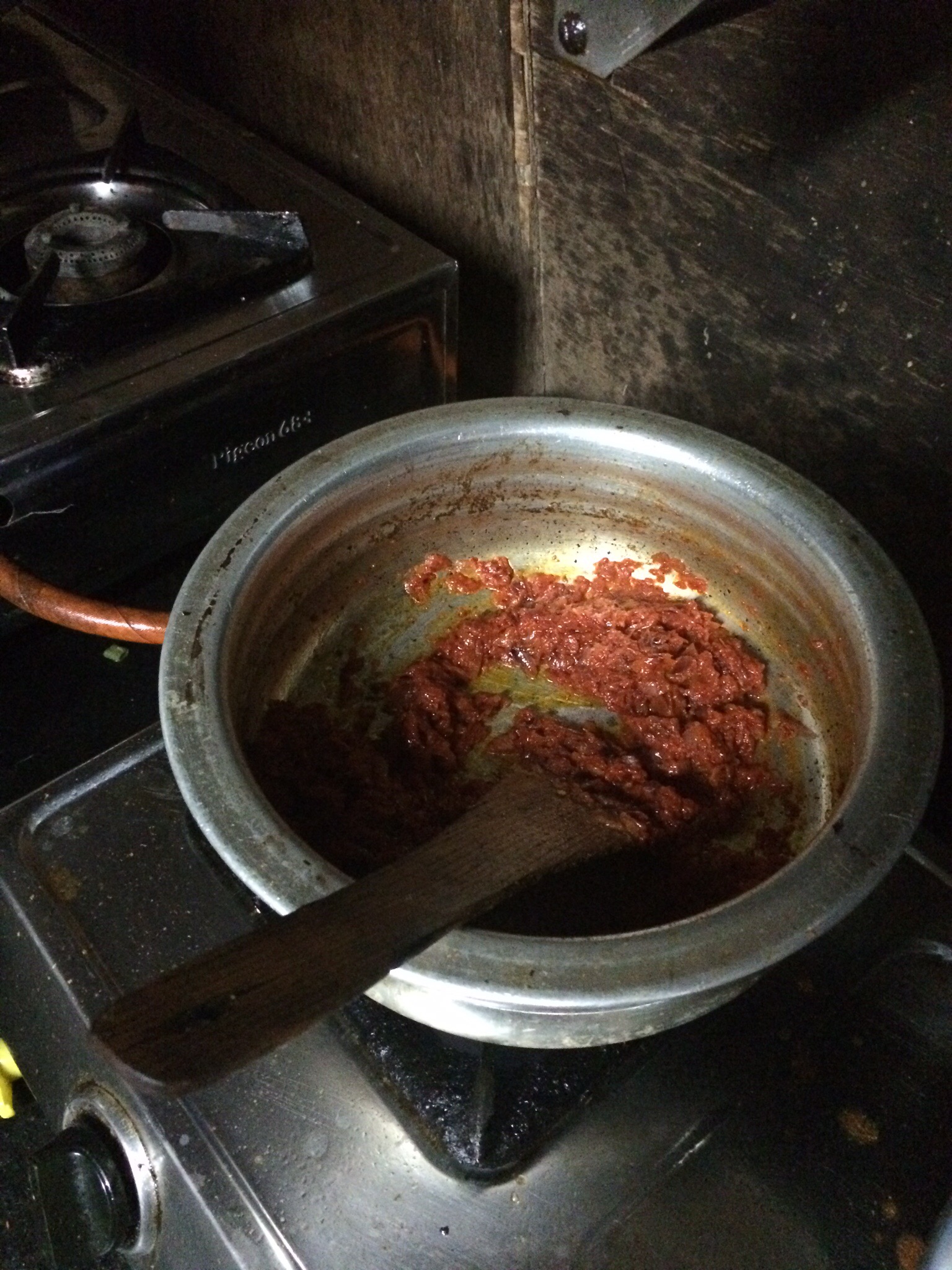
It is  our last day and Francis tells us, “Tonight I’m making you a surprise”.  Our stomachs are so full after eating ten of his meals, but we must soldier on.  Lunch was a wonderfully spicy chicken cafreal, and I watched as he prepared the paste. (taking notes, of course!)

The cafreal paste

The cafreal paste

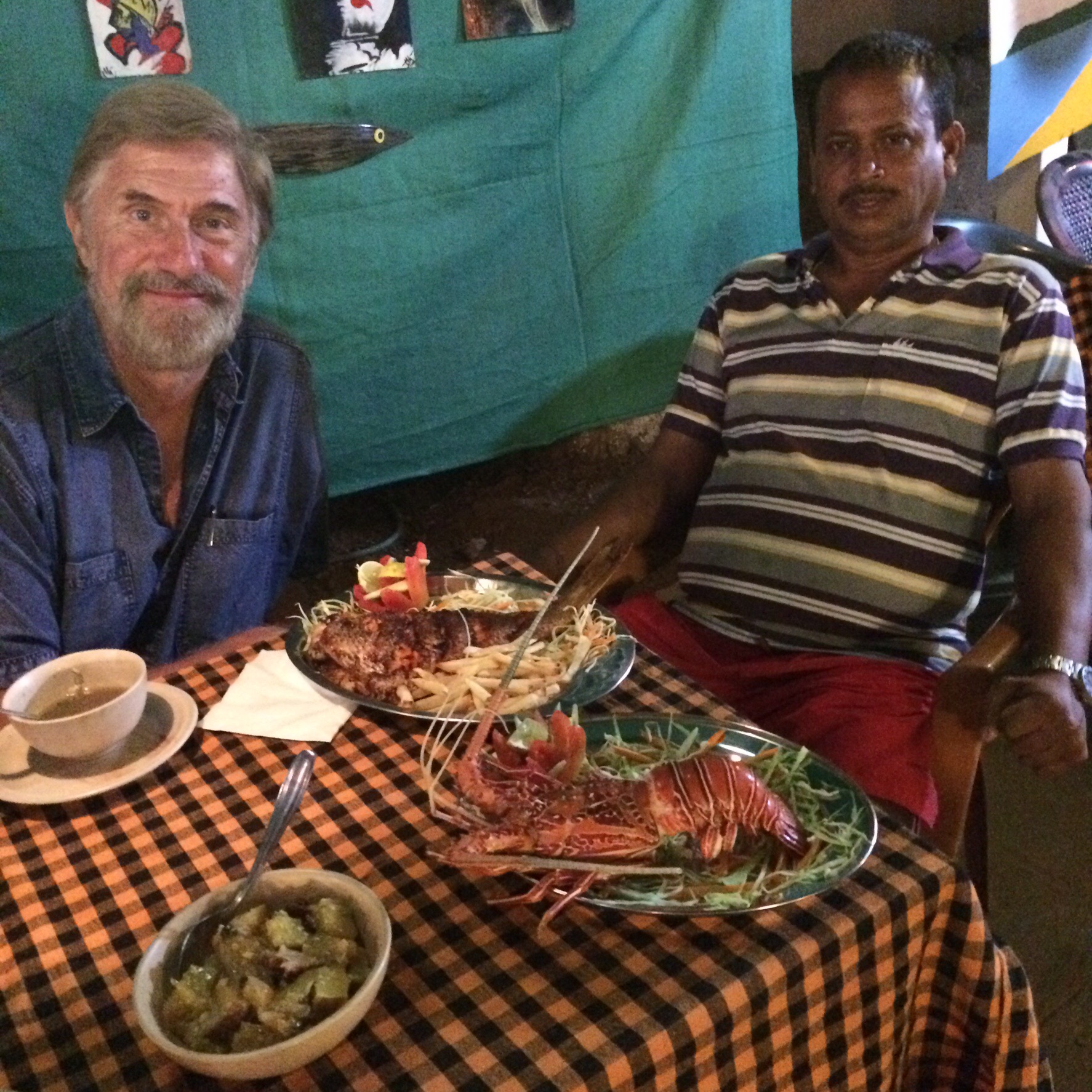
The look of pride and joy on his face is touching as he comes out with first, fish head soup, then whole grilled fish with pumpkin from his garden (flavored with caper berries and chilies), and the piece de resistance, a whole lobster. Food is my religion and  Francis is certainly the saint of Agonda.

The last supper with Francis

The last supper with Francis

The official Patron Saint of Goa is St. Francis Xavier, a Spanish priest who traveled throughout India, China and Japan converting the “pagans, in 1543, when he died in China, Portuguese merchants gave him last rites and buried him in slaked lime.  According to legend, when a Jesuit brother later disinterred him, the body had not disintegrated, and when his finger was cut, blood oozed out. This was reported to the Vatican and the Pope made him a saint.

SE Cathedral where the glass case with St Francis is displayed

SE Cathedral where the glass case with St Francis is displayed

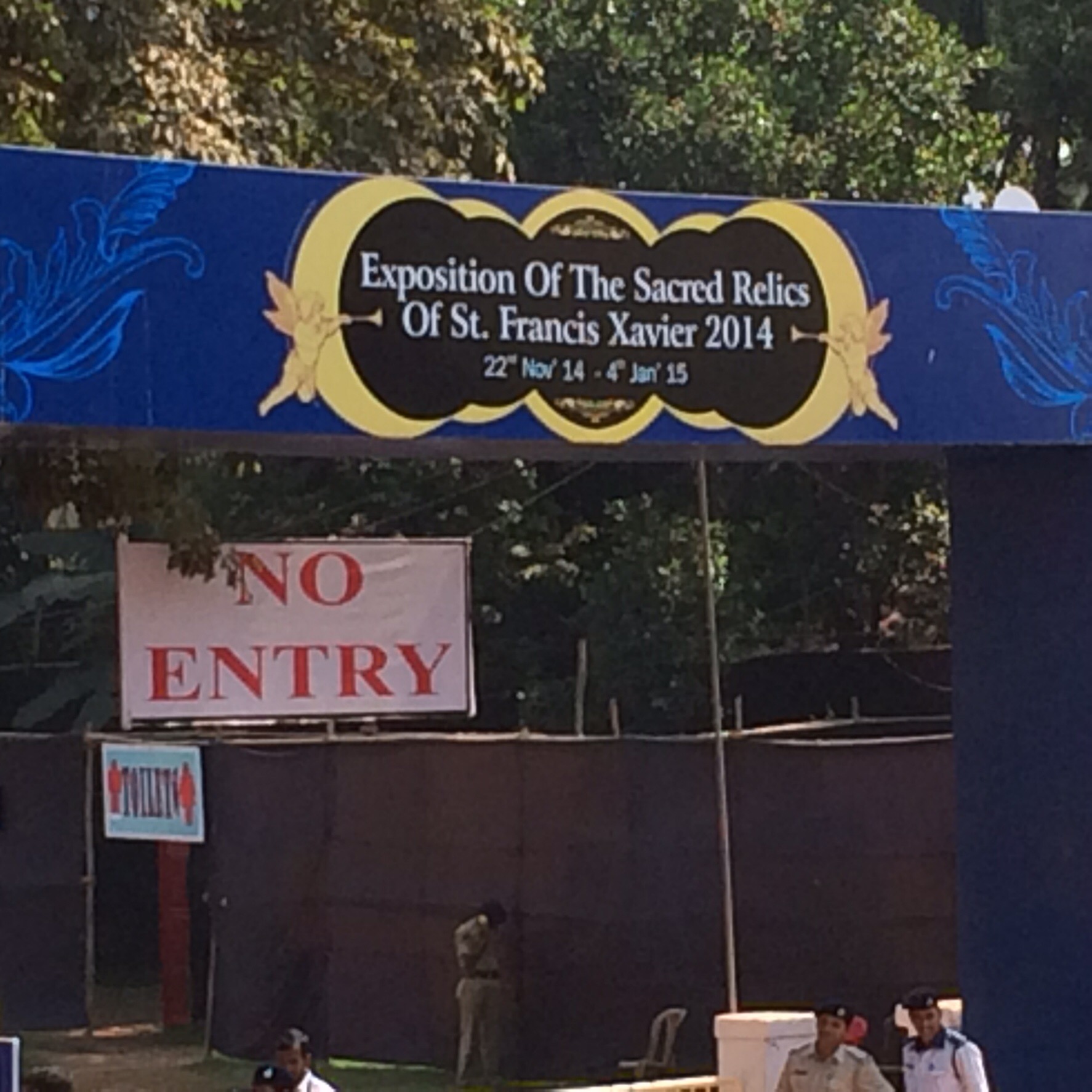
Pieces of his hand were distributed around the world for their healing power, and one fervent devotee bit off a toe.  He is now displayed in the church in Old Goa, and every ten years there is an”Exhibition”of him in his silver lined glass case with his exposed feet.  This year is just such a year and we are determined not to miss this event. Although it may be hard to believe, after a week of relaxing nothingness, we actually yearn for some action; and India knows how to put on a festival.

Entrance to the "exhibition"

Entrance to the “exhibition”

Line of pilgrims waiting to get into the cathedral

Line of pilgrims waiting to get into the cathedral

Pilgrims wait on line for hours to get into the church.  We sneak around the back and find an entrance, unguarded, onto the church grounds.  Although we can’t kiss the grave, we do get to see him from afar.  Meanwhile, outside there is a carnival going on, replete with Ferris Wheel.  An exhibition hall has been set up, and each religious group has their own information booth.  My favorites have  a cardboard figure of Jesus on a motorbike, with the inscription “I will carry you on eagle wings”: and a standing cardboard Jesus with “I Miss You”.

"I miss you"

“I miss you”

"I will carry you on eagle wings"

“I will carry you on eagle wings”

Goa is 75% Catholic, but there are Hindus and Muslims who also come to experience the spirit of St Francis, and stalls line the streets leading up to the church, selling everything from food to bras.

Off to Kerala tomorrow .

A Very Auspicious Day/OY VEY!

The plaintive sounds of the muezzin calling the faithful to prayer at the local mosque drift into our room.  It is 6 am and time to get up.  Indians have dinner at 10pm and don’t go to sleep until after midnight, so the streets don’t come to life until about 11 am, when they start to rouse themselves out of bed.  That’s the  best time to wander, before the choking fumes of traffic and the mass of people make walking unpleasant.

Gerald is looking for great cow pictures and I monitor the changes in my favorite shrines.  Morning time is when incense is lit and flowers are offered to the gods.  It also presents a small window of opportunity to see/photograph the shrines while their little metal gate is open; otherwise it looks like the gods are imprisoned.  This morning I realize that in my haste I forgot my camera.

At the end of the road,after cursing myself numerous times for not having my camera, we hear drums.  Women are  pouring into a courtyard where a drummer is playing and a puja (blessing ceremony) is being done in front of a shrine. It is Sri Mata- a mother goddess, and this is a pre-wedding ritual. Durga, another female goddess is in the same compound  and the women pay homage to each goddess in turn.  The attendant at the shrine is a priestess. This group is from a simple village , but soon afterwards a wealthier group arrives and this time two drummers appear. First it is the bride’s family who take turns pouring offerings of milk and flowers, and there are now two drummers.  The groom’s family appears some minutes later, which presents a problem. They shouldn’t be there at the same time, but with IST (Indian Standard Time), the bride’s family was supposed to have been there much earlier.  Four generations of women dance with abandon to the drums, and I of course am invited to join them, which I willingly do.

“Gerald, I want to go to that wedding tonight, please go talk to the groom”. There will be more than two thousand guests, and it will be a gala affair. Indians are notoriously hospitable.  I am prepared with my best silk outfit and silver sandals for just such an occasion. Unfortunately this time we are not invited..  As we leave, people are arriving in cars, on foot, and rickshaw.  The wedding season has begun!

Dates for marriages are chosen with an astrologer, and this weekend is apparently an auspicious one.  Our friends and our guesthouse owner are all going to weddings with between 2000 and 4000 guests.  When I ask Mr. Singh (owner of our favorite restaurant ) if they are going to a wedding this weekend, he replies “We will be going to a big royal wedding in January.  All the Maharajas of each state will  be present and we have two chartered planes to take our group.” Now that’s a wedding I’d like to be invited to.

As we climb the six flights of stairs to our room the sounds of fire bombs exploding break the quiet. From our panoramic window we see the luxury hotel, on Jag Mandir, a private island,lit up like Las Vegas. Famous Lake Palace Hotel ( from the Bond movie “Octopussy’) is also ablaze with lights.

Our room is a bargain at $17 a night, with a painted stenciled ceiling and views of Lake Pichola on two sides,but the mattress is hard as a rock.  I am hoping for a good night’s sleep because I am pooped.  BOOM.BOOM.BOOM. There seems to be a wedding all over town tonight. Fireworks, drums, loudspeakers with disco music, people talking,laughing until the wee hours of the morning.  And if that isn’t enough, at 3 am the ever-present stray dogs go on a howling binge (maybe frightened by all the fireworks) and don’t let up until dawn.

The daily spectacle of processions, ceremonies, and incredible flashes of colors is what makes India “The Greatest Show on Earth”.

The Weight of Beauty

image

Rabari woman

image

Meghwal women in Ludyia

image

Ahir woman

image

Meghwal girls

November 24

I smile and grunt as I point to the silver neck collars, ankle cuffs and earrings.  And so the ritual begins.

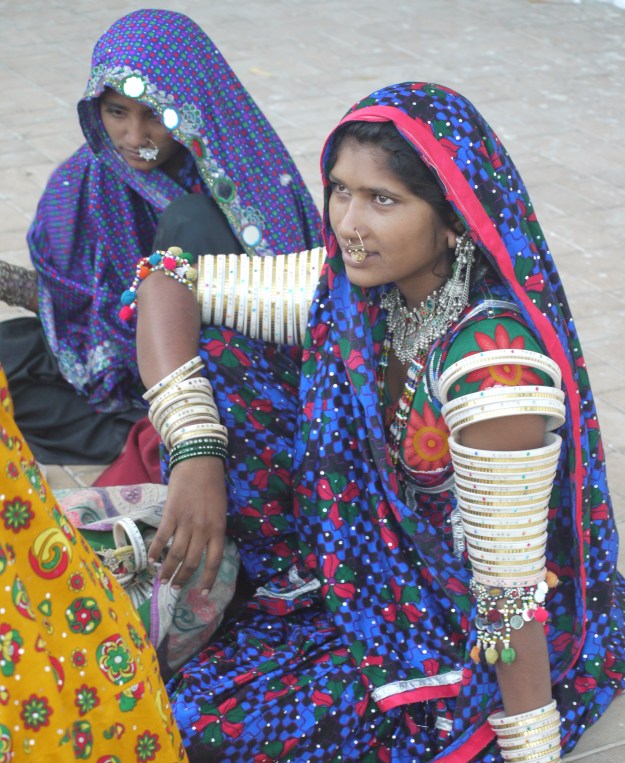
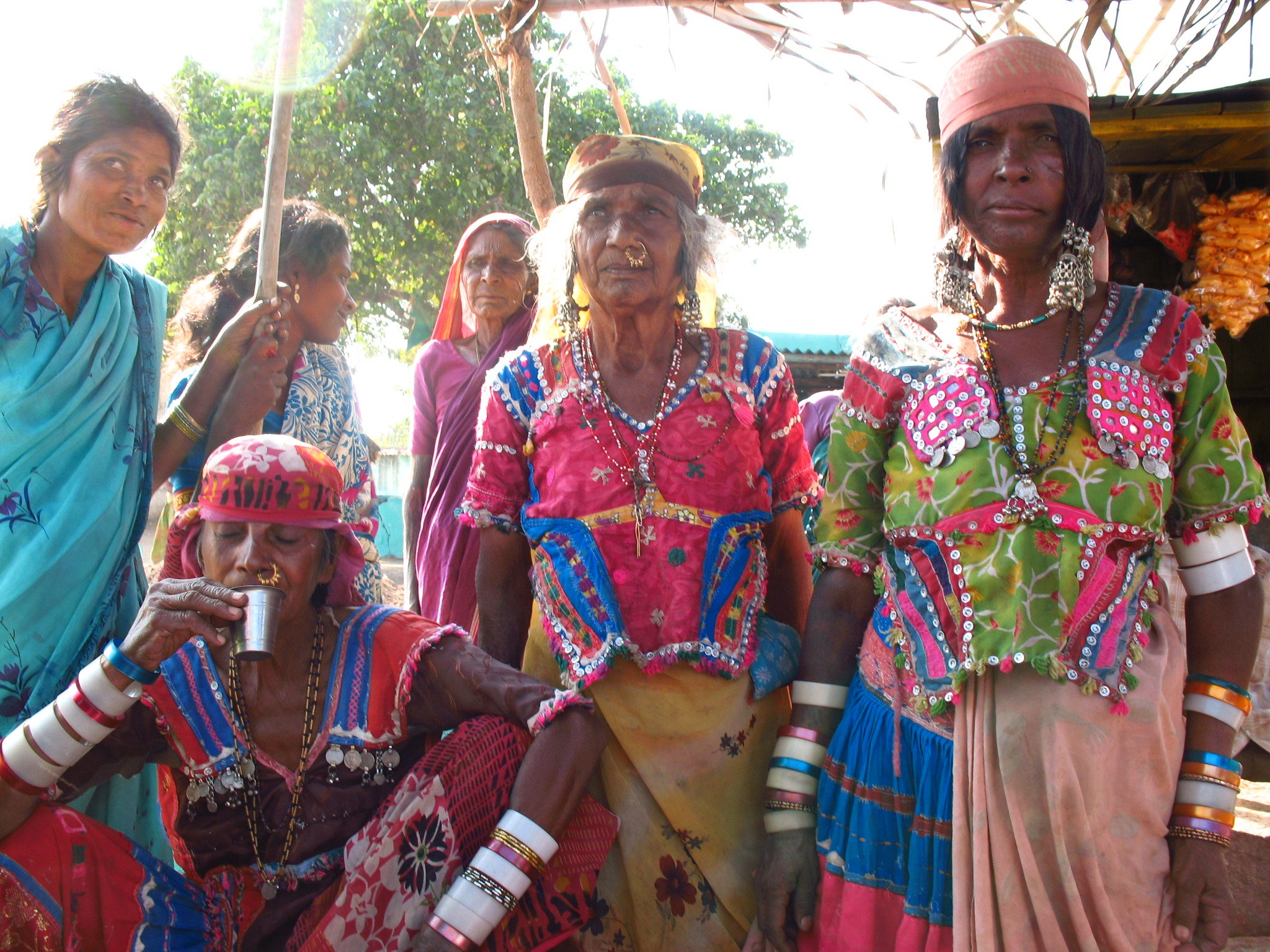
We are now in Kutch-a remote area in the north of Gujarat, which emcompasses a 17,000 sq. km long salt desert and is the home to a variety of colorful ethnic groups. Known for their skills in the traditional crafts of weaving, embroidery, tie dye, woodwork and leather, they are alternately reclusive and outgoing.

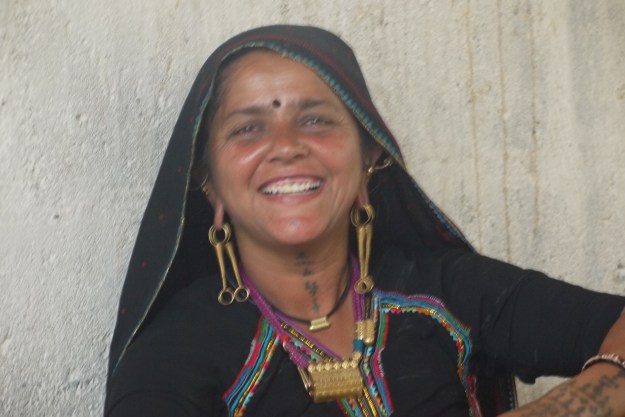
Wealth is portable for many of these tribes, and a tangible sign of prosperity.  Women wear ankle bracelets weighing over 2 kg, and the neck collars are no lighter. When we go into these villages I wear gaudy jewelry, bought specially for such occasions; and always my “mangal sutra” which is a sign of a married woman.  A common bond is formed by comparing our “wealth” and they want to know if I am wearing real gold. As a wedding gift, Meghwal women receive enormous gold nose rings which they proudly display. Gandhi called these people “Harijans”, or “Children of God”, but to the Hindus they are “Untouchables” and relegated only to certain professions.

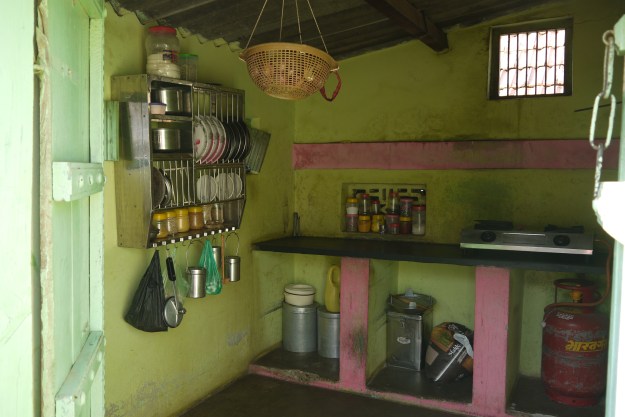
Originally from Rajasthan, Meghwal women are known for their intricate and colorful embroidery, embellished with small round mirrors and pom poms; the men work with leather. Meghwals usually live near Muslims so they can buy hides from their dead cows. Hindus are forbidden to work with leather. I find it ironic that these people are considered the lowest of the low, and yet their villages and homes are the most immaculate places I have seen in India.
P1060174

Kitchen

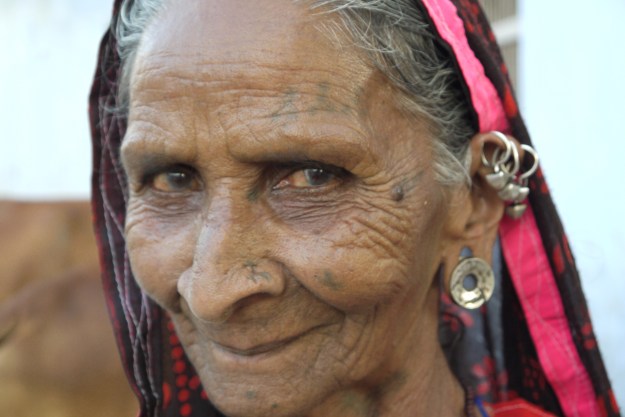
Rabaris are elusive and fascinating.  Herders, and primarily nomadic, they came from the deserts of Jaisalmer. Women are dressed in black embroidered bodices and wear two long brass earrings in each ear, so heavy that sometimes they rip the ears apart.  With cities encroaching on their grazing lands, the Rabari are forced to live in villages, and occasionally pack up their belongings to travel for several months.

We are with our resourceful driver/guide,Sheik, and like a good tracker, he is always on the lookout for my “women”.  On the highway we suddenly see a long caravan of camels and carts.  “Deborah, look up ahead, it’s Rabari on the move”.  It’s a rare site to see them traveling, and we speed up, looking for a safe place where we can stop and get out.  I am almost falling out of the car, trying to get my camera and myself out quickly before they are gone.  No need, the caravan is about 20 camel carts long.  I get a glimpse of the carts, filled with clothing, beds, suitcases and provisions.  Small children are placed high atop bundles of cloths and furniture. As we get closer, the women signal that they don’t want any photos taken, so I put my camera away and try to soak in this amazing sight and stamp it into my memory. (These days no easy feat!)

image

Nomadic Rabari herdersI

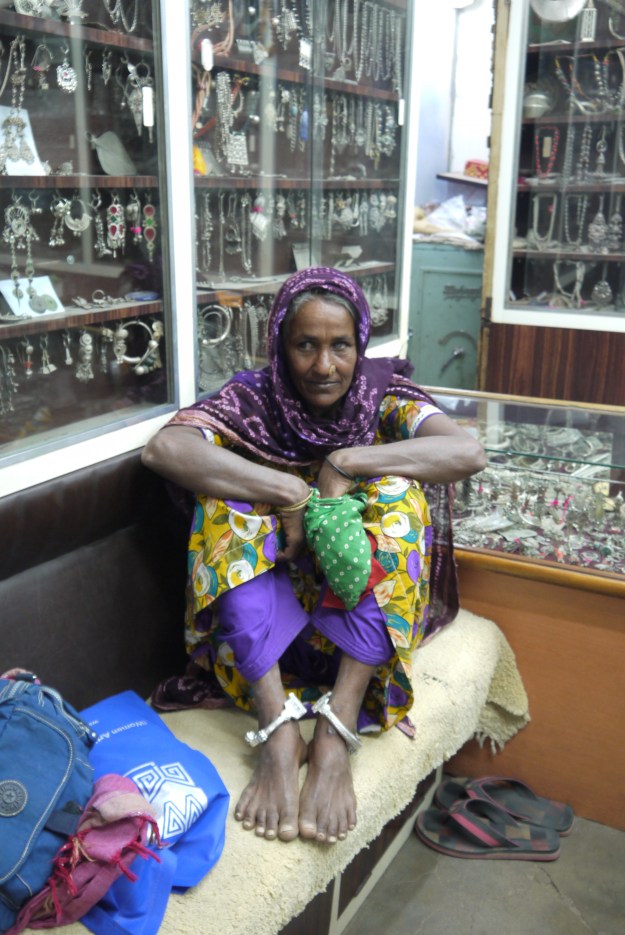
At the silver market in Bhuj (the largest and only big city in Kutch) I notice that there is a very booming market for these weighty body adornments.  I thought that many of these people were too poor to buy precious metals and had resorted to wearing plastic or nothing at all, but I’m very wrong.  Each booth displays rows and rows  of tribal silver jewelry.  I sit down at one where a Rabari woman is trying on a heavy silver anklet.  She motions to me to get one too, and the jeweler complies by placing one on my ankle. Alas, my ankles are too fat, and he offers to stretch it to fit me.  The woman is beaming with joy as she gesticulates that this is definitely my style.

P1060132

Buying silver ankle bracelets in Bhuj market

Older women tend to remove their jewelry and save it for their daughters, or just take a well earned break from being the familiy safe deposit box. Once they are married and have children, they no longer need to be beautiful.