Give Us This Day Our Daily Samosa

I dream about them at night and then fret that I may oversleep and miss out on being the first one in line at the shop.

The object of my adoration is Frances’ wifes’ divine fish samosa.-best eaten hot before the frying oil has a chance to settle into the crispy dough. If I haven’t remembered to put in my order the night before, I’m SOL if I get there after 8:00 am.
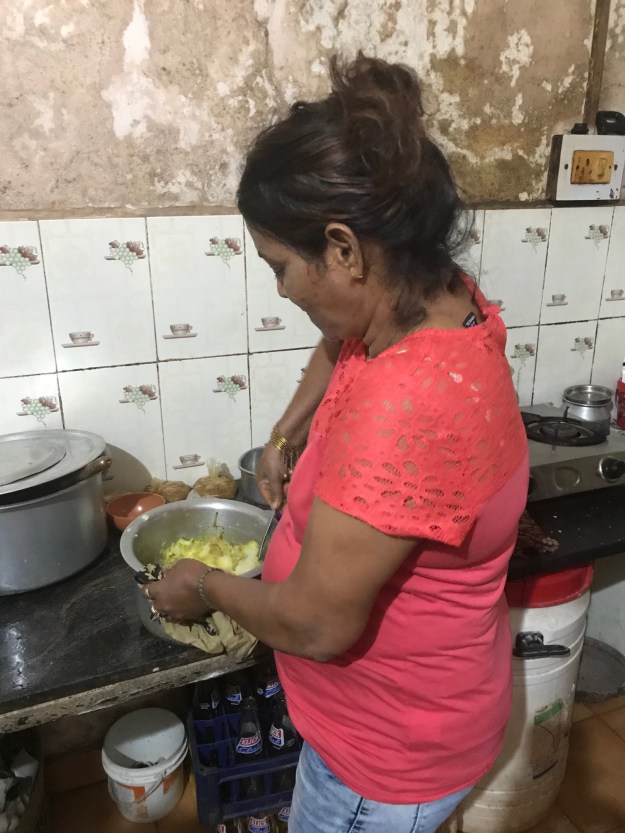
Schoolchildren clutching 20 rupee notes in their small hands scurry to buy a few on their way to Catholic school in the morning.
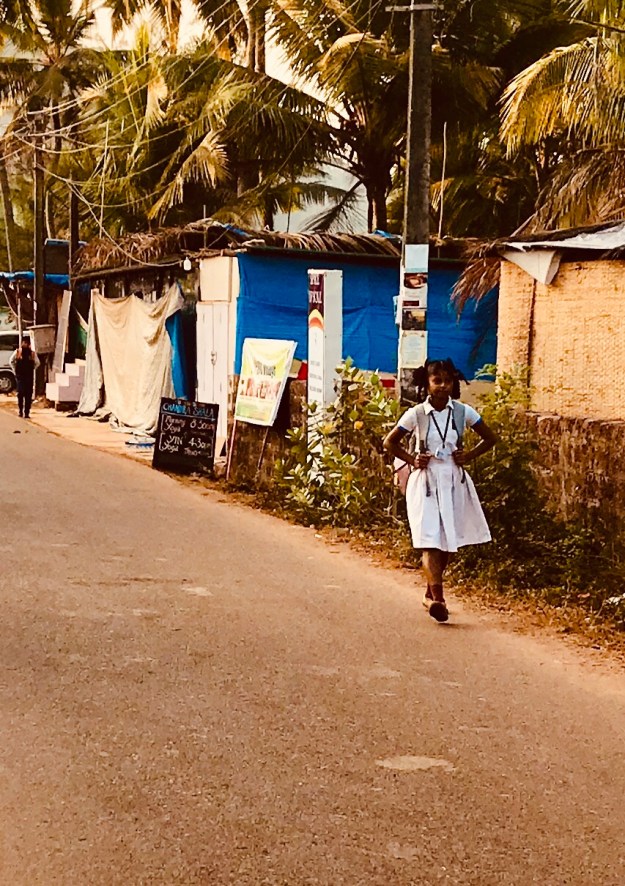
I savor each bite lovingly as I make my way leisurely through the village to meet G at the beach for breakfast. I’ve bought four of them for us to share, but the chance of having any left by the time I reach my destination is slim.

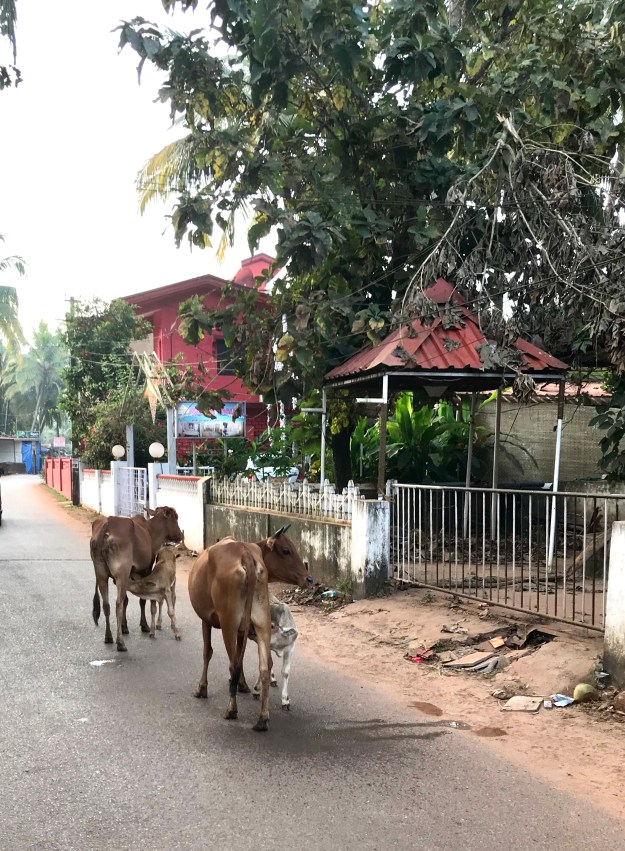
I love being out in the early morning before the sleepy village starts to come to life. Young girls with long black hair neatly braided in loops like pretzels,walk briskly in their freshly starched white uniforms, not wanting to be late for school and risk the ire of the schoolmaster. Motor scooters zip by while cows roam lazily in the middle of the road secure in the knowledge that no one will disturb them no matter how pesky they may be. ( Even in Catholic Goa cows are sacred).Today there are two cows busily nursing their calves.
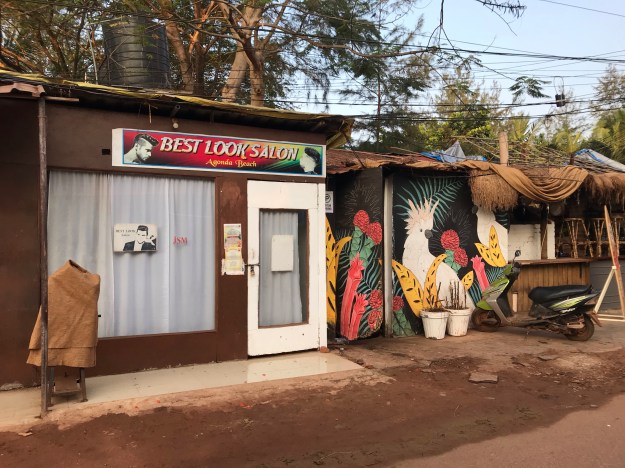
On the way back I pass barber shops, not yet open, advertising the latest Bollywood hairstyles for men. There will be lines later as hair seems to be an important fashion statement.)
Brightly painted homes double as rooms to rent and Beach Huts display sign boards with menus, (often with funny spelling errors).
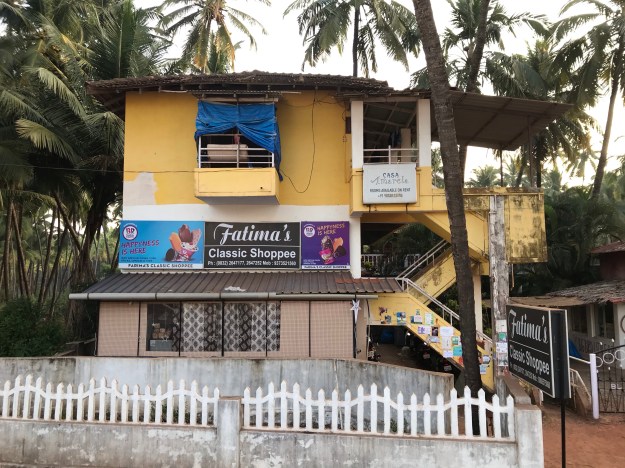
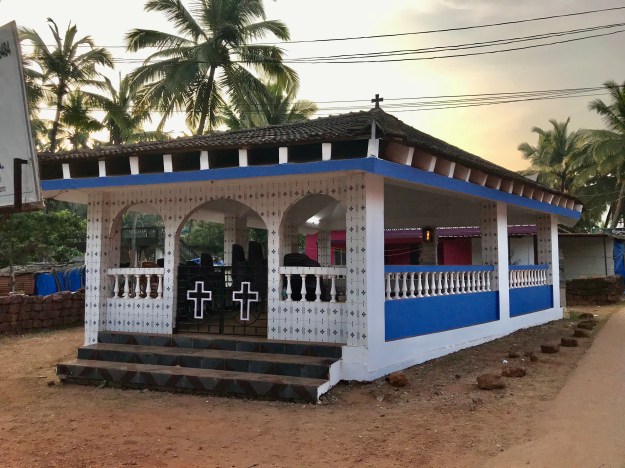
In the center of the village is a Gazebo for local celebrations. The church plays a major role in all social activities.
I arrive at the beach just as the shimmering warmth of the day is beginning to make its presence felt. G is ecstatic that I haven’t eaten all the samosas and that I’ve saved some for him, knowing what incredible self control that took.

Even the dogs appreciate the pungent aroma and sniff around wildly, following us to our seats and not leaving until they are sure that all the food is gone.
Trouble in Paradise/The Turtles are Coming

It’s chaos now in Agonda. What with the new Turtle Nesting Legislation and the 28% tax! Nobody knows what is going to happen. – Terry Fernandes, owner of our resort

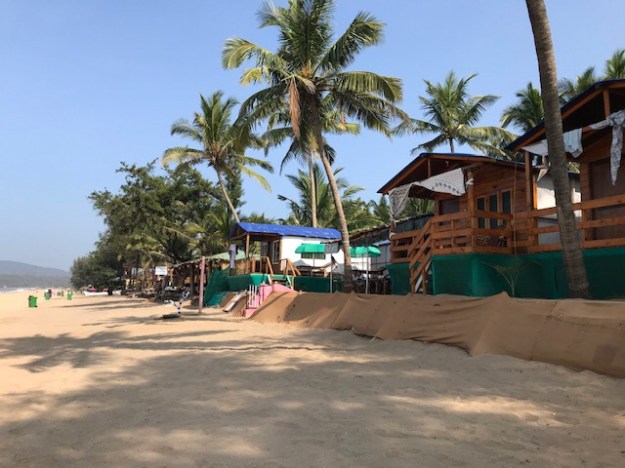
Agonda beach in Goa has been our secret retreat since we first came here ten years ago. Most savvy travelers eschew Goa because of its reputation for overcrowded beaches,noisy bars and general mayhem. But Agonda is different. It is a small fishing village made up mostly of descendants of the masala mix of Portuguese and Indians. Its quiet calm and absence of discos and nightclubs is the major draw for Indian and European visitors looking for a peaceful escape. There is an easygoing balance between the locals and the tourists.

Last year it was discovered that some Olive Ridley turtles had nested on the beach. Each of them lays hundreds of eggs between November and April and the incubation period is forty to fifty days before the babies can swim out to sea. The government decided to set up “Turtle Nesting” zones for eventual development as tourist attractions and enacted legislation prohibiting any and all structures within two hundred twenty meters (about 700 ft.) of the shoreline. Marine turtles are considered “vulnerable species and have the highest protection status.”

Agonda’s economy is primarily based on tourism. Local merchants protested to the government and managed to get a temporary stay order. If the stay is overturned Agonda will effectively cease to exist, as almost all of the lodgings, stores and restaurants are within this arbitrary boundary, and will have to be razed.

I saw no signs of turtle nesting anywhere on the beach and the constant zipping around of the beach patrol truck certainly doesn’t do much to show that the government is serious. It is astonishing that they would imperil a flourishing community.

Living in California I have the utmost respect for environmental protection, but the priorities seem a bit lopsided in a developing country like India where human needs are overwhelming.

After our exhausting thirty six hour journey we experienced some initial disappointment at the changes in our beloved beach experience. We were saddened to hear that our favorite chef and friend,Frances,was in a motorcycle accident and was was forced to close his restaurant where we dined nightly. (Notice that I say “dined” not ate- he was a master chef and a true artist in the kitchen and I looked forward to his nightly creations.) The political demonstrations due to the new citizenship laws enacted by Prime Minister Modi, as well as the bankruptcy of the travel agency Thomas Cook have also had a major impact on tourism.

Our disappointment was short lived as the wonder that is India kicked in.

Last night was a “live music” performance featuring a father and his eight year old daughter, Meghan,visiting from Bangalore. While he calmly played the guitar, this diminutive energizer bunny belted out “Purple Rain” and “This Girl’s on Fire”. She was enthusiastically enjoying the attention of being in front of a crowd of appreciative listeners. She was cute and she knew it.

When her set was over she came over to the table where I was sitting with a young Belgian couple because she saw me mouthing the words to a song her Dad was singing. “How do you know the words?” she gushed. Satisfied that I knew a bit about music she then started jumping up and down, flicking back her long black hair like an MTV diva, and proclaimed “I want to be a singer!” Dressed in a pink flowered jumpsuit her attitude belied her eight young years, and she didn’t stop jumping for an instant. I asked her how long she thought she could keep on jumping up and down and her response came quickly with a mischievous smile- “Forever”.

The audience was made up of first time visitors to India, long time expats as well as young and old Indian families.Everyone was having such a good time that we didn’t care if sometimes her voice didn’t quite hit the right notes. This sense of family and community is the Agonda that I love.

Thankfully the old adage “The more things change, the more things stay the same” proved true.

At What Price Perfection?

Japan is an ideal tourist destination, especially for those travelers used to the challenges of third world countries. You can set your watch by the arrival and departure of the trains and buses, which are efficient, clean and roomy. Our seven minute change of trains at Nagano, where we had to go down a staircase, bumping and banging my suitcase all the way,was achieved with a minimum of stress and minutes to spare. Toilets are super sanitary and fun to use. And it’s a safe and hospitable country.

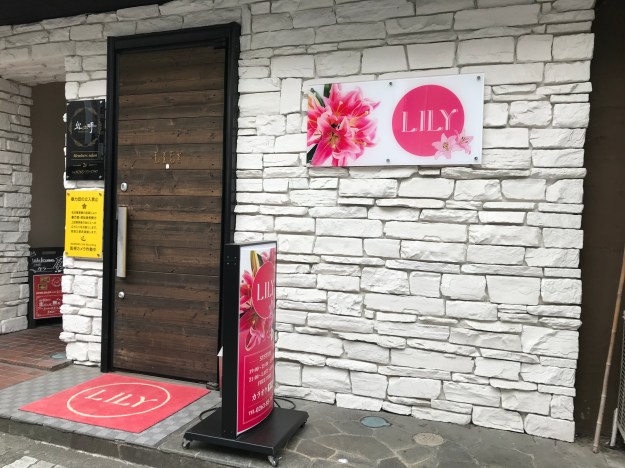
So what’s up with the plethora of “girlfriend” and “boyfriend” bars, where you pay by the hour for conversation,and locales with “unlimited drinks for two hours”, as advertised in restaurants?

Girlfriend Bar

Sign in Restaurant

I decided to do a little research.

I really wanted to visit a Girlfriend bar and act like I entered by mistake- but in this one instance Gerald would not oblige me- saying it might be considered a lack of etiquette.

Japan has a population of about 125 million and it is decreasing steadily each year because fewer couples are having children. Although it’s a booming economy, in contrast to Western countries where immigrants take the low paying jobs, there is limited immigration. This is mostly due to the insularity of the society and the difficulty of learning the language. I am struck by how many old people, especially women, are working in the shops because of a labor shortage.

The society is very regimented, which I guess accounts for the smoothness of how things run. However, they have the sixth highest suicide rate in the world. and it is the leading cause of death for women 15-34 years old. So sad.

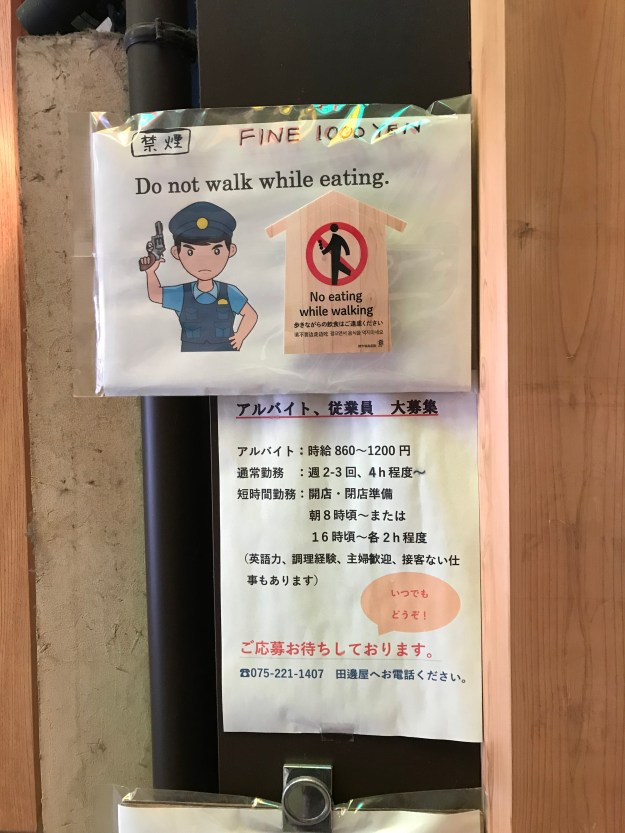
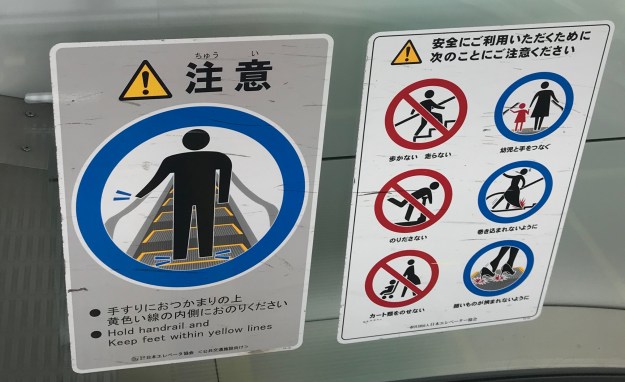
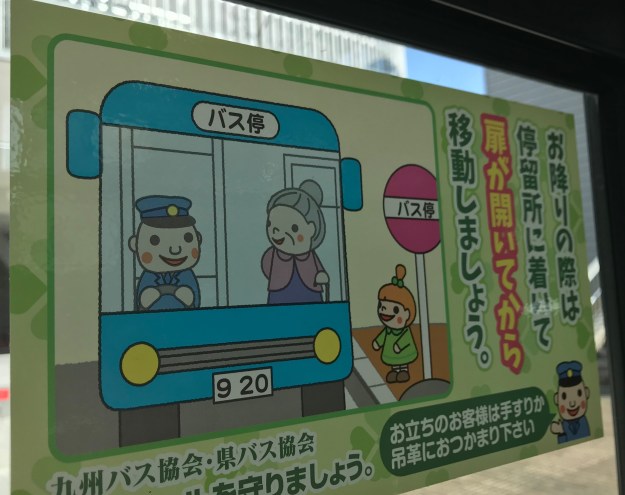
Working long hours leaves little time for socializing and many young people live with their parents. Signs are posted on the street, on buses, in trains, and in public bathrooms, telling you what you can and cannot do.

Sign on the sidewalk

Instructions How to behave in an onsen( public bath)

On the street

Eating while walking is a serious offense as seen by the police with his pistol ready!

On the escalator

On the bus let old people in first

In terms of women’s rights and equality they have a long way to go. There is a 25% pay gap for women and Japan ranks the worst of the G 7 countries in gender equality.

The graciousness and helpfulness of people, even in casual encounters, is touching. The old lady at the shop where Gerald and I stopped for matcha ice cream each day, served us tea and gave me a gift of a regional specialty. When I asked directions in a store and mentioned it was my birthday, the salesgirl presented me with a bag of origami cranes.

My frustration comes from the feeling that I don’t know any more about the culture than I did after my first trip. My joy in travel comes from immersion, and after multiple trips to India and Cambodia, each time I returned with a little more insight about the people. So although I am having a great time, and would happily return,I feel more like an observer than a true traveler. Part of this is due to the fact that few Japanese will venture to speak English although they learn it in school and so my personal interactions are very limited.

The veil of mystery of Japan has not been lifted and remains an elusive fascination, but I must confess to the joy of discovering yet another toilet “option”. Our ryokan with shared toilet,in a small village, surprised me with a new one which I tried without hesitancy. An air sprayer. And I finally figured out why the figures displayed above the spray options are red and blue. The former spray the female parts and the latter is for males.

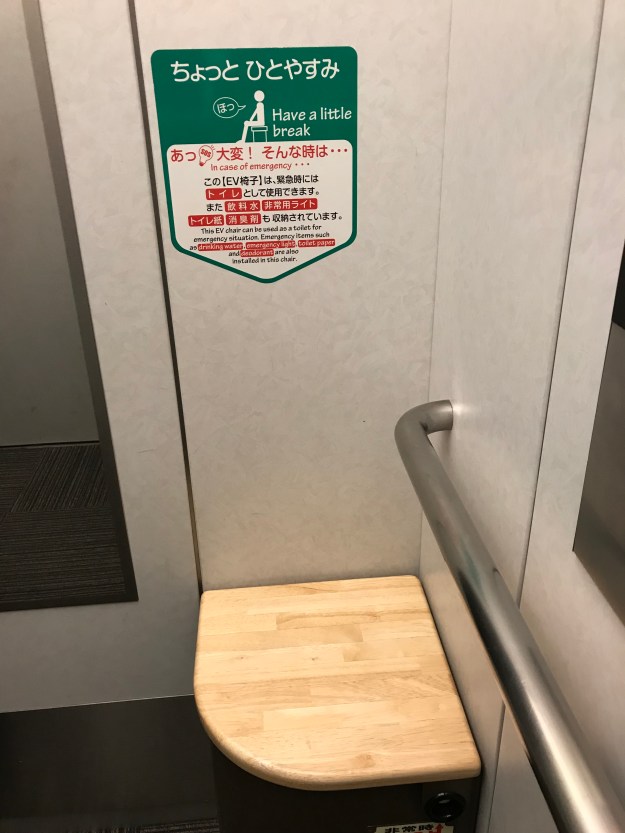
But perhaps the funniest one yet has to be the “Emergency Toilet” in the elevator of our hotel in Matsumoto.

Lost in Translation

No seat reservation.

Just the words a traveler wants to hear. Never. Gerald had arranged a stay in a beautiful Onsen Resort described in the Lonely Planet as “a romantic ryokan with private attached onsen whose exquisite attention to detail makes this a place to experience Japanese hospitality”. We knew it was in a remote location and would be a full days journey with many changes of train and bus, but it was a special treat for my birthday, and we were prepared for the long haul. Or so we thought.

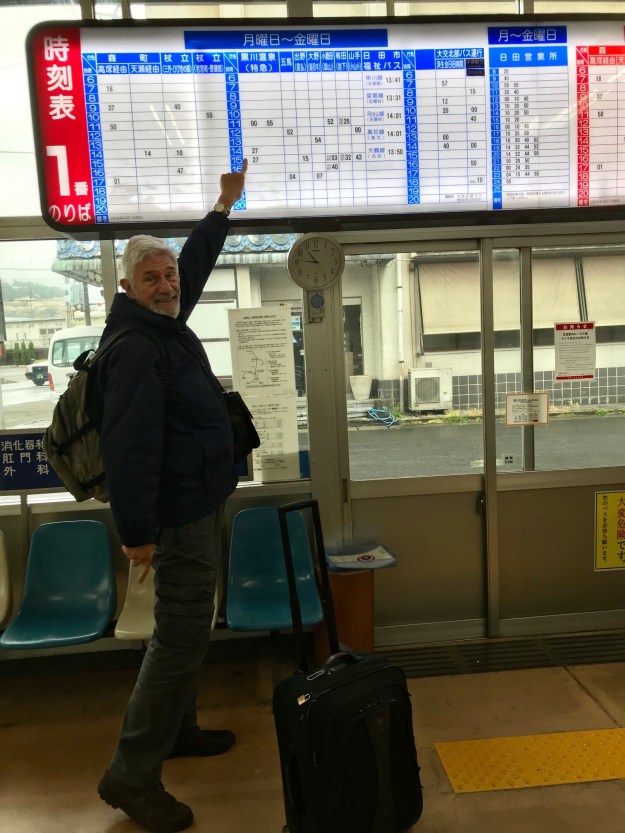
The ryokan manager recommended we spend the two hour wait time at the Hita train station, sightseeing and having lunch before catching the bus for the final leg of the journey.

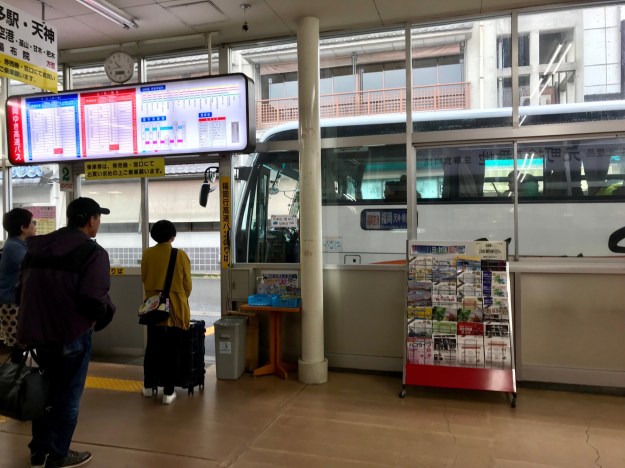
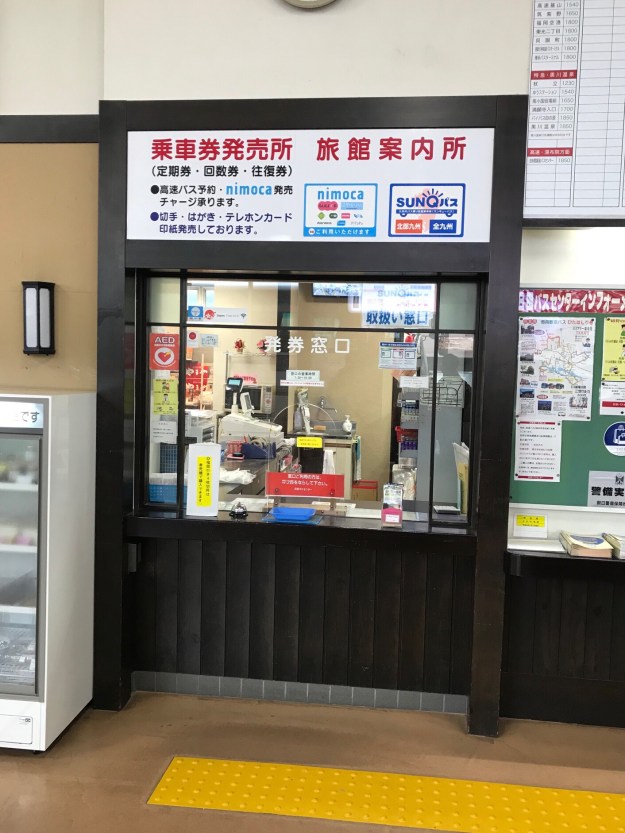
First up, store the luggage in a locker either at the train station or the adjacent bus station so we would be unencumbered by shlepping our bags around. No Go. All lockers full except for some tiny ones which would accommodate only a backpack. OK, Plan B, go to the Bus Station to get tickets for the ride to Kurakawa Onsen town and just hang out until the bus arrives. Here’s where we really hit a snag. You would think buying a bus ticket would be a simple affair. Nope. What the ryokan manager neglected to say was that no one spoke or understood English. Two bus tickets to Kurakawa Onsen”- enunciates Gerald,who has learned a fair amount of Japanese.

No seat reservation.

Panic sets in. The ticket agent shakes her head and indicates through gestures we can not buy a ticket. After pleading and insisting on getting on the bus, the best we can manage is the promise that if there is a seat available when the bus arrives we can get on. We try to buy a ticket for the next bus, same response.

No seat reservation.

It seems strange that all the busses are already full. We remain dumbfounded.The ticket agent can feel our pain and quickly retrieves a “communication device” which translates her Japanese into somewhat recognizable English. We ask her to call the Ryokan for us in the hope they can help us. Back and forth. “Wait bus”. “I don’t understand you, will someone come and get us?'” “Seat on bus”. “What?”

Somewhat exasperated and exhausted at this point, we decide to just wait until the bus arrives and see what happens. A small restaurant at the station is filled with older Japanese women chattering and eating udon. This seems like a good way to destress. All eyes are on us as we enter. Other than saying Udon” we don’t know what to order. No pictures for a menu. A brainstorm- “Tempura?” A knowing smile. Jackpot.

The bus arrives and there are plenty of empty seats. What was the problem? You cannot make a seat reservation less than 24 hours in advance. Only standby!

We bought a ticket for our return trip, and paid more for it than the ride without a ticket. Go figure.

Right then I decided to look for a Japanese translation app for my phone, et voila! Now I can ask whatever I want and people are taken by surprise when a voice comes out of my phone in Japanese.

What’s in a Toto/How the Mighty Have Fallen

A Toto you say? No, not Dorothy’s dog in The Wizard of Oz. It’s a brand of state of the art toilet, ranging from the basic model to super deluxe. Since meeting a woman in India who works for an organization called “Give a Shit”, I’ve had an obsession with toilet customs. In Osaka’s Intercontinental Hotel I observed three new features-“deodorizer” (although this option was available only in our master bathroom,not the guest one), “soft spray“, and “bidet. “The seat was pre warmed and when you got up after your business was finished, it flushed all on it’s own.

On my super heated seat, I pressed “bidet“. The pressure was a bit extreme and in my haste to end this unpleasant burst of sharp pellets hitting my female parts I started pushing all the buttons. When I abruptly stood up the water went flying. Finally I saw the STOP button. But too late. I had already soaked my underwear and jeans.
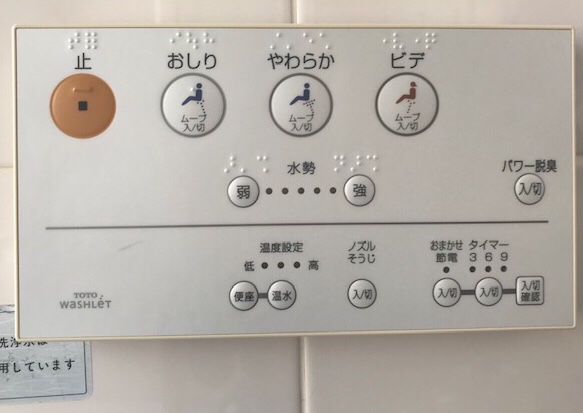
The Hilton in Fukuoka, despite being Asia’s largest Hilton,and designed by the renowned architect Cesar Pelli, disappointed in terms of toilet amenities. Where was the “music” (not really music, but flushing sounds to mask embarrassing noises emanating from your lower parts) , the “deodorizer” or at least spray options? There was only a choice of three and they were written in Japanese. The risk was too great of starting another Old Faithful.

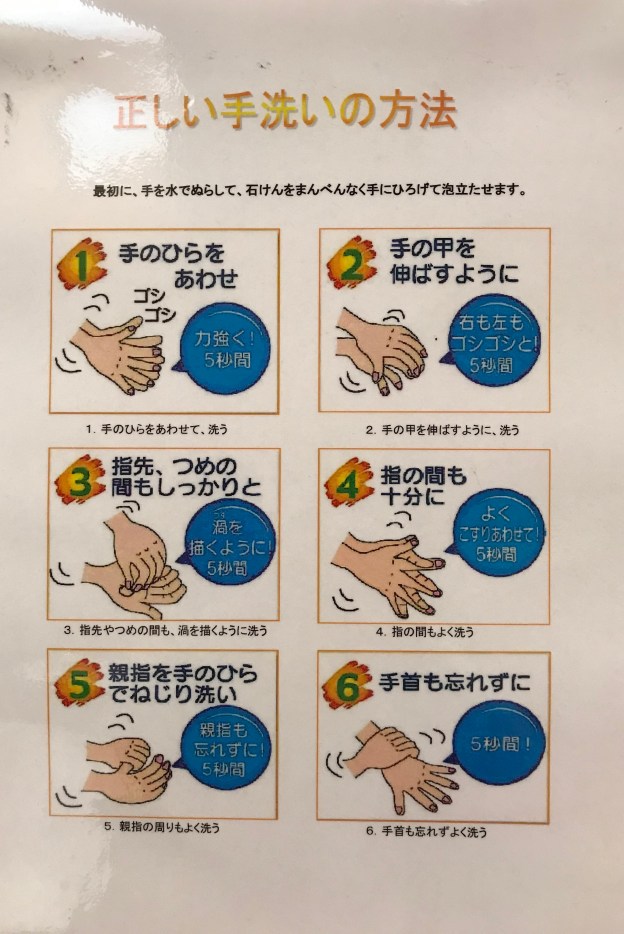
Just as I was feeling disheartened, I entered the toilets in the new, super modern National Museum of Kyushu, designed by one of Japan’s most famous architects. I hit the jackpot. Not only were all options clearly shown and explained with pictures, in English no less, there was also a detailed explanation of the six steps to wash your hands. After so many years traveling this earth and still so much to learn.

Meanwhile, Gerald was becoming alarmed when I didn’t return for quite a while, but I was having too much fun.

I hear from informed sources that the Japanese are working on a conveyor belt option which offers sushi, matcha tea or ice cream while sitting on the pot.

Guest of the Day/Take Me Out To The Ballgame

Dear Ms Huth,

Warm greetings from the Hilton Fukuoka Seahawk. Congratulations! We are thrilled to inform you that you are being chosen as “The Guest of the Day”. You will enjoy all the privileges of Executive Members:

Unlimited access to the Executive Lounge

Breakfast 6:30-10:00

All Days snacks and drinks 6:30-21:00

Cocktail Hour with Refreshments 5:00-7:00

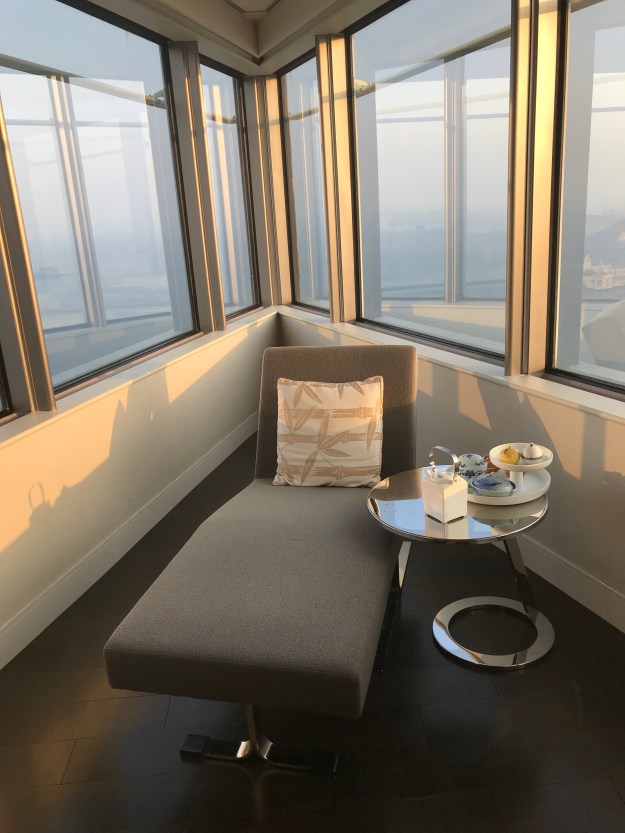
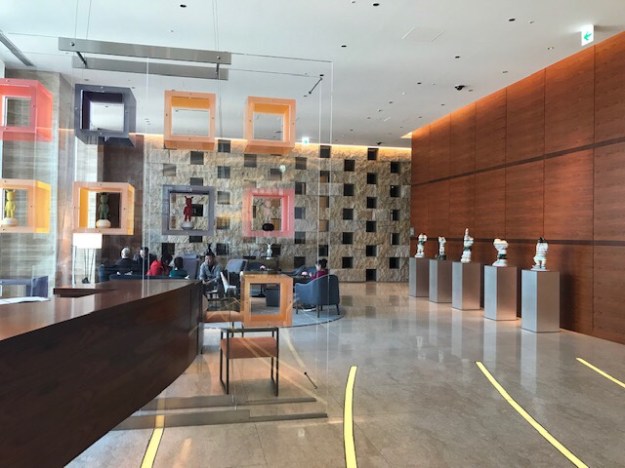
Hilton Seahawk in Fukuoka has more than one thousand rooms and is on the Sea of Japan. Cesar Pelli, the architect, drew his inspiration from giant cruise liners, and created a lobby of soaring, glass covered space. Our panoramic suite on the 32nd floor had a view of the sea on three sides and came to a V, giving you the impression that you were jutting out into the water. Initially we had been a bit disappointed by the city of Fukuoka, but now we were thrilled.

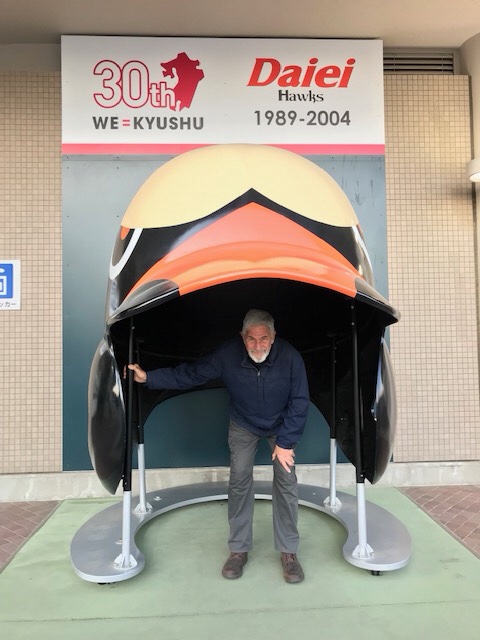
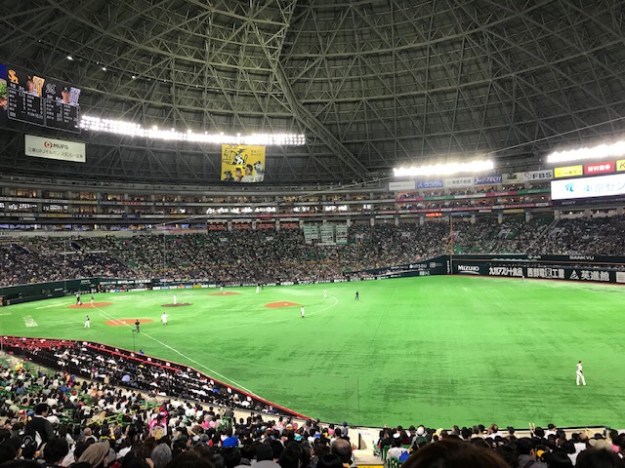
A Hawaiian couple joined us during Happy Hour in the Executive lounge on the first night. They come regularly just to see the local baseball team play. Our hotel was conveniently connected to the Fukuoka Superdome where the baseball team, The SoftBank Hawks play, and there were home games all weekend..

It’s so much more fun watching games here, the whole family comes together and makes a great party out of it. Who cares if they’re a great team or not- everyone has a lot of fun. You really should go. And don’t miss the seventh inning balloon event.

Now I have absolutely no interest in baseball, but I do know that Japanese go crazy about it, and I love delving into local culture when I travel. So after spending most of the day visiting Daizafu, a Shinto pilgrimage town, we decided it was time to get into the essence of contemporary Japan and get tickets for the game. I was super excited.

The crowds were pouring into the Superdome, wearing team jerseys,hats,pins- eating sushi from Bento boxes instead of hot dogs and popcorn.

Yei pun pun pun. Pun pun.

The chanting was deafening in the stadium. Alex Vargas from Cuba, the next batter up came onto the field, and salsa music was blaring from the loudspeakers. Each player has a fan club and they compose a song for them which is played and sung by the fans whenever they come to bat.

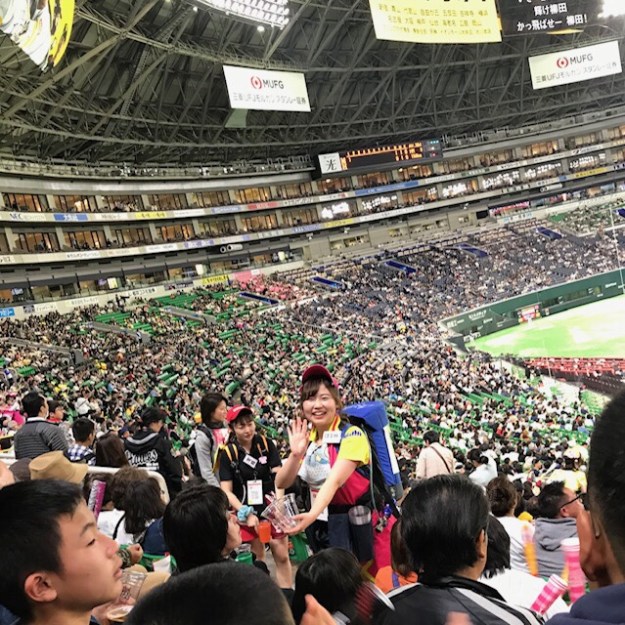
Young women,dressed as bunnies, or other odd costumes walked up and down the aisles with backpacks and spray hoses, selling beer from draft, or gin and tonics. They had perky smiles and didn’t seem to tire either of hauling that load around or trudging up and down the steps. The stadium was filled to capacity and there were as many women as men and a good number of seniors. Everyone got into the mood. Two sections were reserved for the fans of each team, with Taiko drummers, musicians and a crowd “conductor”. They would stand and wave giant flags and yell shouts of support. There was constant activity between the chanting, flag waving, and music playing each time a new batter was up. As much fun as all this was, I was getting bored and by the fifth inning was ready to leave. But I had to hold out for the balloons. I saw the girls selling packets of white and yellow balloons.

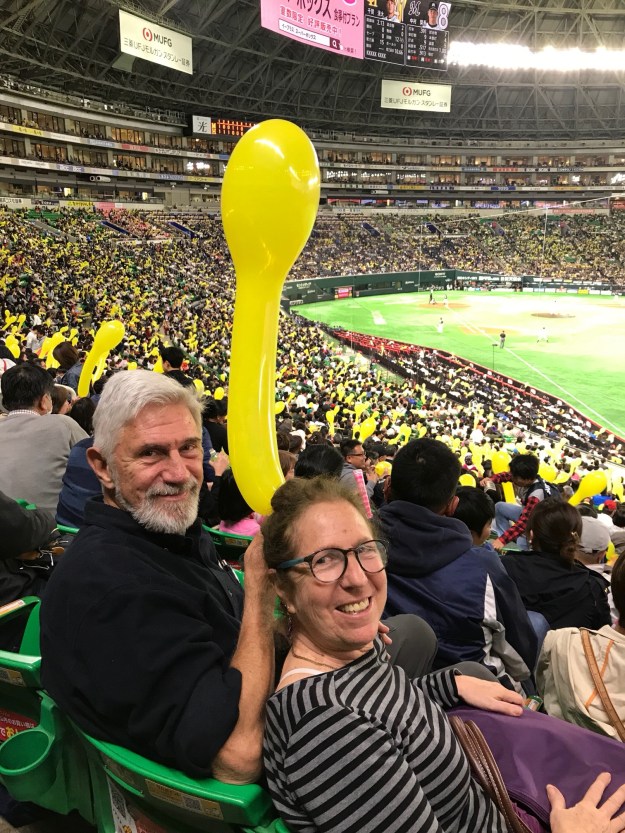
Maisie told me that in the middle of the seventh inning the fans blow up balloons, white if the team is winning and yellow if not, and let them loose in the stadium, but I don’t see many people with balloons.

Gerald had gotten the scoop from the Hawaiian wife about what happens during the game, but he thought it wasn’t going to happen. The man next to me gave Gerald and I a balloon to blow up and we started feeling the crowd getting ready. Instead of the traditional seventh inning stretch, which occurs at American baseball games, thousands of balloons were set free and the crowd went wild. Cheerleaders descended onto the field, along with giant mascots, and they encouraged the fans to cheer the team onto victory. But alas, it was not to be and the home team lost in the last inning.

I think the most impressive thing about the game was the family atmosphere. Despite the sale of alcohol, there was no yelling, aggressiveness or unseemly behavior. After all, it’s just a game, and the idea is to have fun, and I think that is something that gets forgotten back home.

Off We Go

I know. It’s a free flight and I’m going to Japan on vacation for three weeks.  How can I whine about anything? It’s in my nature,my ethnic background and almost a given, even for an ex-New Yorker to kvetch just a little bit.
First, the good stuff.  Korean Air is fabulous.  Never having flown them before, I was of course dubious. Seats were roomy, even G had legroom and we were only in Economy. “Bibimbap or Chicken with Lice” the flight attendant, dressed in a light turquoise satin blouse and white polyester pencil skirt, asked sweetly.  A starched thin white bow jutted out from her perfectly coiffed and sprayed hair. I wondered to myself if the points on the bow might be used as a weapon in case of terrorists or unruly guests. But I digress.

Both the row in front of us and the row in back of us had miniature choir members-those tiny little creatures that are a source of delight to grandparents, but a horror to airline passengers-BABIES. Trying hard not to be negative I gave them the benefit of the doubt, but after a half an hour into the 13 hour flight the recital commenced. When the screeching first started I thought it was a cat in a carrier. But then it was joined by crying from a second source close by. As if a signal for the musical theater piece to begin, the little girl in back of me started to run around squealing and pulling my hair surreptitiously. Within an instant the flight attendants came around handing out earplugs and trying to mollify the little ones. I will admit there was a unison in the voices as if carefully orchestrated,when the fourth little one chimed in. Defeated, I looked at the choice of movies, and was delighted to see all the Oscar nominated ones available. After watching four that I had missed in the theaters, I was mollified sufficiently to calm down.

Arriving at the Intercontinental Hotel in Osaka

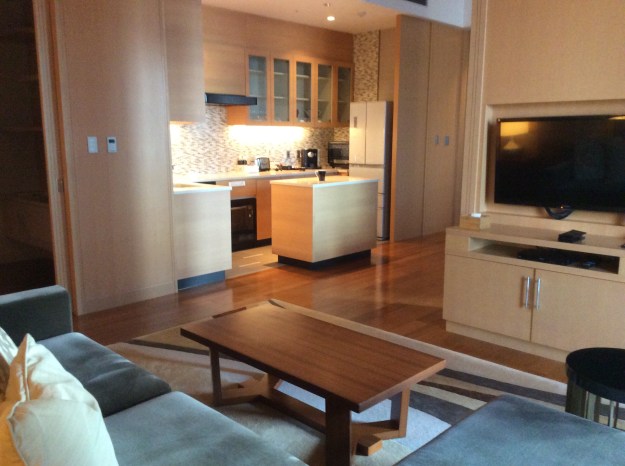
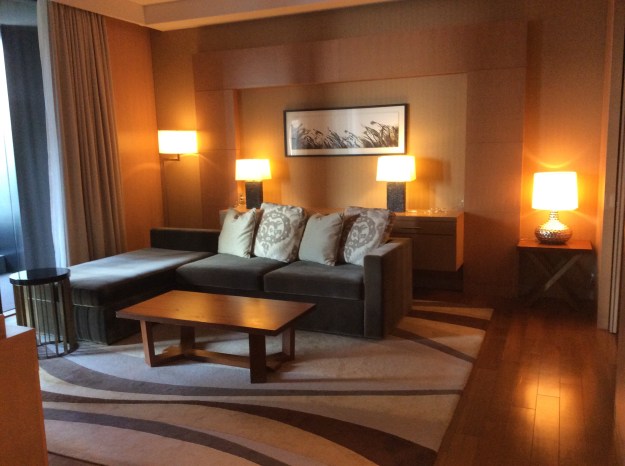
we were informed that they upgraded us to a suite for my birthday. Easily as big as my house, it is on the top floor (32nd) has two bedrooms, two bathrooms, an office, Living Room, full kitchen, Laundry Room and a terrace the full length of the suite. I’m going to the onsen later.

Life is good in the Golden Zone.

Amy’s Story

I was born in Calcutta and adopted at three years old by a single woman from Utah. I have no memories of India at all and when I applied for a visa to come here was surprised to learn that I had to first renounce my Indian citizenship. I never knew I was still an Indian citizen.

img_0052

Amy has a big,beautiful infectious smile, with eyes that invite you to engage. When I asked if I could interview her she readily agreed. I’ve been curious about the motivation for so many young Europeans and Americans of Gujarati origin to come to Ahmedabad to live or work at Manav Sadhna for extended periods of time. But Amy’s story is a bit different because she grew up in the non-Indian, very white Mormon culture of Salt Lake City.

My mother was a non practicing Mormon, as were her parents. They enjoyed a lifestyle of cocktail parties and country clubs. My mom felt that she shouldn’t have to be married to have a child and was liberal minded. She picked me out from an orphanage photo.


Amy’s upbringing was filled with the love of her mother and grandparents, and when asked if she experienced any racism growing up, she replied simply “No”. I was surprised and pushed further. ” Maybe my mom sheltered me from that. When I was a junior in High School someone called me a “Nigger”. I told them I was Indian.” Amy’s mother exposed her to Indian culture as a young child and had a mural painted in her bedroom of Amy riding an elephant amidst landscape scenes of India. Four years later her mother asked if she would like to have a brother or sister, and soon after a boy from Bulgaria was added to the family.

Unfortunately this idyllic childhood ended with the untimely death of her beloved mother when Amy was twelve. Her mother’s niece and husband, who were childless, came to live and care for the two motherless children. Trying to cope with the loss of her support system Amy turned to the Mormon church. The idea of being “sealed”with her mother for life ( a Mormon ritual)was very comforting .

Sealing is the everlasting covenant from God to families that we will always be together eternally. All married couples are sealed to each other with their children being born into the covenant, but when a couple adopt a child, they take the child with them to the Temple for a sealing ceremony..

She had been spending almost all her free time with the local Bishops family as well as other practicing Mormons, a way of escaping her less than happy home-life. Becoming active in the church was a natural consequence. Although her family were “inactive” Mormons, Amy was baptized at eight according to Mormon practice.

For the next twenty years Amy was the ideal Mormon. She didn’t drink, smoke, practiced purity in thought and action and attended Church regularly. She never questioned any of the tenets of the religion. All that changed in 2008.

Amy’s brother had a much more difficult time adjusting to his new home, having lived with his mother only a few years before she died. He turned to drugs and alcohol and had a tumultuous youth. They lost touch for many years. When one day he called and said he was clean and sober, and had found a homosexual lover, she was delighted for him. The church up until this point had been vague on their position on homosexuality, and left the handling of the issue to local leaders. Meanwhile, Amy had been experiencing doubts about her own sexuality and began seeing a therapist. The legalization of same sex marriage in California in 2008 made her curious to learn more about homosexuality.

In 2015 when the Church came out with their official position on same-sex marriage, Amy was at this point identifying as a lesbian.The handbook stated that children of same-sex marriage could not be blessed or baptized until age 18 and at that point had to renounce their parents in order to join the church. The policy also states that those in same sex marriages would be considered apostates, a category that includes murderers and rapists.This was the final straw. It was time to leave.

I strongly believe in God because of my adoption story and other spiritual experiences I’ve had throughout my life. I also believe I will be forever with my mom and grandparents with or without the Church’s teachings. If the LDS Church reversed their policies on homosexuality I’d be an openly gay member. I still believe in the tenets of the church but I am also learning to have more faith in the universe, that I don’t need to worship in a church or temple. I can be close to God anywhere.

I’ve always known that my life was a miracle and lived it as such.


THE TOILET GARDEN/GANDHI’S DREAM

“It is health that is wealth not pieces of gold and silver.”-Gandhi

I wrote this four years ago but noticed that it was not published and had “disappeared”. For those that haven’t seen it before, it was this visit that inspired us to come back and work at Manav Sadhna.

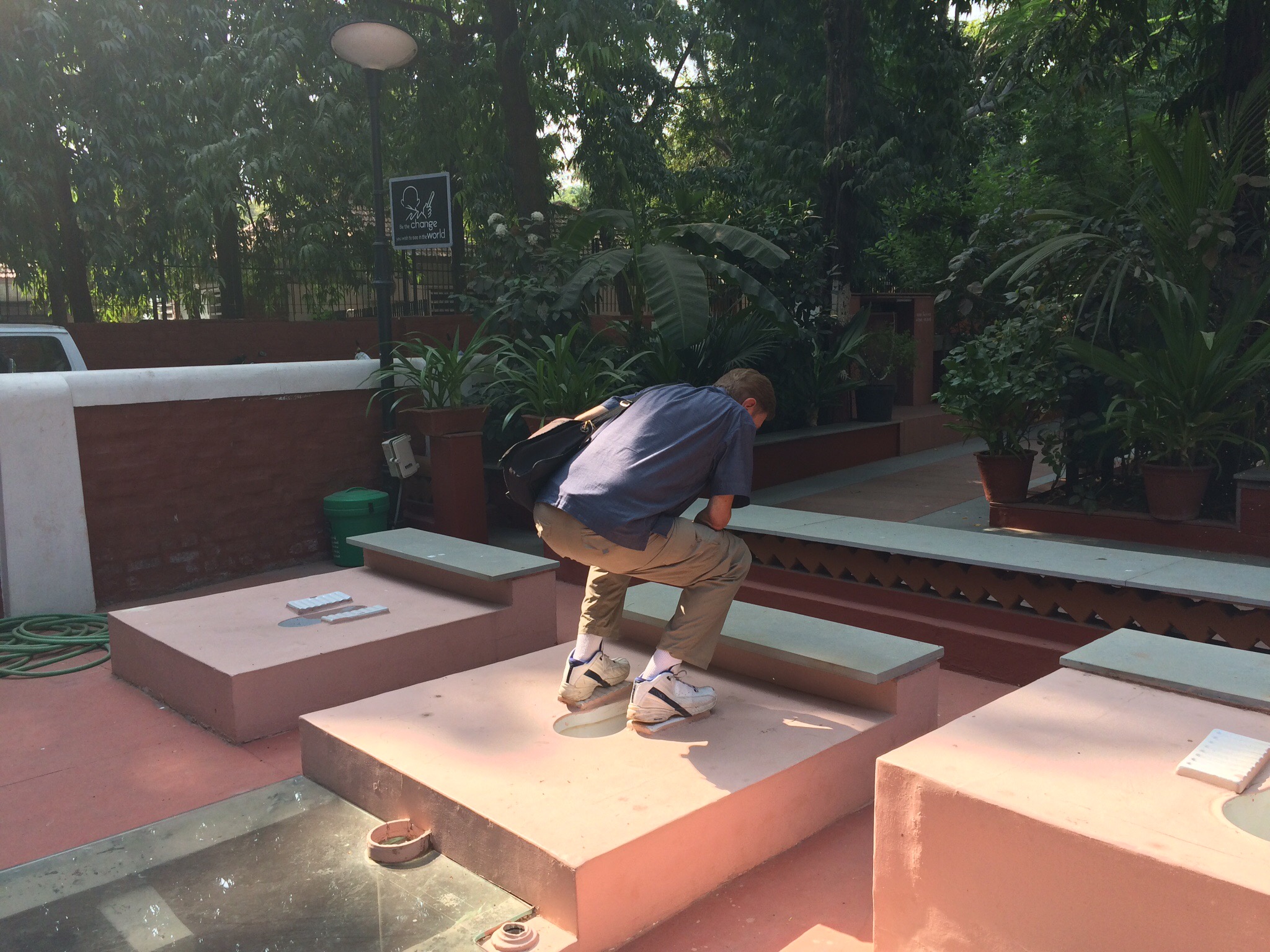
More people in India have cell phones than toilets. The Toilet Garden was listed as #61 in the guidebook “101 Things to Do in Ahmedabad “, under the heading “Flushing Diversions“. Yes, there is one, I am not joking.  During our family visit to Delhi we didn’t have time to visit the Toilet Museum so we thought we would make up for this lapse.

It is located inside the Environmental Sanitation Institute compound on the grounds of Gandhi’s former ashram. Founded in 1955 by Ishwarbai Patel, better known as “Mr. Toilet”, there are thirteen varieties of toilets displayed in a lovely garden.

Gandhi was horrified that one caste of people, the Harijans, formerly known as the “Untouchables”, were responsible for going around to the villages and collecting the waste. “Mr Toilet” distributed more than 30,000 toilets, and now 55% of the population have sanitary facilities , up from the previous low number of 8%. The garden was built in honor of this great accomplishment.

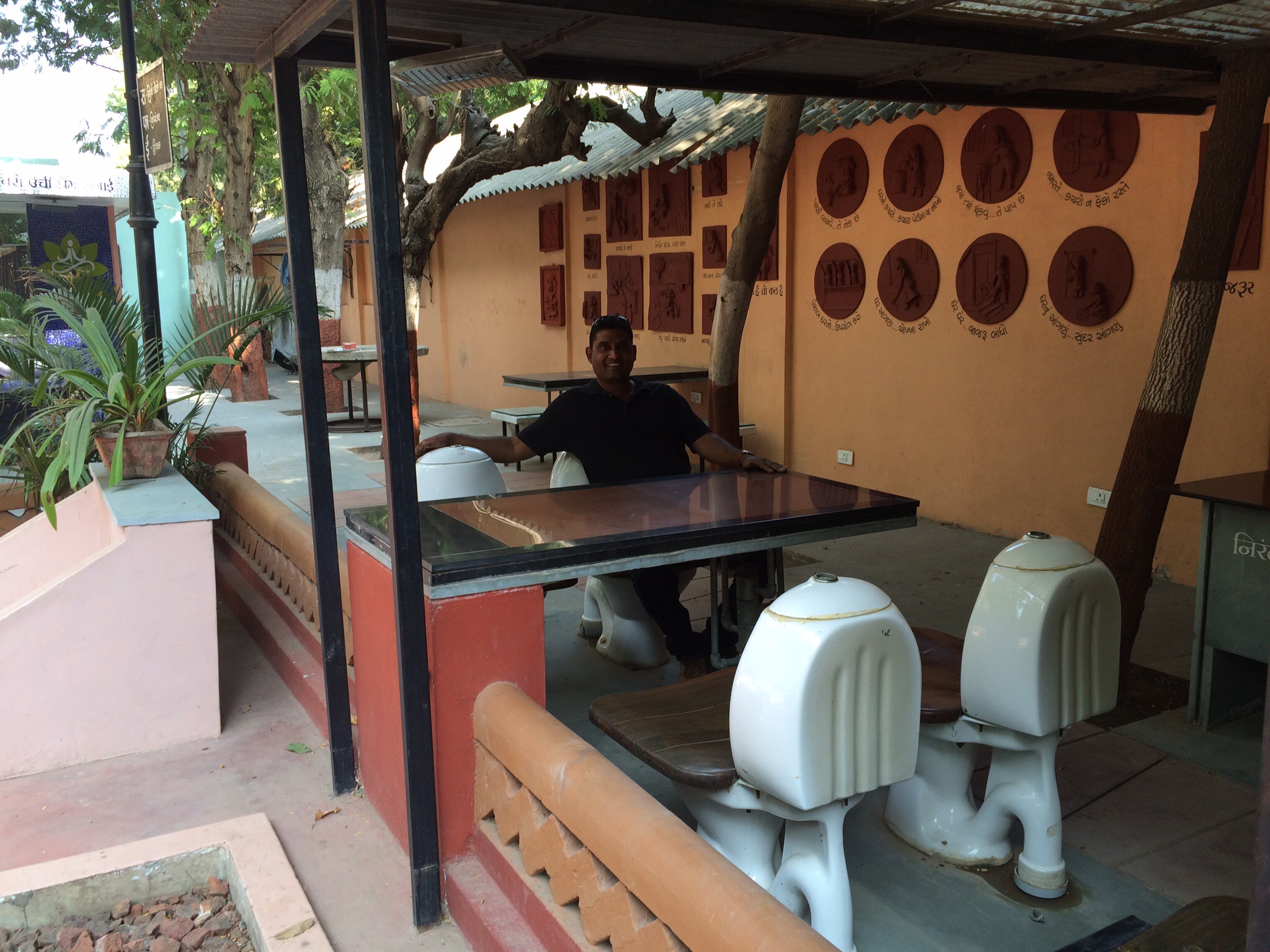
Gerald, of course posed in front of the “VIP TOILET” as well as one of the squatters.  I joked that it would be nice to have a  cafe with toilets as seats, and sure enough there was one. We sat down, had a chai, and used our toilet paper as napkins.

A figure of Gandhi was carved into a tree stump nearby and we went next door to visit his Ashram.

Manav Sadhna, an NGO that works with improving the lives of women and children in the neighboring slums has its headquarters here. Forty thousand women scrounge for garbage to sell to recyclers and these women play a vital role in the sanitation of Ahmedabad. This center is a safe haven for children to learn a skill, get basic health care and experience love and compassion. There are also various programs for the elderly,computer training , recycling and finance.  More than 9,000 people in the community are served.

What started as a lark, ended up as a fascinating and informative look at another side of India..

IMG_1631.JPGIMG_1628.JPGIMG_1626.JPG