Tag Archives: Haridwar

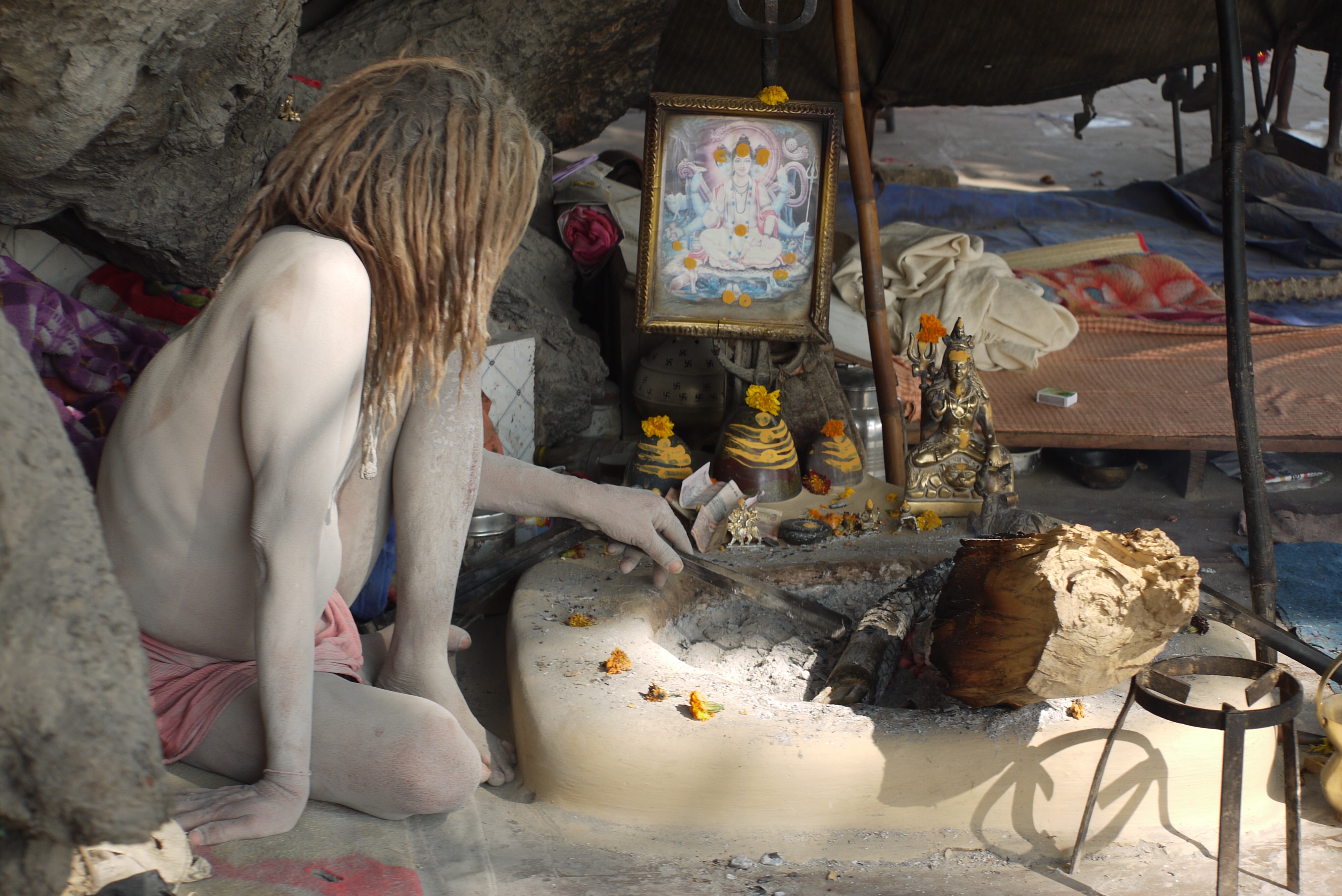
Sadhus on Parade


sadhu covered in ashes

Rishikesh exploded onto the Western scene when George Harrison and the Beatles came here to gain enlightenment at the Maharishi Mahesh Yogi’s ashram in 1968.  We know at the outset that it will be more tourist oriented than Haridwar,but our first impression is one of extreme disappointment. On the narrow, unpaved lanes on the way to our guest house we pass rubble, varying sized mounds of cow dung and dog poop.

After dropping our bags in the room,we head out to explore the town. Sandwiched between posters advertising ” emotional block treatment” and ” Bliss of Breath”, are the “German Bakery” shops. (Dating from the hippie days in Katmandhu, they specialiize in western favorites such as chocolate cake and apple pie) Advertisements for yoga classes, yoga teacher training courses, meditation,Ayurveda and esoteric treatments are papered on entrances,walls and poles. Too many Westerners here for my taste.  I want Sadhus! Sadhus are a uniquely Indian phenomenon. Men, often highly successful,renounce their worldy possessions and wander.They depend on the generosity of others to survive , and are considered holy men.

We beat a hasty retreat to the rooftop terrace of our guesthouse overlooking the Ganges, with a spectacular view of the mountains.


Today is another day and a completely different picture emerges. On our way to eat breakfast down the hill from our guesthouse ,we pass one of the many ashrams. Big cars are parked inside and a beehive of activity is going on. Turbaned sadhus clothed in saffron colored robes are mingling with devotees dressed in white. I look for someone who might speak English and ask what is going on. “Guru happy birthday.  Rich people bring donations. After Satsang everyone come eat.”

After eating  breakfast my mood changes. We wander through town, passing Kashmiri souvenir shops selling pashminas and jewelry,and  more German Bakery signs.  Further along, the scene becomes more Indian- stalls frying spicy aloo tiki (mashed potato patties), chai wallahs (tea sellers), and women selling a kind of fruit like a guava.

As we walk back, I notice that all the sadhus coming in our direction are carrying big bundles and packages. First I joke that it must be sadhu shopping day, and then it hits me. They must be giving out food at the “birthday guru’s ashram”.  I almost trip over myself trying to get there before I miss the action.

Crossing the footbridge over the Ganges, my eyes pop out of my head. I can’t believe what I am seeing. Hundreds of sadhus are lined up against the wall leading to the entrance of the ashram. Mixed in among them are spaced out beggars- smoking hashish through a pipe.


Hauling the goodies


I can hardly contain my excitement as I inch my way through the crowd.  The grizzled faces and tattered clothing tell the story of a hard life. These men(and the rare woman) are less fortunate than the ones I saw with the packages on the way here, and they are relegated to the back of the line.  I would love to photograph each medieval face- but it’s not possible. The suffering is too raw and personal. The ashram has a security guard with a stick to control the crowd should things get out of hand.  If I give just one person some money there would be a riot.

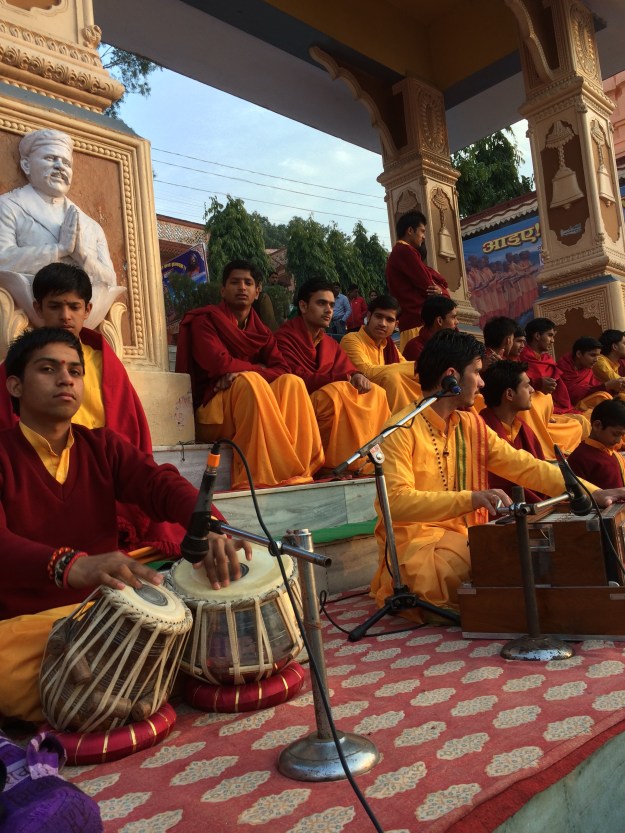
Every evening on the Ganges there is a ceremony called Ganga Aarti, to bless the sacred river.  We were warned that the one here in Rishikesh was small and geared to foreign tourists and western ashram people-but decide to go anyway. Organized by Pramath Niketan Ashram, the service is conducted by the novices, and like the one in Haridwar, is intimate and moving.  The faces of the young men and boys, some in deep meditation and prayer create a strong sense of community with the assembled group.

As we walk back to the guest house when it ends, we can see the flickering lights and hear the chanting of other Ganga Arti that are going on across the other side of the river.

Another day in Incredible India.
IMG_5841


Om Hari Om/”Can You Hear Me Now?”

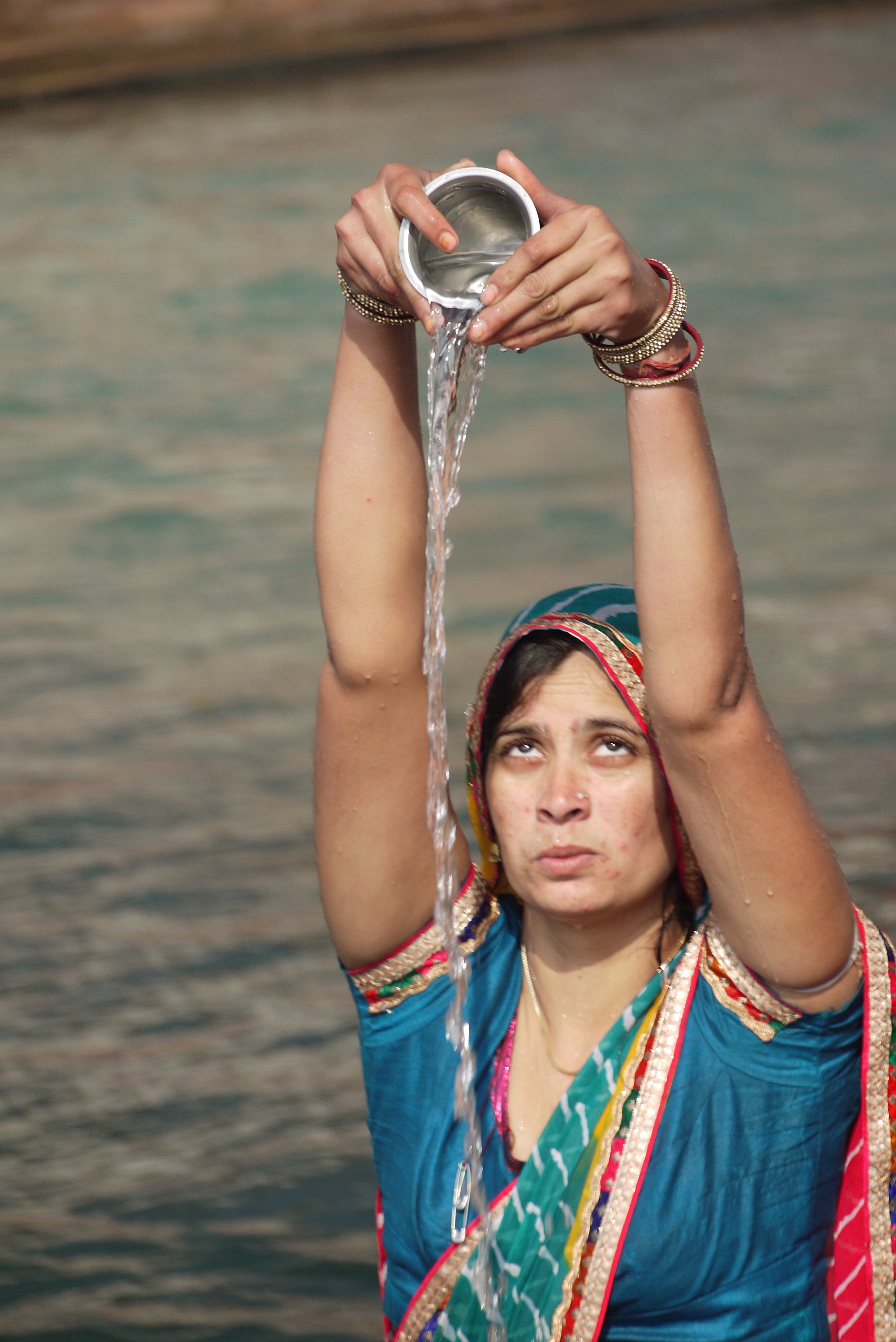
Pouring the holy Ganges water and doing puja

Ritual bathing in the Ganges

Haridwar is a  place that brings out the best that India has to offer. Peaceful and spiritual are the words that come to mind. It is a holy city situated in the foothills of the Garhwal  Himalaya and close to the source of the Ganges River. The rushing green waters tumble out of the mountains,carrying India’s life source through to Varanasi towards the Bay of Bengal .Pilgrims come to place the ashes of their loved ones in the river,or to bathe in the hallowed waters of Maa Ganga. Mother India is a loud country, from Bollywood music to loudspeakers chanting vedas and mantras in shrines.Other than ashrams, which  can also be quite noisy, there are few places where you can walk the streets and hear yourself think. I’ve been to Varanasi, and since it is a cremation site as well as the holiest city in India,the intensity of that place can be overwhelming. Here I can inhale slowly and breathe freely.

This is not a tourist town and is geared toward Hindus fulfilling their religious obligations.  When you see Indians traveling, they are always in groups, because they travel with their extended family- parents, children, and  both sets of grandparents . Privacy is an unheard of concept here, and certainly not one to be desired.To be alone translates to loneliness and one is pitied for not having friends and family. The first question asked of Westerners is “Are you married?” and if not, “Why not?”Men stroll the streets arm in arm, without the contraints of seeming unmanly. I feel that this strong connectedness is what gives people a feeling of optimism and joy. That combined with their belief in reincarnation-that the next life can be free of this life’s challenges if one has accumulated enough good Karma.

Our hotel was formerly a private home, or haveli, built in 1916 by a wealthy Hindu family.We are greeted with a necklace of tulsi wood and a list of the included activites at the hotel.

Havan at Haveli’s Ghat 8:00 am.     ( prayer service with a pandit, or priest)

Astrologer/Palmist for consultation  3:30 pm.

Evening Tea                           4:30 pm.   ( a chance to socialize with the other Hotel guests)

Evening Aarti at Haveli Ghat.    4:45 pm ( short prayer service with lighted candleabras)

Escorted Evening Aarti at Har ki Pauri. 5:00 pm

Bhajan Sandhya. 7:30-8:30 pm.         ( Devotional music and chanting with tabla and    harmonium)

There is a mix of guests staying at the hotel-Indians, non-resident Indians, and foreigners. Lisa comes from N. Carolina and is here to scatter the ashes of her deceased husband who died suddenly of a heart attack at the age of fifty,and to perform the traditional funeral rites he requested. We notice her sitting alone in a corner and invite her to join us at Tea Time.  A Gujarati couple from Ahmedabad , with their two grown sons are  sharing the table with us.  They are also here to scatter ashes and do the ritual bathing in the Ganges. The elder son, 26 years old, is chewing a big wad of paan (red beetle nut)  and his teeth and lips are stained a disgusting red.  I can’t bear looking at him so I concentrate my attention on the parents. At the morning ritual the mother guided us along and showed us when we should take the holy water, wash our hands,inhale the smoke, and in general try to follow the prescribed rituals.

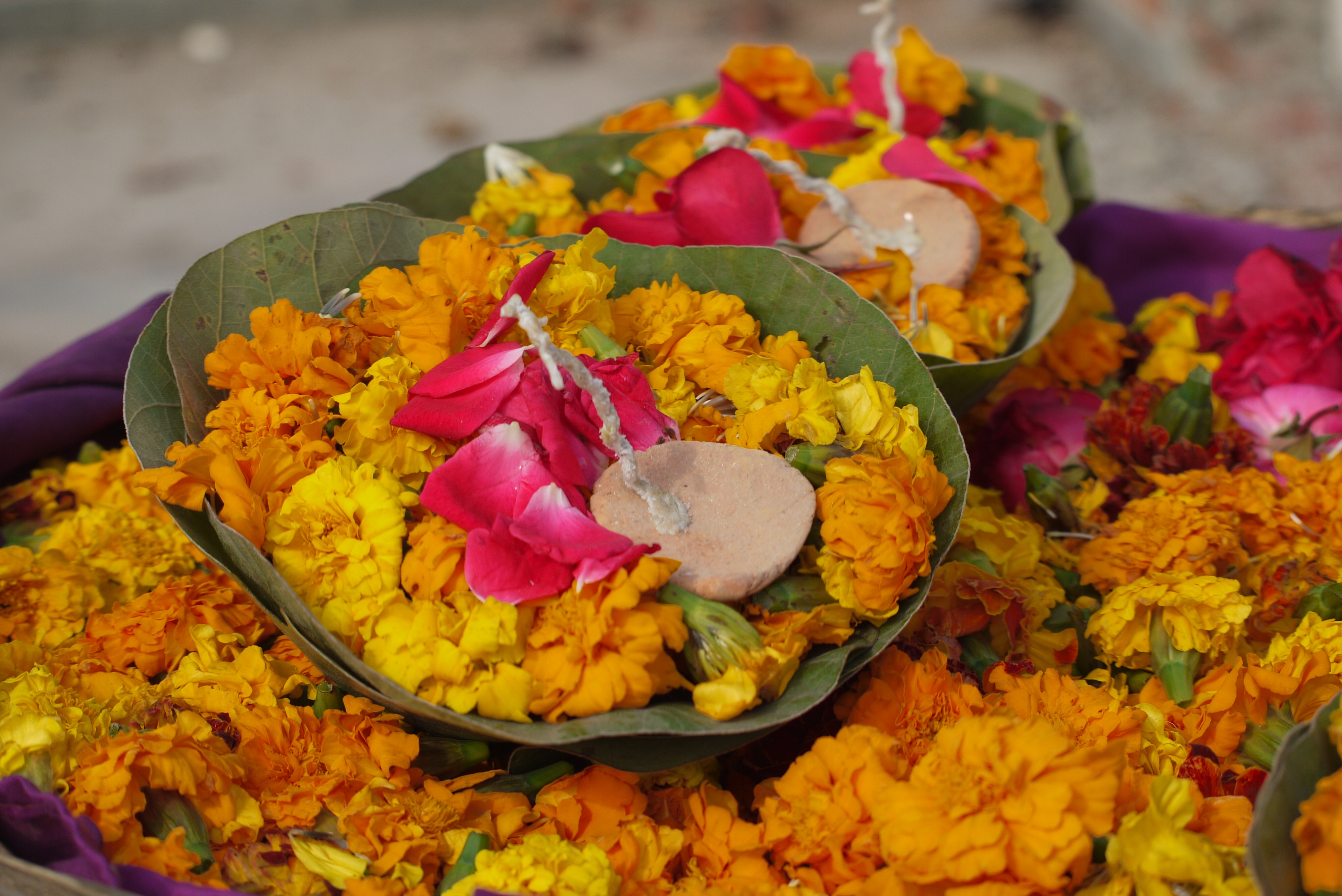
At 5:00 we gather in the lobby in front of the reception desk to wait for the Brahmin who will escort us to the evening Ganga Arti.  Chanting, fire, pouring of milk in the Ganges, bells clanging- all of this is part of this  daily evening ritual which takes place on innumerable rows of steps, known as ghats,  on the banks of the Ganges. All to sing praises of Maa Ganga. Lisa, Gerald and I, the Amdavadi family,  an Indian family living in Minnesota with their two grown sons from Chicago and New Jersey, and last but certainly not least, the Brazilian man,Claudio and his twelve year old daughter, Gabriele,  are patiently waiting in the lobby the hotel. Gabriele looks like an 18 year old super model and is spinning around on her new Hoverboard that she bought in Delhi. At first it seems an unwieldy group, as we are more used to doing things on our own. However, when we arrive ,we are escorted to a special section with prime viewing position, and we truly appreciate the extra attention.Mrs. Amdavadi helps me stay firmly on the slippery steps by the river. One false move and the fast moving current will pull me away in a New York minute.  Chains are fastened along the banks as an anchoring device to hold onto while going in the water. Lisa and I decide to purchase “diyas”, the small banana leaf boats filled with marigolds, roses and a ghee candle, as an offering of prayer for the departed and those loved ones in need of healing. Paan mouth’s younger brother offers to take photos with his Iphone as we place them in the water.
.

Diyas or prayer offings

India is a country of paradox and contrast.Ancient traditions are passed down through the generations-but along the way they adapt to the modern times, sometimes too much so.  During the evening services, temples and shrines  light up with garish neon lights,spinning in circles,shooting out like fireworks- a mini Las Vegas. And the cell phones! Nothing is too holy or sacred that it should disturb or disrupt a call. Priests are busily stoking ashes, or  cracking coconuts as part of a solemn ceremony with one hand,and with the other they are on the phone.  I saw this with marriage ceremonies, blessing rituals- even my hairdresser while washing my hair ,continued talking non stop to her boyfriend for over an hour. “Customer hair wash” she yelled into the phone as she massaged my head vigourously with her free hand. I went for my Astrology consultation at the hotel and the young man told me he is studying for an MBA, but he comes from a line of astrologers through the male line, and he wants to continue using his knowledge and gift.  He told me we could SKYPE if I had any questions for him when I got home.

Edit

Pandit

Puja on the ghats

I learned something this evening- how good it feels to be in a group. Some people I really
liked, others less so, but it didn’t really matter, the experience was the same. The sense of community and spirituality we feel here in Haridwar will remain etched in my heart as a memorable moment on this trip.

.