
All things bright and beautiful
All creatures great and small
All things wise and wonderful
The good Lord made them all……
-traditional Church hymn
Dressed in thin, gauzy white cotton robes and carrying small cloth bundles on long wooden sticks, a group of women passed me by as I was walking down the street in Udaipur early one morning. A white mask covered their mouths and they were walking barefoot. Who were they, where were they going and what was their story? I was determined to find out.
I learned that they were Sadhvis, Jain nuns, and that they were itinerant pilgrims. Jainism is one of the three ancient Indian religions along with Hinduism and Buddhism, The name comes from the Sansrit word “Jinja”, which means Victory and refers to the destruction of Karma and the stream of rebirth, or Moksha ,through an ethical and spiritual life.
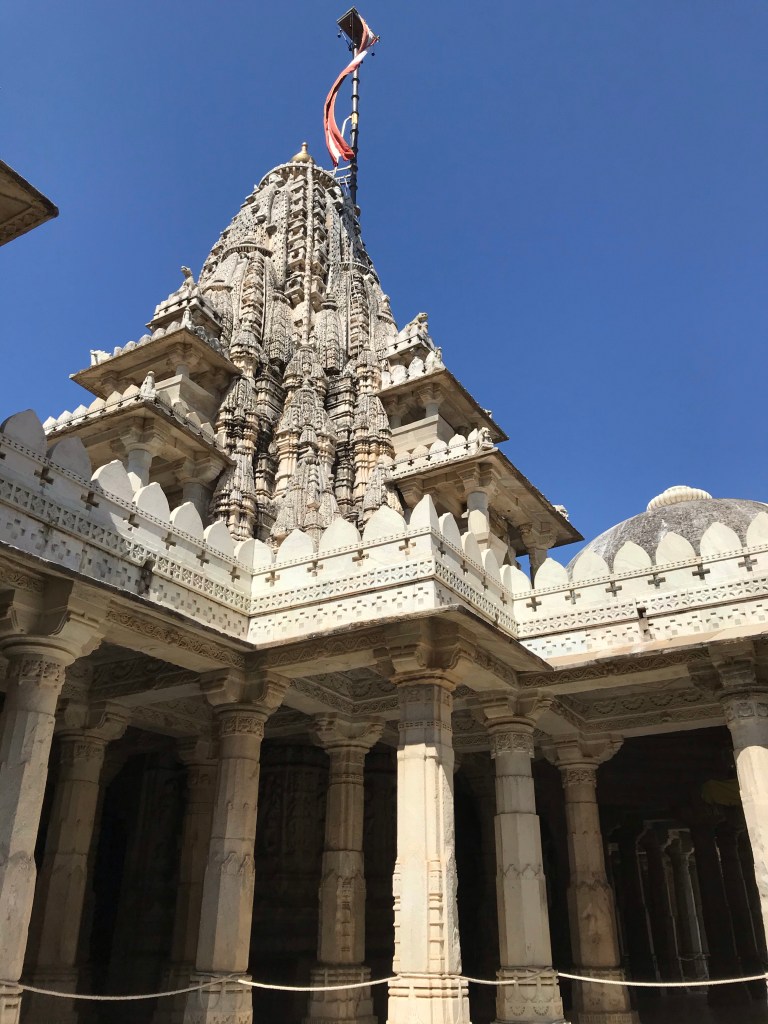
I had forgotten all about it until Gerald pointed out a beautiful tree growing in the courtyard behind the famous Jain Temple at Ranakpur (between Udaipur and Jodhpur). Three Jain nuns were busily washing their clothes. I saw an opportunity to satisfy my curiosity and approached them cautiously, unsure how they would react. To my surprise they spoke English well and were eager to engage in conversation.

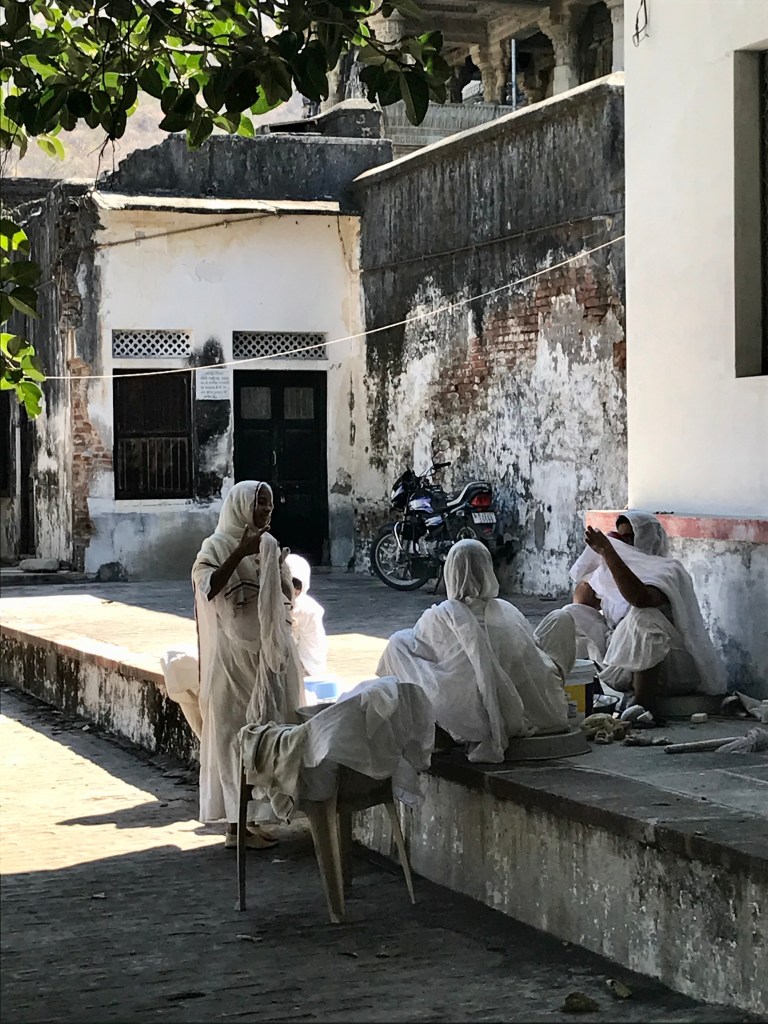

I am thirty six years old and have been a nun for seven years. I wanted to be a nun since I was thirteen but I could not get parental permission. They forbade me to join and said I had to wait until I was twenty nine. I said I would not marry and they finally allowed me, seeing how strong I was.
I am nineteen and have been a nun for one year. My sister is a nun also. I am very happy in this life.
I have a degree in Accounting and enjoyed a privileged life. My parents were devout Jain. But I knew from a young age that I wanted to be a nun. My parents were against it, and made me wait until I was twenty five.
Jain nuns forsake all emotional attachments and material possessions. There is an elaborate “wedding” ceremony, called Diksha, attended by thousands of Jain devotees, where all attachment to family, love, feelings of anger,hate and greed, are renounced. A new name is taken and she can never touch any family member or any man again.
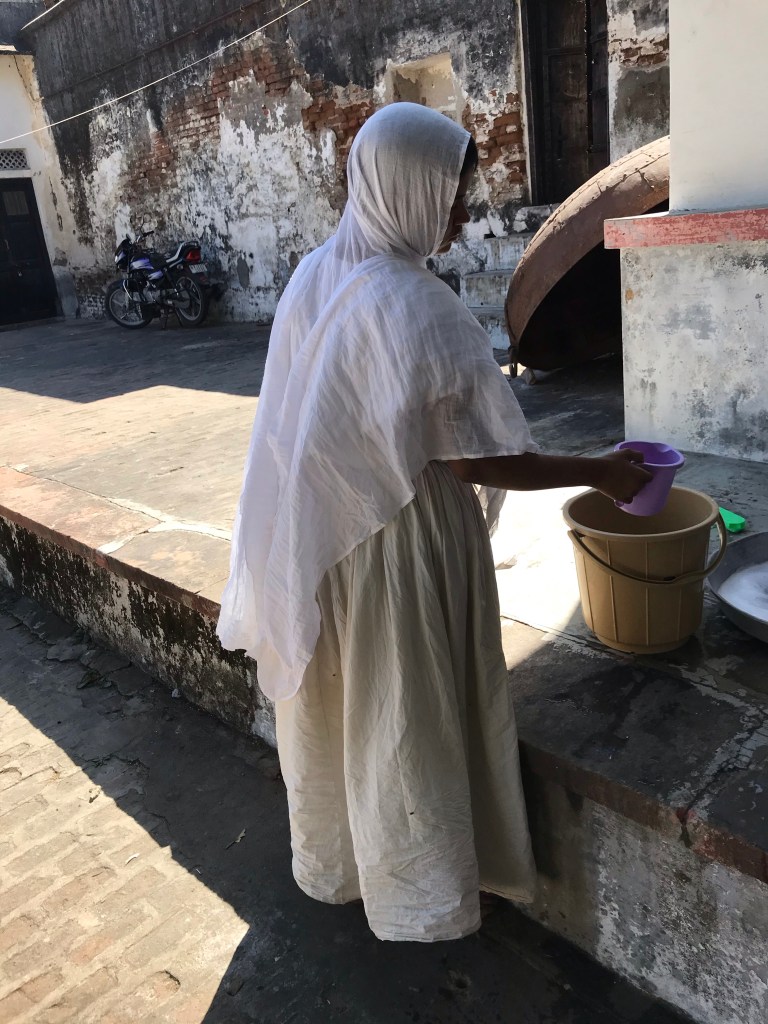
Having no permanent abode, they wander barefoot, from place to place, always in small groups, depending on the generosity of villagers for their food, and staying in one place no more than a week. This group consisted of nine nuns traveling together, originating from Mumbai. I was told that their next stop was Udaipur, some hundred and twenty miles away, and it would take them seven days to reach there on foot. I was corrected when I asked if the wooden sticks were for walking and was told: “No, they are for protection. We walk at night and there may be animals on the road.”
During monsoon season they remain in a temple and do not travel for four months.
You must speak to our Guruji. She can give you all the information you need about our life, but she is eating now, and no one is allowed to see us eat.
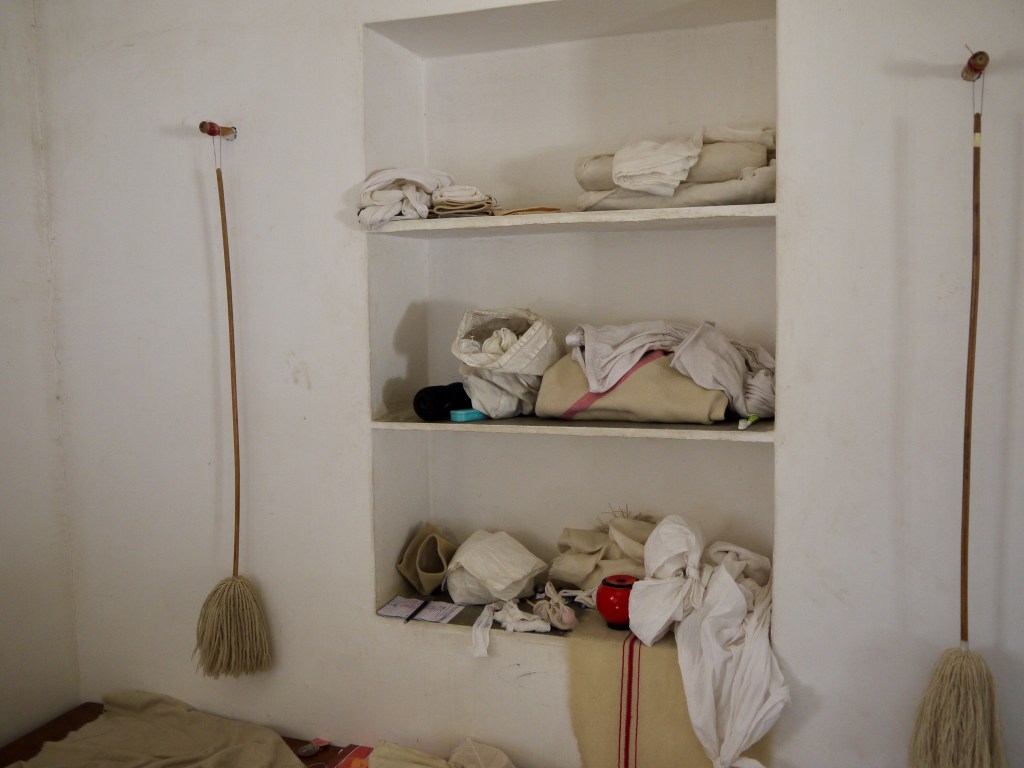

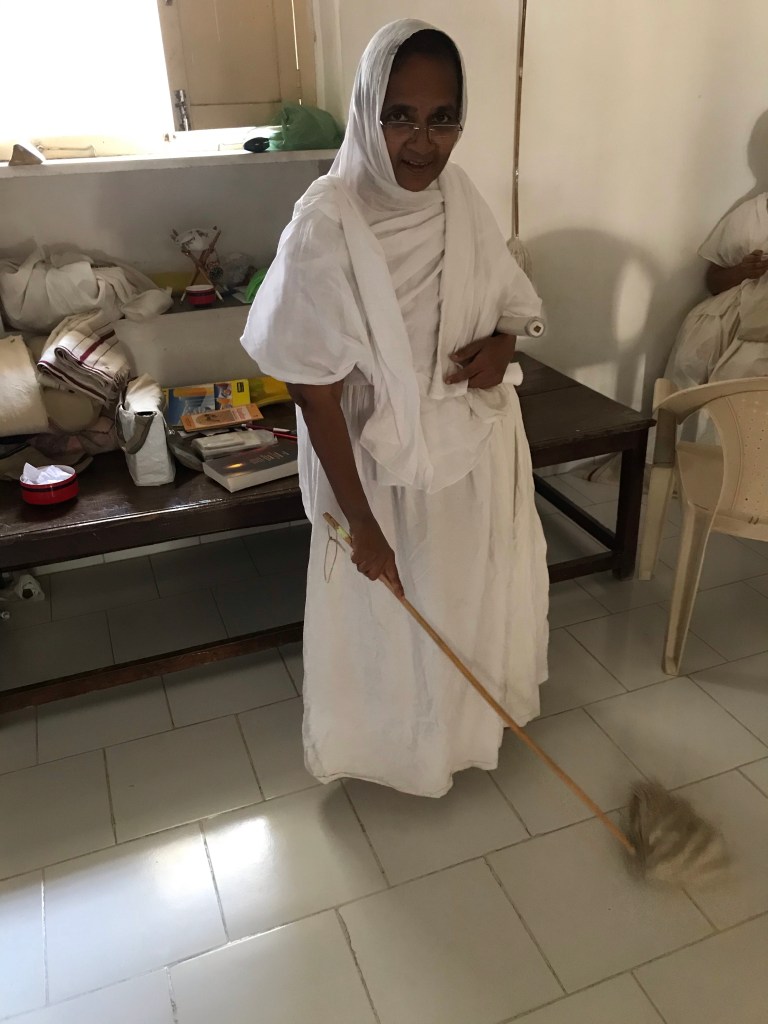
I was shown into the hostel where they were staying and the simple sleeping room consisted of a marble floor with stacks of blankets, several sweeper brooms with cotton tassels, and hand painted wooden eating bowls.
We are non violent and believe every living thing has a soul. We do not eat any foods that grow underground like potatoes,onions and garlic. Why would we want to kill innocent insects and bugs?Our bodies do not need meat, we are pure vegetarians. That is why we wear face masks and sweep the ground we walk on and the bowls we eat from.
The woman in the corner reading the Dharma is the mother of two nuns. She always wanted to become a nun but her family would not allow it. She married, had two girls and a boy. At age thirty her husband agreed for the whole family to dedicate themselves to a monastic life. At the time the daughters were twelve and thirteen and the son was ten.
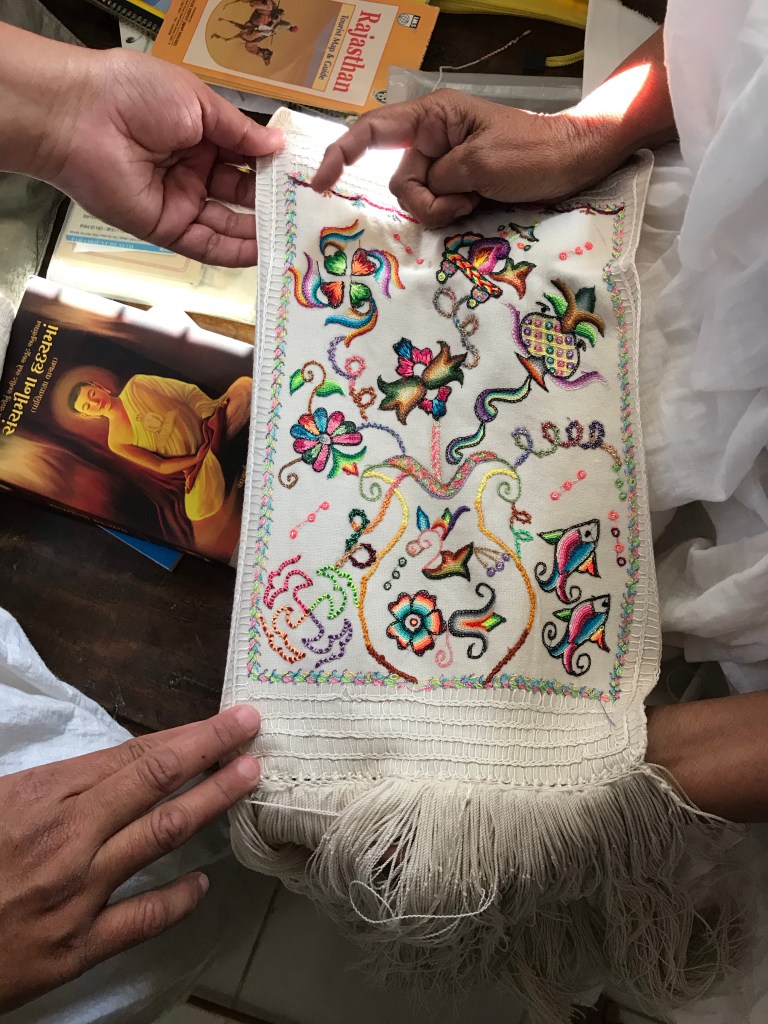

It is an arduous life. The Guruji wanted me to know that “we wash our clothes every fifteen days and every seven days we pluck the hairs out of our head by hand.”
Each young woman and nun I spoke to expressed the pure joy they felt in their lives of non-attachment, and the Guruji told me that she receives many requests to lecture in villages and cities on the benefits of living a pure non-violent life.
India has been the birthplace of many of the world’s major religions. We can learn lessons from the Jain dedication to preserving and respecting the environment as well as the sanctity of all living creations.
 THE DREAM OF DISTANT LANDS