Tag Archives: Manav Sadhna

Amy’s Story

I was born in Calcutta and adopted at three years old by a single woman from Utah. I have no memories of India at all and when I applied for a visa to come here was surprised to learn that I had to first renounce my Indian citizenship. I never knew I was still an Indian citizen.

img_0052

Amy has a big,beautiful infectious smile, with eyes that invite you to engage. When I asked if I could interview her she readily agreed. I’ve been curious about the motivation for so many young Europeans and Americans of Gujarati origin to come to Ahmedabad to live or work at Manav Sadhna for extended periods of time. But Amy’s story is a bit different because she grew up in the non-Indian, very white Mormon culture of Salt Lake City.

My mother was a non practicing Mormon, as were her parents. They enjoyed a lifestyle of cocktail parties and country clubs. My mom felt that she shouldn’t have to be married to have a child and was liberal minded. She picked me out from an orphanage photo.


Amy’s upbringing was filled with the love of her mother and grandparents, and when asked if she experienced any racism growing up, she replied simply “No”. I was surprised and pushed further. ” Maybe my mom sheltered me from that. When I was a junior in High School someone called me a “Nigger”. I told them I was Indian.” Amy’s mother exposed her to Indian culture as a young child and had a mural painted in her bedroom of Amy riding an elephant amidst landscape scenes of India. Four years later her mother asked if she would like to have a brother or sister, and soon after a boy from Bulgaria was added to the family.

Unfortunately this idyllic childhood ended with the untimely death of her beloved mother when Amy was twelve. Her mother’s niece and husband, who were childless, came to live and care for the two motherless children. Trying to cope with the loss of her support system Amy turned to the Mormon church. The idea of being “sealed”with her mother for life ( a Mormon ritual)was very comforting .

Sealing is the everlasting covenant from God to families that we will always be together eternally. All married couples are sealed to each other with their children being born into the covenant, but when a couple adopt a child, they take the child with them to the Temple for a sealing ceremony..

She had been spending almost all her free time with the local Bishops family as well as other practicing Mormons, a way of escaping her less than happy home-life. Becoming active in the church was a natural consequence. Although her family were “inactive” Mormons, Amy was baptized at eight according to Mormon practice.

For the next twenty years Amy was the ideal Mormon. She didn’t drink, smoke, practiced purity in thought and action and attended Church regularly. She never questioned any of the tenets of the religion. All that changed in 2008.

Amy’s brother had a much more difficult time adjusting to his new home, having lived with his mother only a few years before she died. He turned to drugs and alcohol and had a tumultuous youth. They lost touch for many years. When one day he called and said he was clean and sober, and had found a homosexual lover, she was delighted for him. The church up until this point had been vague on their position on homosexuality, and left the handling of the issue to local leaders. Meanwhile, Amy had been experiencing doubts about her own sexuality and began seeing a therapist. The legalization of same sex marriage in California in 2008 made her curious to learn more about homosexuality.

In 2015 when the Church came out with their official position on same-sex marriage, Amy was at this point identifying as a lesbian.The handbook stated that children of same-sex marriage could not be blessed or baptized until age 18 and at that point had to renounce their parents in order to join the church. The policy also states that those in same sex marriages would be considered apostates, a category that includes murderers and rapists.This was the final straw. It was time to leave.

I strongly believe in God because of my adoption story and other spiritual experiences I’ve had throughout my life. I also believe I will be forever with my mom and grandparents with or without the Church’s teachings. If the LDS Church reversed their policies on homosexuality I’d be an openly gay member. I still believe in the tenets of the church but I am also learning to have more faith in the universe, that I don’t need to worship in a church or temple. I can be close to God anywhere.

I’ve always known that my life was a miracle and lived it as such.
 

Between Heaven and Hell/It Depends On Which Day You Ask

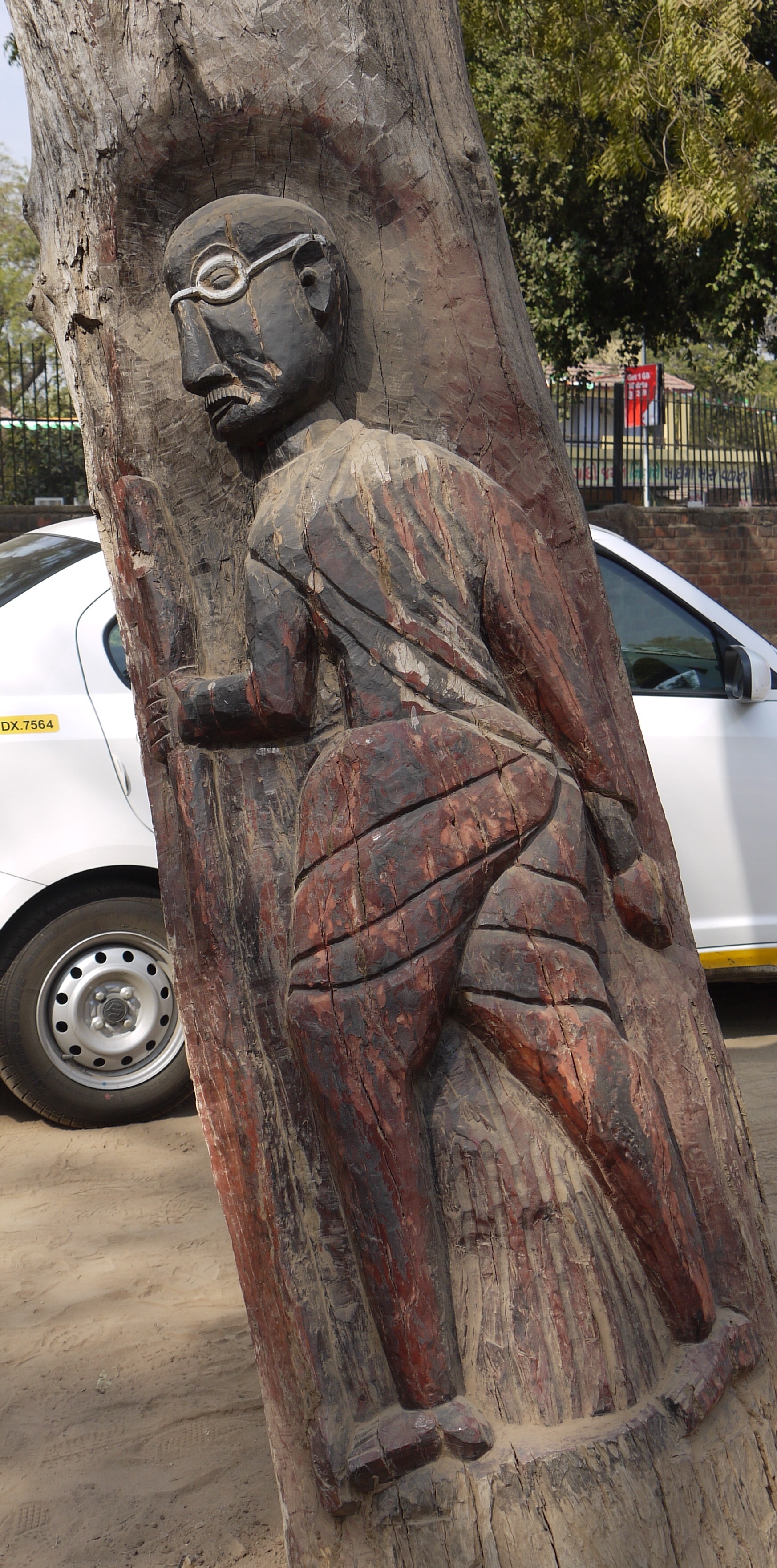
Gandhi sculpted in a tree at the ashram

“It depends on which day you ask”  was the response from Veena, (an Indian-American volunteer from Berkeley),when asked how she would rate her experience working as a doctor for Manav Sadhna this past year. It certainly could be said about so many things in India. I would be lying if I said that the three weeks spent in Ahmedabad working with the children at Manav Sadhna went by quickly. The last week I was counting the days until our departure.  We hated the city- the choking fumes of pollution, the rubble, the slums, and the complete chaos.  There doesn’t seem to be any redeeming factors to counter the negativity.

The flip side is the incredible experience of working with people so totally dedicated to compassionate service and non violence. This is no ashram with holy people; it is everyday people putting into practice their convictions in the most humble manner without ego, only service. Each day begins with communal prayer and sharing.Virren gave up a lucrative career in the US and decided not to marry and have a family, in order to follow his heart and be fully committed to serving others.  He earned enough money  in the USA which enabled him not to have to worry about working anymore.  Similar stories were repeated many times.

What is so startling to me is the number of young people, born in the UK or US who come  as repeat volunteers to Ahmedabad each year during school vacations to serve at Manav Sadhna.  Esham is an 18 year old ,born in England of Gujarati parents ,who first visited India as a fifteen year old with the program, Discover India.  He was so taken with what he experienced, that he started his own charitable foundation to build sports fields in the slum areas of Ahmedabad.  Britain awarded him honors for his work.  His father was born in Uganda, but grew up in the UK when his family and all people of Indian ancestry were kicked out by the dictator, Idi Amin in 1972.  Esham’s wish for his 18th birthday was to bring his father to experience Manav Sadhna, and see Gujarat for the first time. During the summer break, the ashram is filled with young Indians from abroad, who have never grown up or lived in India, but feel a strong pull.  I met three or four 18 year old girls,on winter break from University.  All of them expressed the same sentiment.  “When I leave, all I think about is when I’m coming back next”. Nimmo is a 37 year old hip hop singer who grew up in LA and moved to Ahmedabad permanently six years ago. He is in the process of helping set up an arts center and tours around the world sharing his message of love and cooperation, through his music.

I loved how I felt at the ashram and the relationships with the volunteers and the children I worked with, but I could never go back to Ahmedabad.  Its hard for me to understand the powerful magnet that attracts these young people come back to such a place. I know it will take some time to fully absorb what I learned and I am grateful for the time I spent there. So ,yes it depends what day you ask for my answer about my Indian adventure, but it is not yet over.  After Rajasthan we are headed for the Himalayas and the sacred cities of Haridwar and Rishikesh.

Thursday’s Children

Monday’s child is fair of face,

Tuesday’s child is full of grace,

Wednesday’s child is full of woe,

Thursday’s child has far to go

Friday’s child is loving and giving

Saturday’s child works hard for a living

And the child that is born on the Sabbath day is bonny and wise and fair and gay.

caption id=”” align=”alignnone” width=”538″] The community Center at Manav Gulvar[/caption]

The  classroom is bright and airy, a ceiling fan is turning slowly, and the children are seated on the floor in two rows, one against each side of the wall. Eighteen pairs of shining, black eyes follow us as we move through the space, getting the room ready for today’s project.  There is a hushed silence that feels like being in a church; each word we speak, each gesture we make, is observed with intense concentration by the children. We decide to make an accordian book of buildings with the children’s collages.  Five, ten minutes go by and I notice that no one has put anything on their board yet.  Nilam, the teacher, pulls me aside. “The children have never seen a real building, so they have no idea what to draw.  All they know are the small shops in their community.  I told them to just draw their favorite shop.”  I am stunned,speechless.  It never occurred to us that this was beyond their scope of experience. Gerald, whose heart is bigger than his size, is forever the optimist.  “Just wait.  Give them a chance, they’ll come around. All they have to do is look outside the window and copy the shrine or mosque, I’ll get them started.”

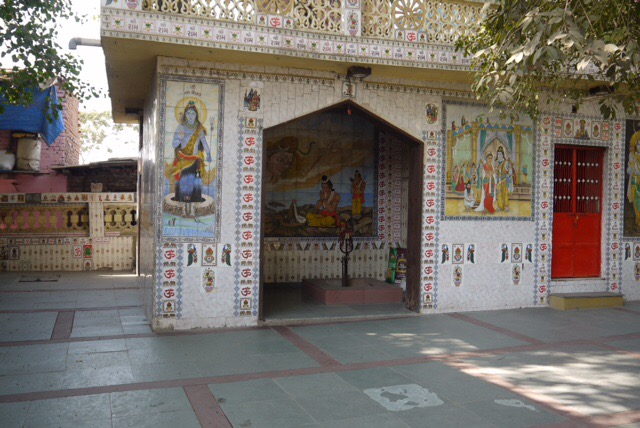
Hindu shrine in the community center

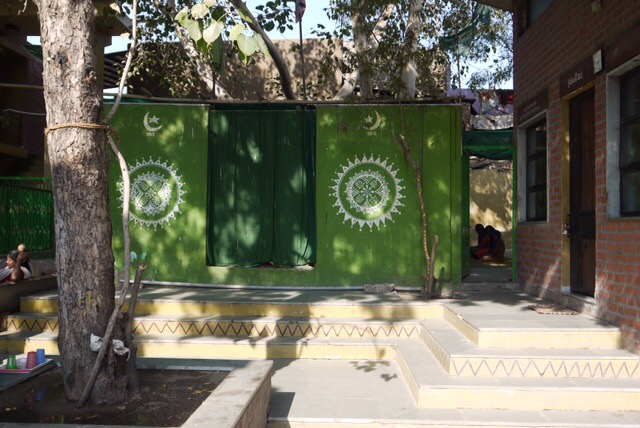
Mosque in the community center

Bea, one of the Spanish volunteers is in the room with us, as well as two Indian Americans who are there to translate from Gujarati.  None of the children speak either Hindi or English. We  go to each child and gently prod them to pick from the beautiful selection of colorful hand made papers we have brought with us, and paste something on the board. They are more comfortable with rulers and erasers and pencils, freedom is a luxury they have not experienced.

One of the older girls,Monisha,has already started to paste papers on a Hindu Shrine she drew.  Soon the others follow suit, some more slowly than others, but all becoming engrossed in the work.  Two small Muslim boys motion to me to come to them.  I don’t quite understand what they want from me,but the adoring look in their eyes has me almost in tears.  I think they want me to help, so I cut up some shapes and give it to them for their Mosque.  As Nilam passes by I ask her what they want.  She says they think I want them to put these shapes on the board, and they don’t want to do something wrong!


Two hours pass by quickly.  Children from other classes peek inside, smile, shake hands, give hugs, and even another teacher comes to join the project.  Bea and I decide to entertain them with Spanish songs.  I only know a few lines of “Malagueña” and “La Cucaracha”- but it does the trick.  They are all holding their bellies and laughing,shrieking and rolling on the ground in glee.

It is amazing for us, even after six visits to India, to be reminded how cut off some of the locals are, even in big cities. For a few hours a day, these children exist in a safe, protected, joyous and loving bubble. Maybe they do have “far to go” but it brings to mind Mother Theresa’s words

We can do no great things, just small things with great love

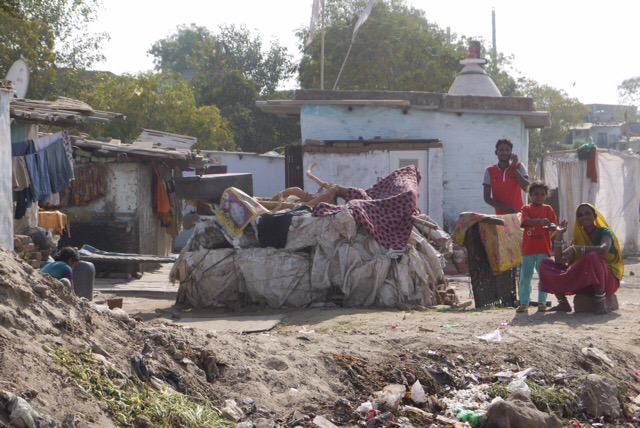
Gulvar slum

A very happy group with their finished project

Gandhi’s Dream is Alive and Well in Ahmedabad 

  It’s been almost two weeks since we started working at Manav Sadhna, a non governmental organization (NGO) located on the grounds of Gandhi’s former ashram. I’ve struggled to put my feelings into words. This has probably been the most difficult project we’ve worked on to date. A feeling of love and  compassion envelops you upon entering the ashram grounds, but the world outside is difficult to digest.  The negative things that people fear about visiting India are abundantly evident in Ahmedabad- the pollution, the poverty, the congestion, the beggars and the chaotic nature of a metropolis that is overpopulated and under developed.  We have never stayed long in big cities because of this, but were moved by the work we saw being done at Manav Sadhna last year.

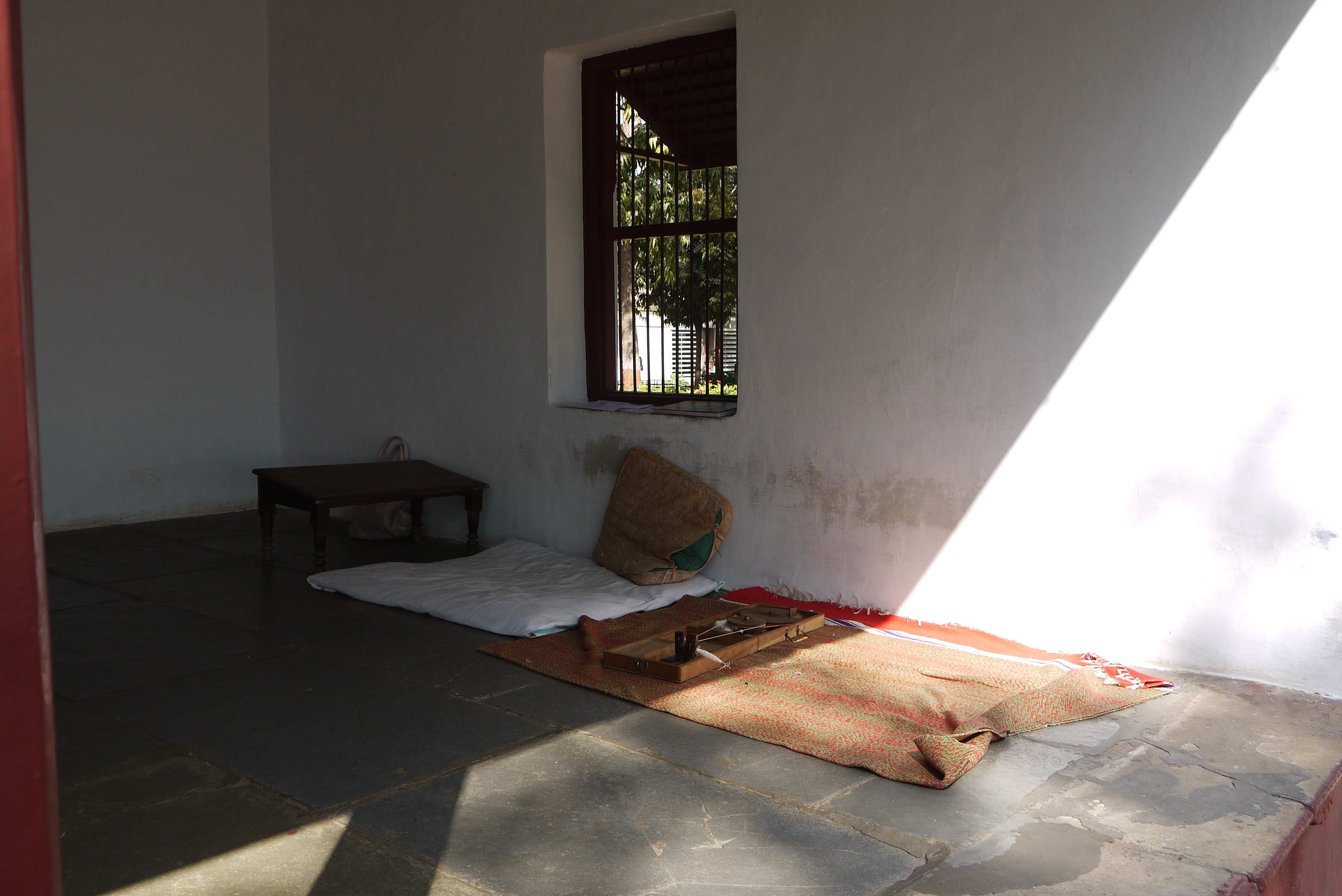
The scope of the organization is mind boggling, and every program is organized in keeping with Gandhi’s principles of loving kindness.   The original buildings on the banks of the Sabarmati river, where Gandhi lived for twelve years from 1918-1930, have been converted into a living museum.  It attracts flocks of visitors, mostly Indian,to relive a period in history that changed India and the world forever.

Gandhi’s living quarters

The banks of the Sabarmati River

Manav Sadhna- worshiping each individual as a service to God– was founded in 1990 based on Gandhi’s philosophy of “Love all, Serve all”. Walking through the grounds , the peaceful nature of the place  creates a meditative environment . Shoes are removed and left at the entrance of the main building , as a sign of respect.

Three women who work in the kitchen, sweep and clean the dirt and dust from the day before, as the entrance room fills up with  volunteers from around the world,many  of whom are  non resident Indians who have grown up in the USA . We  sit cross legged on a mat , and by now the workers have also joined the group. A tape plays excerpts from Hindu,Muslim,Buddhist,Christian and Jewish prayers, while the group bows their head in silent meditation. Each new volunteer is acknowledged with an introduction,drums, and a tikka (traditional red dot made out of vermilion paste)placed on the forehead.  A hand made paper garland is put around their neck.  In the center of a flower it says “Be the Change”, and each petal has one word written- “Beauty”, “Truth”, “Hope”, “Compassion” and “Love”. The volunteers talk about what they will be doing – teaching, arts projects,medical work,marketing,environmental, social welfare, women’s issues, etc. Many are repeat volunteers and have been coming for years-bringing supplies,skills and most of all,their complete dedication to the values of Gandhi.  And then everyone scatters to their respective projects.

Main entrance hall of Manav Sadhna

I am in awe of the work being done and the manner in which it is carried out.  There is a camraderie among the volunteers who work here in the various programs. Laura and Catherine are Pacific Islanders who live in California.Laura left a lucrative multi million dollar financial enterprise to start a charitable foundation. She is here to build homes in Nepal,Afghanistan and Pakistan. The lively contingent of five Spaniards have come for four months to do whatever is necessary, and organize yoga classes and silent spiritual meditation retreats. This weekend they are cooking  a Spanish meal for  Seva, a “pay it forward” cafe. It promises to be filled with music, laughter and lots of garlic. Ashish, a software engineer from Delhi, has come to set up a recycling operation as a profit sharing enterprise for some of the 40,000 women who spend their days scavenging the garbage dumps in the hope of salvaging enough junk to make a few pennies to buy food. We visited the program and felt his passion, as he described how each of the “sisters” is treated with respect,given health care, a fair price for their work, and a day (Saturday) which is reserved for some well deserved pampering.

Our work with the children has been mixed. The first group was very talented, and are employed doing part time work for the ashram, making paper goods to be sold at their retail store. Creativity and enthusiasm were both in full measure.  We were sorry to have to end our time with them and move to another group. The next class was at a brand new beautiful community center, built by a famous Indian architect deep inside one of the nearby slums. As we passed through the narrow lanes, with tiny, cramped cement block homes, feelings of sadness, despair and  wonder filled me. Living in these conditions is a daily struggle to survive, yet the smiles were bright and forthcoming.We visited homes where five or six people lived that were no larger than my bedroom and the walls were covered with mold and mildew.  Always we are offered chai, some snack, and as people wander in and out, it is obvious that family and neighbors are important and account for their incredible resiliency. What would be intolerable living conditions for us, is for them a daily reality.

It’s strange to feel “stuck” in our lovely hotel , rather than being out and about exploring the city,but all attempts  have been abysmal,frustrating and terrifying. Rickshaw drivers don’t seem to know where anything is, traffic is  at a standstill, and the belching fumes of exhaust are sickening.

Today was a great day. We worked at a new community center in a slum that is 60% Muslim and 40% Hindu.  To get there we had to drive on an unpaved road and then clamber up a dirt hill.  It was much poorer than the other two locations where we worked.  Again, the center was an oasis in the midst of extreme poverty. A Hindu temple and a small mosque were built  on the grounds., and this was an experiment in harmonious living between the two religions. The children obviously  had little previous outside contact and treated us as a curiosity.  It took a while for them to open up to trying something new, but then it was all smiles and creative energy. It’s really such a small thing we do with the children, a few hours of having fun and exploring new ideas- but they are so happy for the attention and respect.

Manav Gulzar slum

We finished the day by going to the Sabarmati Riverfront Festival, where Gerald had created and organized an interactive collage mural and an exhibition of the work done by the children at his workshops. Next week is the kite festival.

Manav Sadhna- An Oasis in the Desert

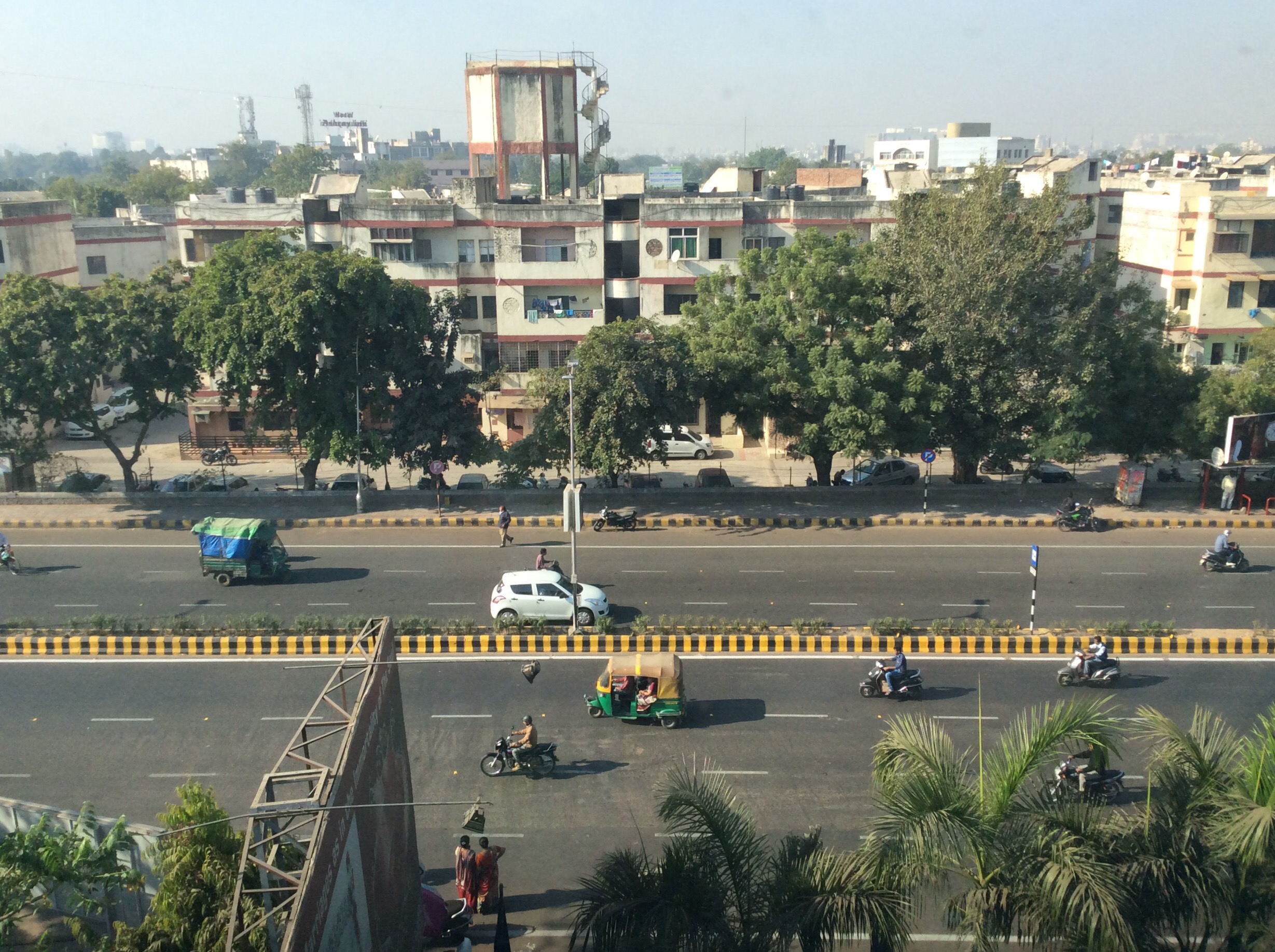
Early morning view from my window

Today is a day like any other in a big South Asian city. Early in the morning, just after the sun rises at 7 am, people slowly start to appear- on roof tops flying kites, hanging out the wash, sweeping dust off the streets-all without any sense of urgency. Streets are eerily quiet at this hour, since shops open  informally at 10 or 11- even the banks don’t open until 10:30. As the day progresses,Ahmedabad, the capital city of Gujarat,becomes increasingly congested, with auto rickshaws belching their thick smoke, ancient buses rattling along, emitting intermittent blasts of exhaust. And there there are the people- three million of them. Crossing to the other side of the road from our hotel is a life-threatening proposition.  Each day 382 people are killed in traffic accidents in India. There are occasional traffic lights, but they are a suggestion, rather than an imperative, and few drivers pay any attention.  “Challenge the motos not the cars” is Gerald’s mantra.

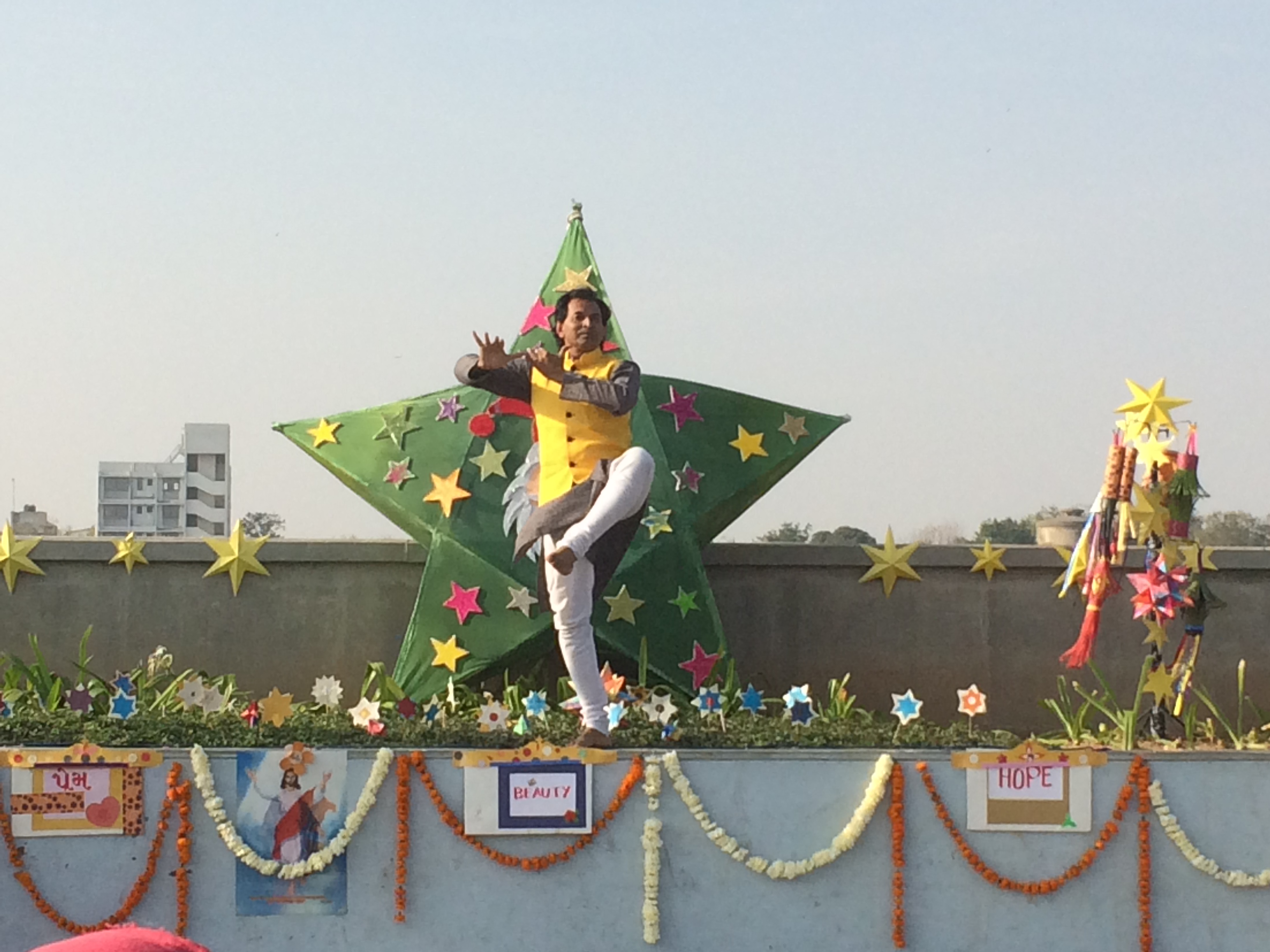
We’ve come here, not for the sights, but to volunteer at Manav Sadhna, an organization on the grounds of Gandhi’s ashram.  Their mission is to serve the thousands of slum dweller families who live in and around the city. Our first day, Christmas,is a typical Indian experience.  Sharish, the volunteer coordinator at the ashram, has sent us an email. “The children are doing a Christmas celebration from 3-6.. Do come and you can see what the children are like that you’ll be working with”.  However,when we arrive at the ashram it is surprisingly deserted.  A young woman tells us “Oh, Sharish isn’t here, he’s at the riverfront for the Christmas celebration.”  No one has thought to tell us that the event is not at the ashram. By a twist of fate we meet the director who is heading that way in a van.

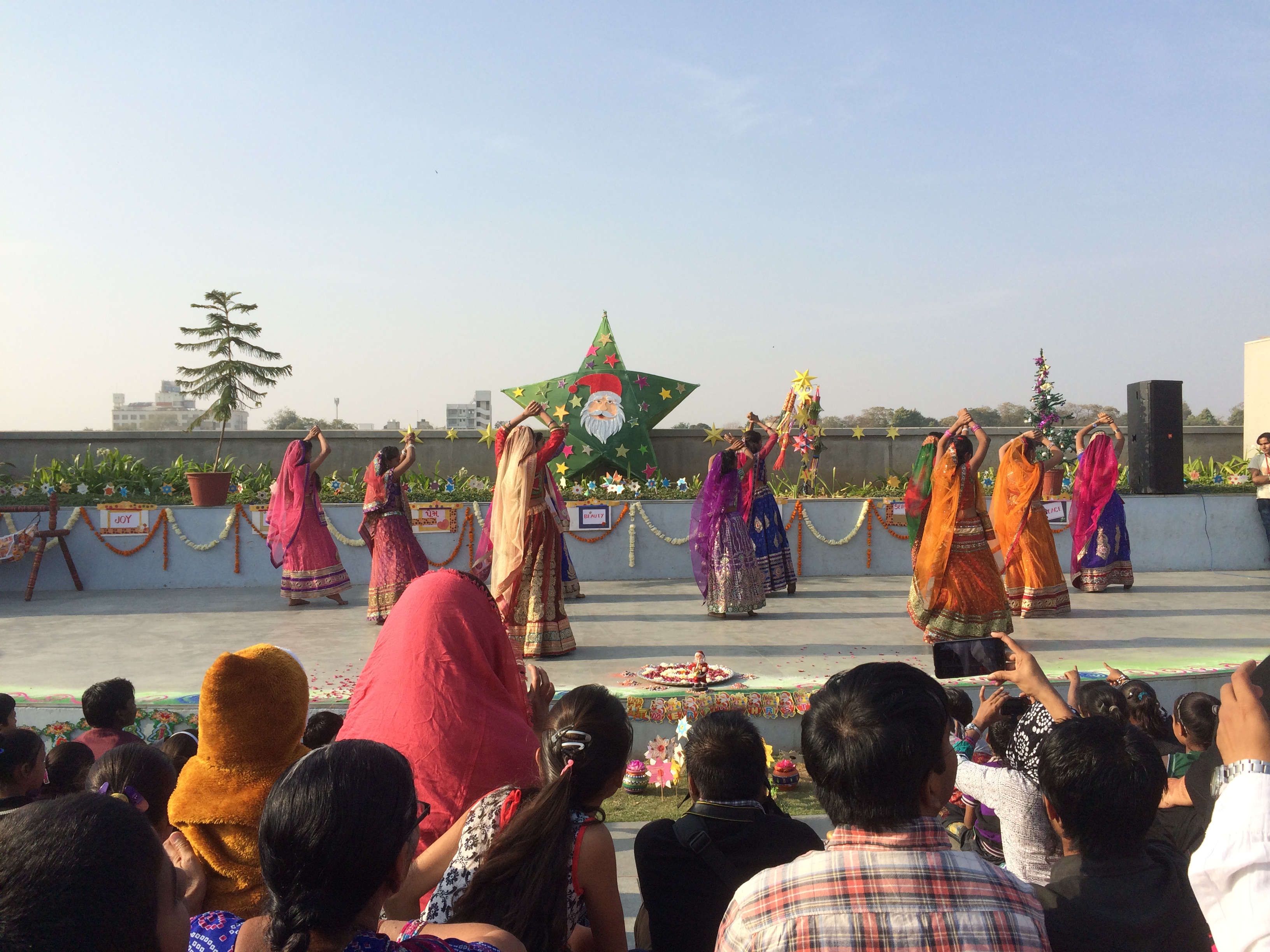
When we arrive at the venue there are easily a thousand people, mostly women and children, seated on the terraced concrete steps by the riverfront promenade. We are then introduced to Sharish onstage, and are shown to prime seats. These are children who spend their days scavenging garbage heaps looking for something they can sell for recycling. Manav Sadhna has organized recycling centers, cutting out the middle man and giving the women the money directly. By looking at the collected group you would never suspect their impoverished condition. Smiling, clean faces, groomed hair, and for the most part, nicely dressed. The show is amazing! Costumes have been rented and the dances are choreographed by an alumnus of the program- easily rivaling a Bollywood production. All this has been underwritten by a software company. An addendum to the program is a group of blind children singing and drumming.  Unfortunately there is only one microphone which gets passed back and forth between the drummers and the dancers, rendering each group mute alternately.

  1. imageimageimageAn auspicious beginning.

“I’ll Never Do It Again” Redux

Some people say that the letters I N D I A mean “I’LL NEVER DO IT AGAIN”, and yet here I am,ready to embark on my fifth (or is it sixth?) journey to that fascinating and infuriating land of enchantment. I must admit that after each one of my first three sojourns I returned with that same sentiment. While I’m there, days pass when I want to tear my hair out, or just find a nice, quiet place to chill. And then something happens…..a colorful procession replete with music and ritual, a delicious meal,-fragrant with pungent spices, or maybe just an invitation to visit someone’s home.

This last trip I was fortunate to enter the mysterious world of Theyyam in northern Kerala. I was “seized by the gods” in their full glory of painted bodies and faces,as they immersed themselves in the spirit of a  god, dancing and moving as one possessed. It was this mesmerizing experience,which takes place at sunrise and sunset during the months of December- February that draws me back. As soon as we returned from our last trip in December 2015 I was planning the next.

Pullurkali

Pullurkali

Yes, we will also be volunteering to work on an art project with scavenger children at Manav Sadhna, Gandhi’s ashram. How that will turn out, I know not.

We are also planning to go up to the mountains at Nainital and see tigers at Corbett National Park. How that will turn out, I know not.

Many friends are as anxious for our return as we are to rekindle their friendship. Gerald is excited about teaching more collage workshops at the Universities in Ahmadabad and Udaipur. How that will turn out,I know not.

IMG_2238

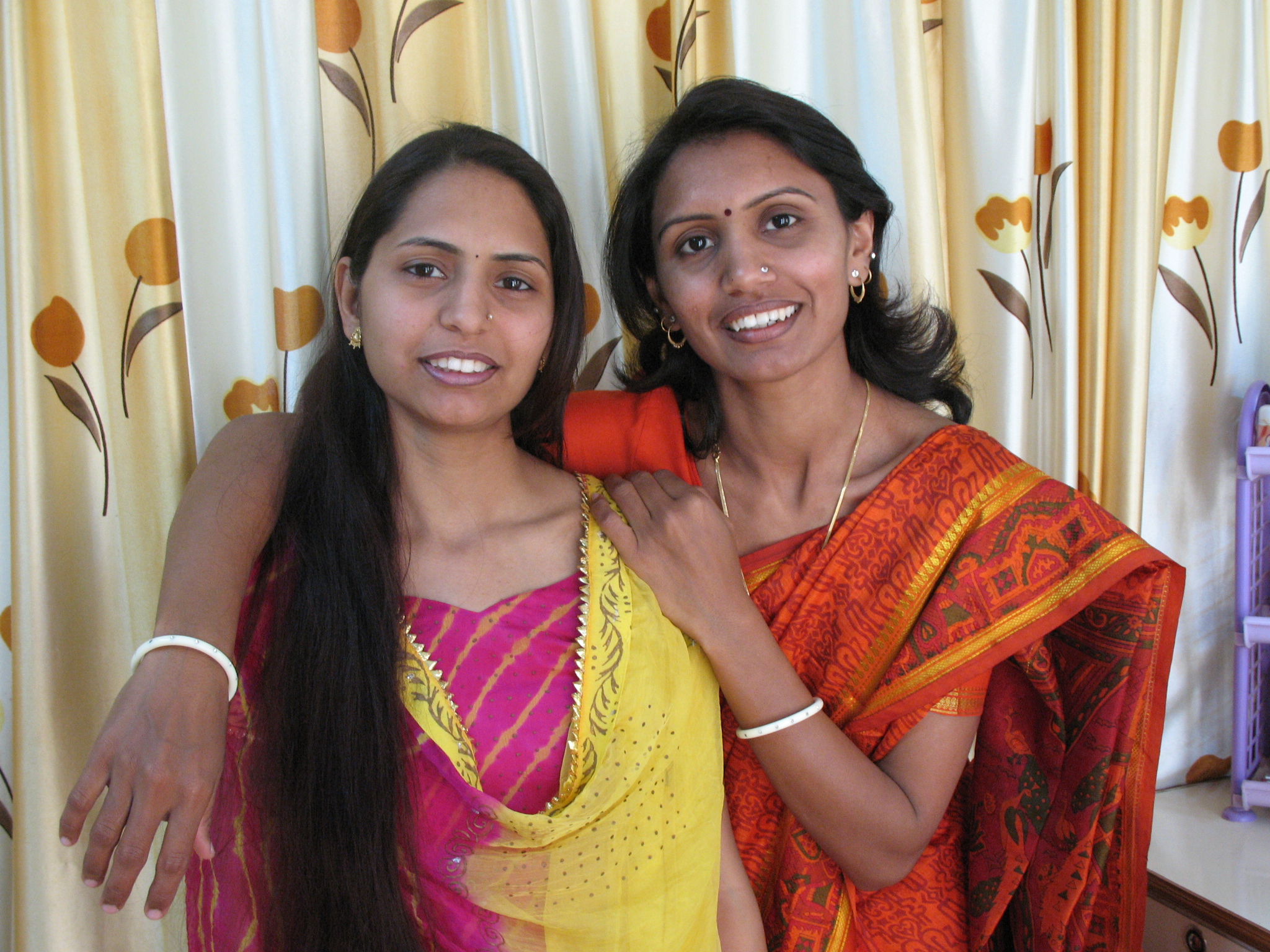
Shalena and her sister- my delightful Hairdresser in Udaipur

IMG_2160

Raji- the Puppetmaster of Udaipur

Francis at work

Francis- our master chef in Goa, at work

What I do know it that we are embarking on another adventure, and that is good.

Namaste