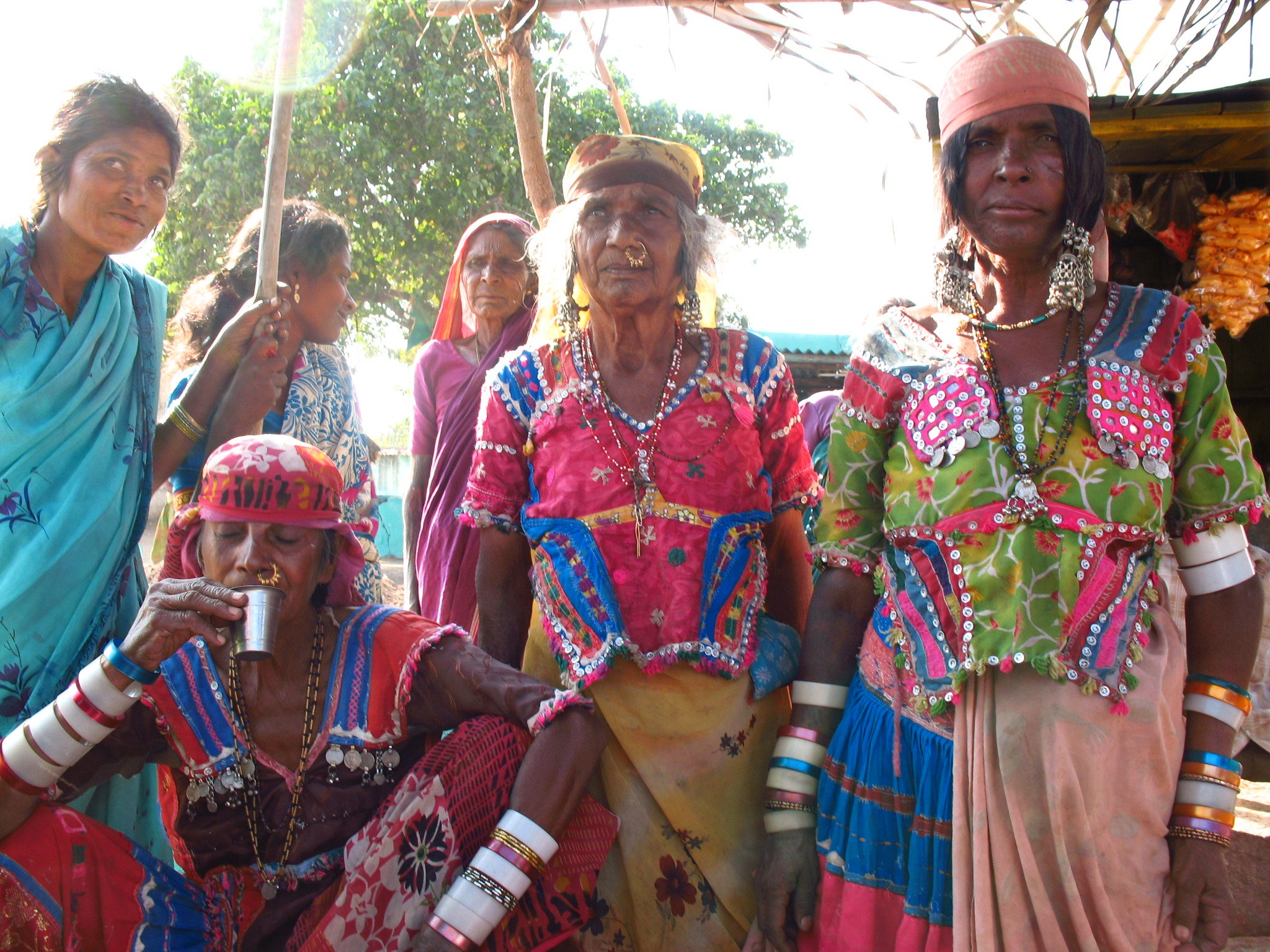
 It’s been almost two weeks since we started working at Manav Sadhna, a non governmental organization (NGO) located on the grounds of Gandhi’s former ashram. I’ve struggled to put my feelings into words. This has probably been the most difficult project we’ve worked on to date. A feeling of love and compassion envelops you upon entering the ashram grounds, but the world outside is difficult to digest. The negative things that people fear about visiting India are abundantly evident in Ahmedabad- the pollution, the poverty, the congestion, the beggars and the chaotic nature of a metropolis that is overpopulated and under developed. We have never stayed long in big cities because of this, but were moved by the work we saw being done at Manav Sadhna last year.
The scope of the organization is mind boggling, and every program is organized in keeping with Gandhi’s principles of loving kindness. The original buildings on the banks of the Sabarmati river, where Gandhi lived for twelve years from 1918-1930, have been converted into a living museum. It attracts flocks of visitors, mostly Indian,to relive a period in history that changed India and the world forever.
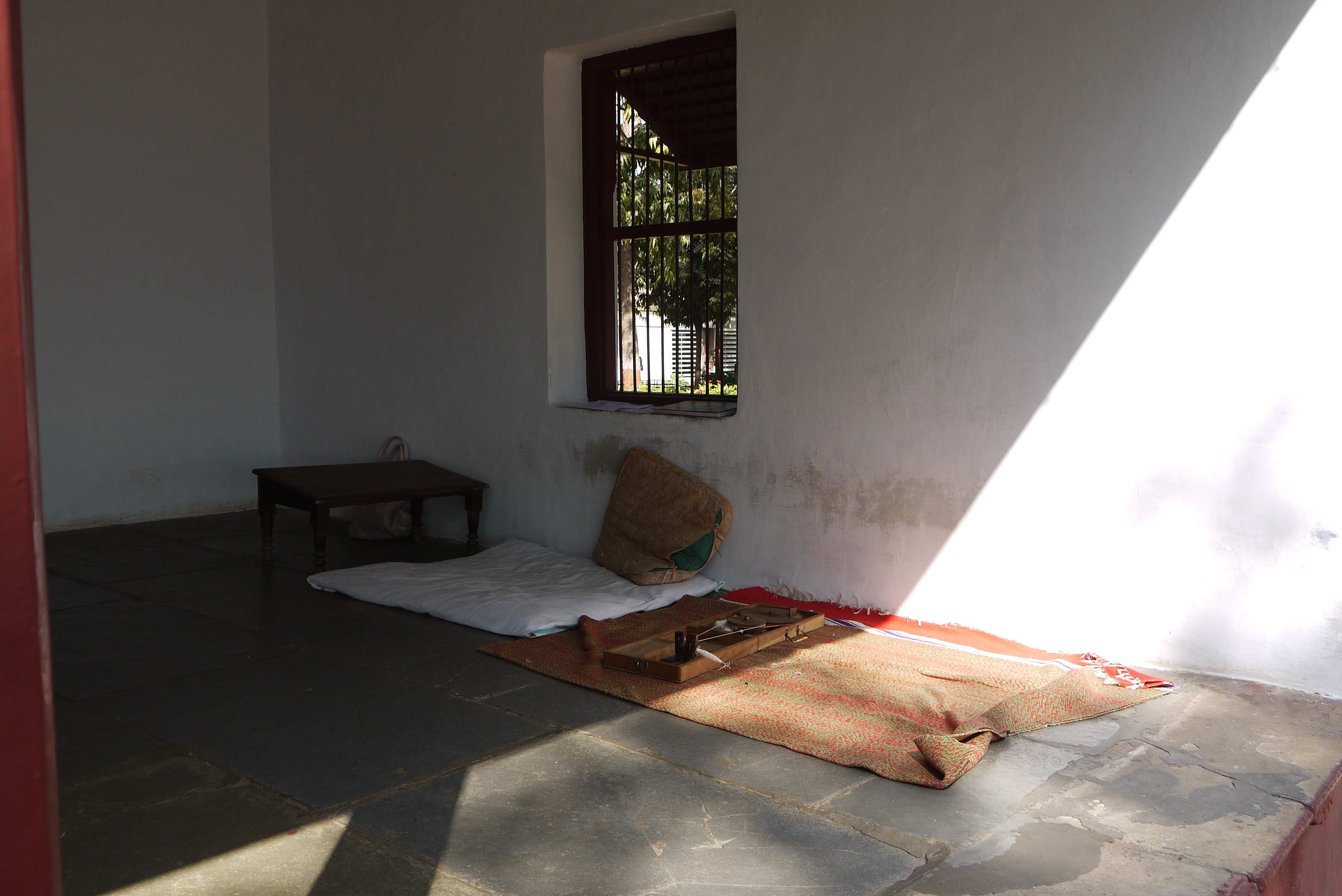
Gandhi’s living quarters

The banks of the Sabarmati River
Manav Sadhna- worshiping each individual as a service to God– was founded in 1990 based on Gandhi’s philosophy of “Love all, Serve all”. Walking through the grounds , the peaceful nature of the place creates a meditative environment . Shoes are removed and left at the entrance of the main building , as a sign of respect.
Three women who work in the kitchen, sweep and clean the dirt and dust from the day before, as the entrance room fills up with volunteers from around the world,many of whom are non resident Indians who have grown up in the USA . We sit cross legged on a mat , and by now the workers have also joined the group. A tape plays excerpts from Hindu,Muslim,Buddhist,Christian and Jewish prayers, while the group bows their head in silent meditation. Each new volunteer is acknowledged with an introduction,drums, and a tikka (traditional red dot made out of vermilion paste)placed on the forehead. A hand made paper garland is put around their neck. In the center of a flower it says “Be the Change”, and each petal has one word written- “Beauty”, “Truth”, “Hope”, “Compassion” and “Love”. The volunteers talk about what they will be doing – teaching, arts projects,medical work,marketing,environmental, social welfare, women’s issues, etc. Many are repeat volunteers and have been coming for years-bringing supplies,skills and most of all,their complete dedication to the values of Gandhi. And then everyone scatters to their respective projects.

Main entrance hall of Manav Sadhna
I am in awe of the work being done and the manner in which it is carried out. There is a camraderie among the volunteers who work here in the various programs. Laura and Catherine are Pacific Islanders who live in California.Laura left a lucrative multi million dollar financial enterprise to start a charitable foundation. She is here to build homes in Nepal,Afghanistan and Pakistan. The lively contingent of five Spaniards have come for four months to do whatever is necessary, and organize yoga classes and silent spiritual meditation retreats. This weekend they are cooking a Spanish meal for Seva, a “pay it forward” cafe. It promises to be filled with music, laughter and lots of garlic. Ashish, a software engineer from Delhi, has come to set up a recycling operation as a profit sharing enterprise for some of the 40,000 women who spend their days scavenging the garbage dumps in the hope of salvaging enough junk to make a few pennies to buy food. We visited the program and felt his passion, as he described how each of the “sisters” is treated with respect,given health care, a fair price for their work, and a day (Saturday) which is reserved for some well deserved pampering.
Our work with the children has been mixed. The first group was very talented, and are employed doing part time work for the ashram, making paper goods to be sold at their retail store. Creativity and enthusiasm were both in full measure. We were sorry to have to end our time with them and move to another group. The next class was at a brand new beautiful community center, built by a famous Indian architect deep inside one of the nearby slums. As we passed through the narrow lanes, with tiny, cramped cement block homes, feelings of sadness, despair and wonder filled me. Living in these conditions is a daily struggle to survive, yet the smiles were bright and forthcoming.We visited homes where five or six people lived that were no larger than my bedroom and the walls were covered with mold and mildew. Always we are offered chai, some snack, and as people wander in and out, it is obvious that family and neighbors are important and account for their incredible resiliency. What would be intolerable living conditions for us, is for them a daily reality.
It’s strange to feel “stuck” in our lovely hotel , rather than being out and about exploring the city,but all attempts have been abysmal,frustrating and terrifying. Rickshaw drivers don’t seem to know where anything is, traffic is at a standstill, and the belching fumes of exhaust are sickening.
Today was a great day. We worked at a new community center in a slum that is 60% Muslim and 40% Hindu. To get there we had to drive on an unpaved road and then clamber up a dirt hill. It was much poorer than the other two locations where we worked. Again, the center was an oasis in the midst of extreme poverty. A Hindu temple and a small mosque were built on the grounds., and this was an experiment in harmonious living between the two religions. The children obviously had little previous outside contact and treated us as a curiosity. It took a while for them to open up to trying something new, but then it was all smiles and creative energy. It’s really such a small thing we do with the children, a few hours of having fun and exploring new ideas- but they are so happy for the attention and respect.

Manav Gulzar slum
We finished the day by going to the Sabarmati Riverfront Festival, where Gerald had created and organized an interactive collage mural and an exhibition of the work done by the children at his workshops. Next week is the kite festival.

 THE DREAM OF DISTANT LANDS