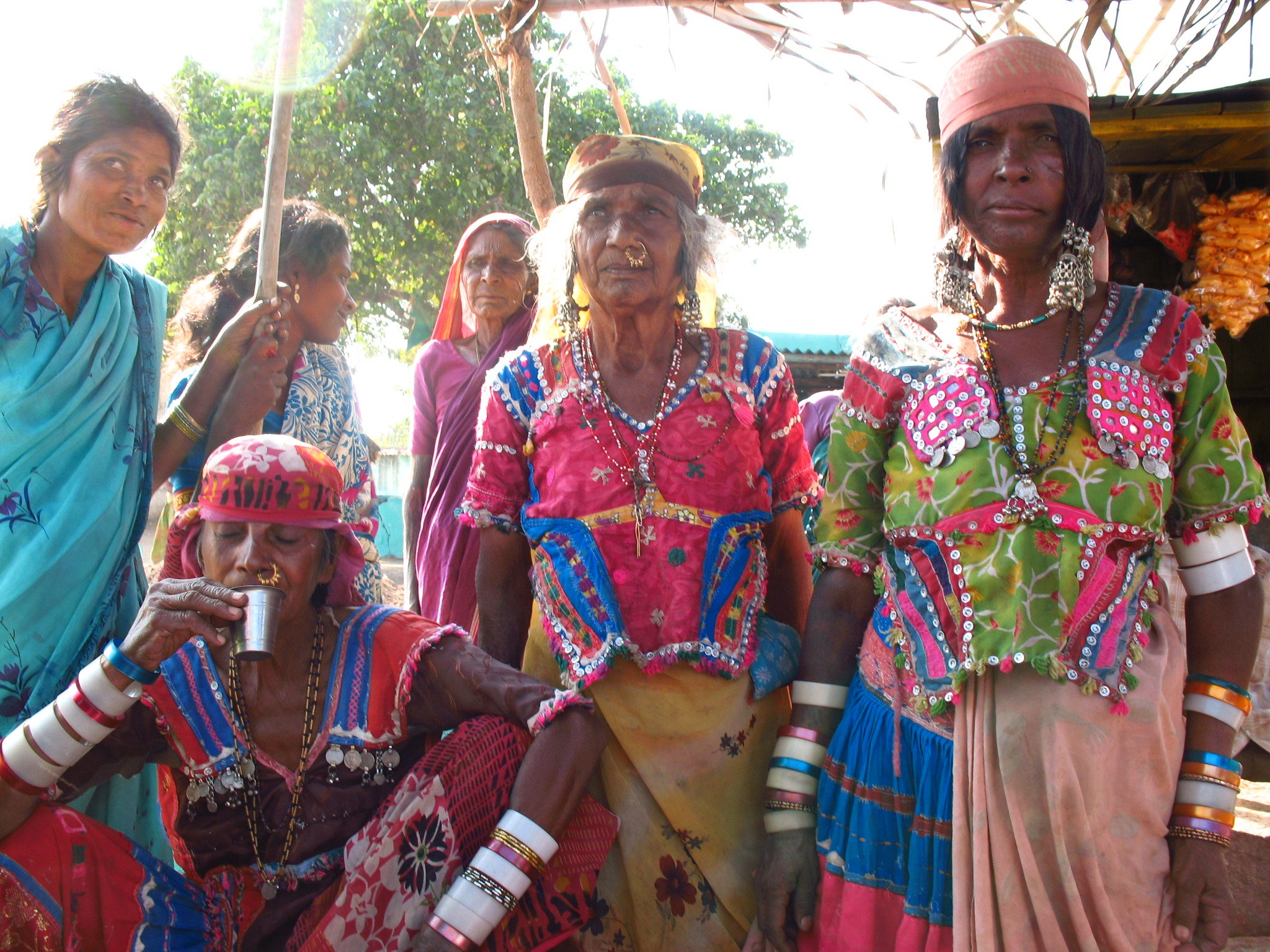

Elegua
“My husband is a Babalawo (Santeria priest) and if you want a consultation with him, it costs $10. He is in the middle of doing a healing ceremony to Elegua for a visiting Cuban American woman from Miami. You are welcome to watch.” And so my adventure began.
I had been winding my way through the streets and alleyways of Havana on the lookout for stores selling “Religious Articles”. My mission was to find a Santeria ritual. In Colonial times the Yoruba people, who were brought to the New World as slaves, were not allowed to build temples or reproduce images of their gods, or “Orishas”. They had no choice but to syncretize their gods with those of the Catholic Church. Santeria is practiced throughout the Caribbean, and in Cuba its influence is strongly felt. Elegua is the most important Orisha, because he is the one who communicates with the other gods, and is the pathway to the past and the future.
Initiates, or Iyawo, are dressed in white and are a familiar presence on the streets of Cuba. In order to become a Santero (priest or holy one), a one year commitment is made to be symbolically born again into a new life. There are prohibitions and restrictions on behavior, food, dress and contact with others, making it a year of purification and rejuvenation. Although religion was not forbidden in Fidel’s Cuba, practitioners could not join the Communist party or practice openly until recently. While many of the ceremonies are secretive, it became my good fortune that strangers are often welcomed to observe or participate.


We took a ferry to the Inglesia de Nuestra Señora de Regla, across the bay from Havana, which was purported to be a center of Santeria . Outside the church, fortune tellers and Santeros were selling shells and other objects to be used as offerings for La Santissima Virgen de Regla , the Black Madonna, or Yemaya in Santeria(Goddess of the Sea, and patron saint of the sailors). Back in Habana Vieja a young woman who was the proprietress of a Yoruba shop gave me my first introduction and invitation. “My husband is a Babalawo (Santeria priest) and if you want a consultation with him, it costs $10. He is in the middle of doing a healing ceremony to Elegua for a visiting Cuban American woman from Miami. You are welcome to watch.”


We walked down narrow streets until we came to a dark hallway with stairs leading up to a row of apartments. Were we crazy to be following a stranger to an unknown destination? It felt right and I was excited. When we arrived at the doorway, a middle-aged woman was standing outside, and the Babalawo (Priest) had a chicken in his hand and was twisting its neck. Blood was streaming on the ground, next to cracked-open coconuts, and a bottle with liquid in it (which I later found out was honey). “Mom, don’t look. I’ll tell you when it’s okay.” My daughter Naomi was being protective of me, knowing that I hate the sight of blood. The Babalawo was chanting prayers as he poured blood, honey,and the juice from the coconuts, first on the ground and then over the bowed head of the woman. He was a slim man of about thirty years old, and wore a knitted skullcap. My heart was in my mouth, and I couldn’t speak other than to nod to Naomi that I was alright. I opened one eye now and then to see the heart of the chicken being plucked out and placed on the head of the woman. She was in her late forties and had purple streaks in her short hair. As the blood dripped down, a kerchief was tied to her head to hold the heart in place. She told me that she would have to remain like this for about four hours until she could remove the kerchief and the heart. More prayers were chanted and then we all went inside.


I explained that I did not want to go through the ceremony to become an initiate and that I was only in Havana for a few days, but was interested in learning more about Santeria. I told him that in my extensive travels around the world I have always been seeking out ritual and ceremonies, to deepen my understanding of people and their spirituality . Norberto (the Babalawo) showed me around and patiently explained all the figures and objects in the house, letting me know that he made the religious objects himself. It was made clear that everything was sacred and that I was not permitted to take pictures, not even of him or Yanara, (the woman being healed) although she told me I could. The conversation was conducted in Spanish- with Norberto talking so quickly in his heavy Cuban accent that I only understood fifty percent of what he was saying. Yanara didn’t speak English, although she had been living in Miami for twenty years, but somehow she understood my fractured Spanish and would relay my questions to Norberto in a manner that he understood. “I’ve been coming down here almost every year, and Norby is like my son. I always come for a cleansing and healing, to keep my equilibrium”.


When we left I was touched that he refused to accept any money from me. “I did not give you a consultation. Explanations are no charge.”
I was numb for many hours afterwards. The power of what had just transpired was palpable. My body felt as if it had been placed in a netherworld, thoughts and feelings were swirling around. This was the Cuba I had been searching for. This was the meaning that had evaded me the past week. Joseph Campbell,the noted writer on Mythology and Religion explained the function of mythology this way:
- Awakening a sense of awe before the mystery of being
- Explaining the shape of the universe
- Validate and support the existing social order
- Guide the individual through the stages of life
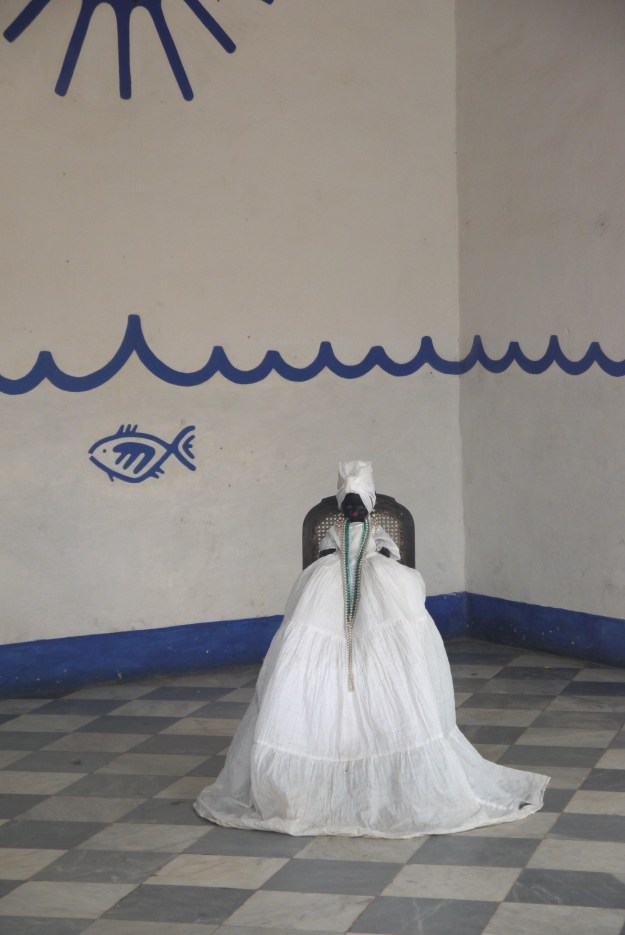
Yemaya
 THE DREAM OF DISTANT LANDS