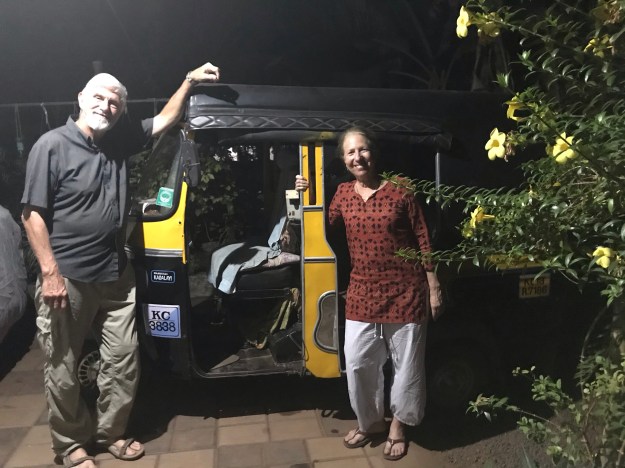
 The alarm goes off at three in the morning and I jump up quickly and quietly so I don’t wake up Gerald. He insists it is not early morning but the middle of the night, and has decided to forgo this last Theyyam ceremony before we leave Kannur.
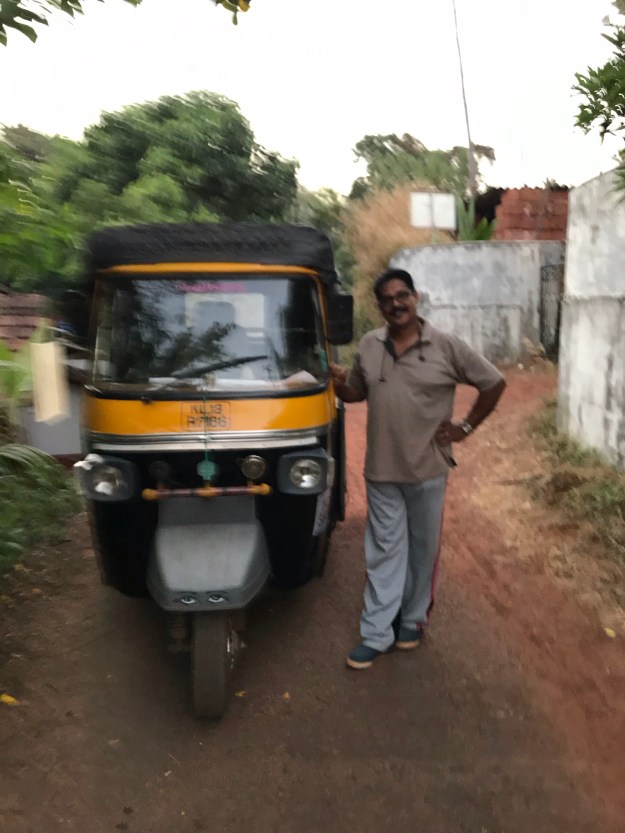
Vineeth, my trusted rickshaw driver and guide is already waiting for me outside. I put my pink cloth carry bag on the seat and off we go.
What’s in my bag? A banana and some biscuits, my camera and telephoto lens, iPhone, and last but certainly not least, a handy water spray bottle which brings down my body temperature quickly when the steamy tropical heat threatens to break my resolve to remain any longer.
The temple I am going to today is only 17km away but it not a paved road so I have no idea how long the journey will take. I ask myself if I should try to sleep on the way and I lie down in a fetal position on the plastic padded bench seat in the rickshaw.That idea is quickly abandoned after the first few bumps.
Forty minutes later we arrive and Golikan, the first deity, is making his appearance. The priest motions for me to wait until the blessings for putting on the mask are finished before I take any photos.I have seen this deity at other temples but this performer is more engaged and active than the others, walking on stilts and leaping around the courtyard wildly.
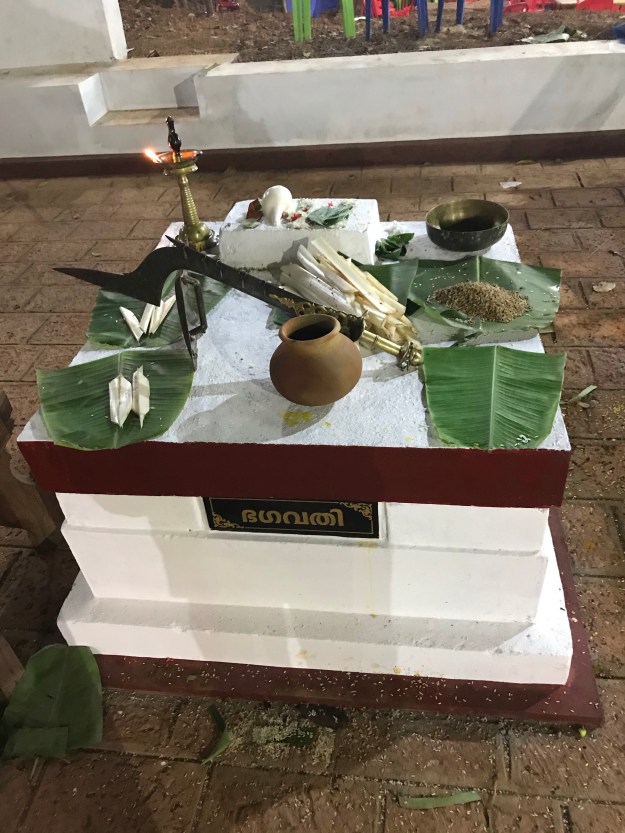
This temple is an older one dedicated to Shiva, and there are small shrines with offerings of rice and coconut.
Quite a crowd has gathered by now and there is an informal men’s and women’s section for seating.
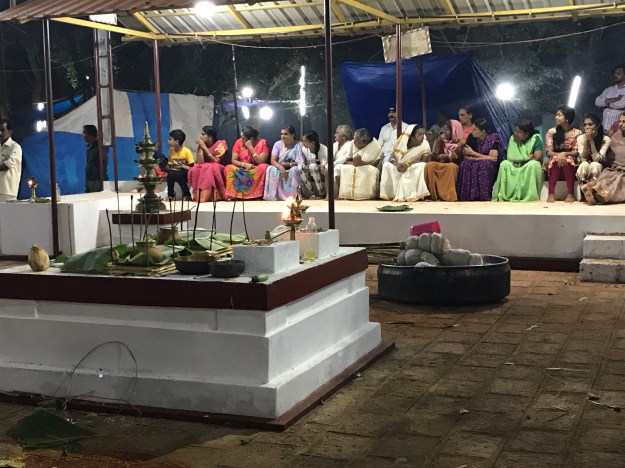
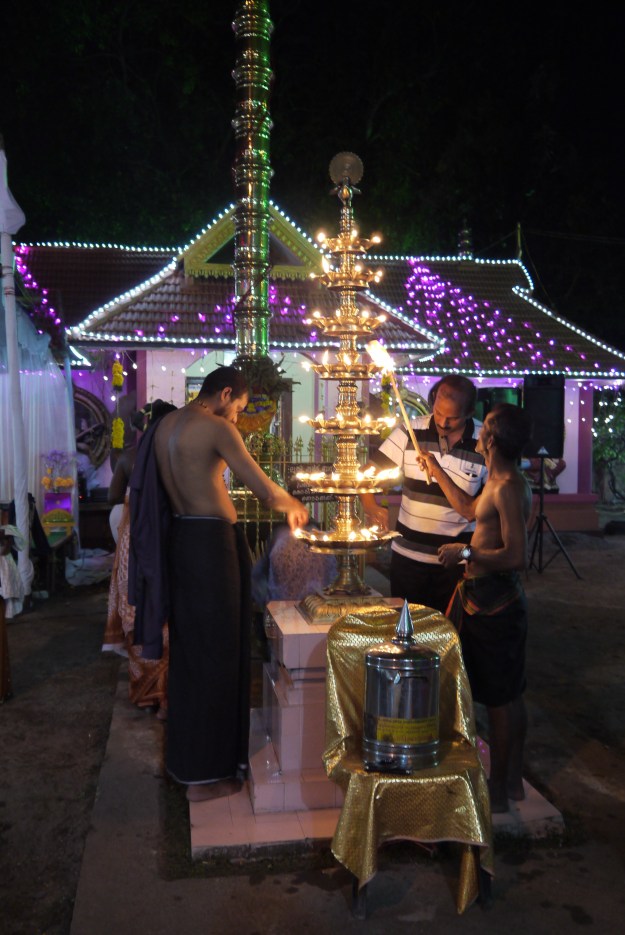
Beautiful traditional Keralan white silk saris banded with gold are worn by the older women, who have brass oil lamps which will be lit and blessed by the spectacular fire dancer deity who will be performing later.

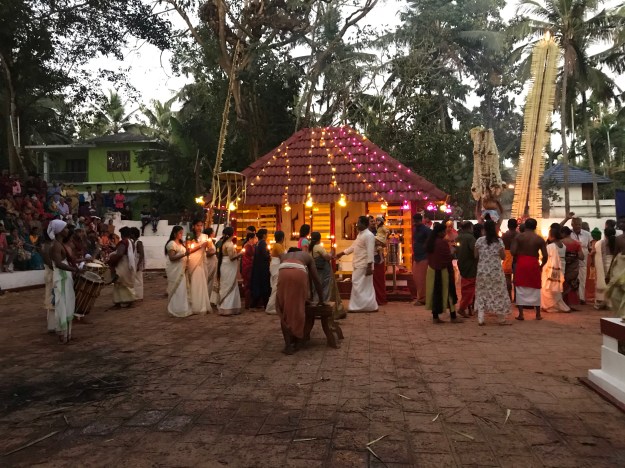
After the first three Theyyam have finished their performance there is a break. Seated on small thrones in the courtyard the Theyyam bless the villagers as they line up. Meanwhile, a loud speaker is advertising services by companies who have sponsored this ceremony. and like all things in India, is at high volume.
An aura of anticipation and excitement is in the air as we await the entrance of Agni Kandakarnan, the son of Shiva.
I am seated directly in front of the temple so that I have a prime view of the entrance of each deity. Agni Kandakarnan arrives and the temple attendants place the eight poles, each with a torch at either end, around his young coconut leaf skirt. When they are lit there is an audible hush and then a gasp.
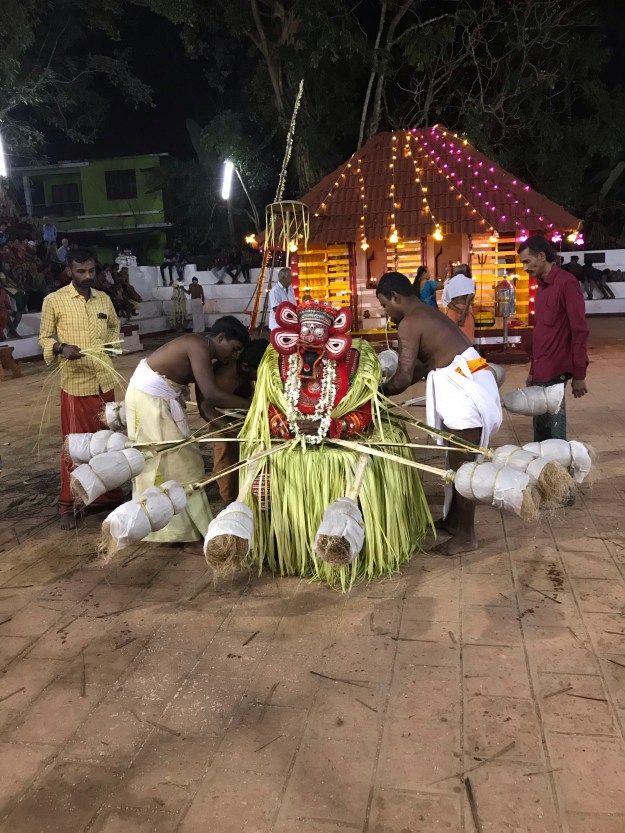

Each time Theyyam is performed, even if it is the same character, there is a sense of unpredictability. On this particular occasion it is both terrifying and playful. As the fiery Theyyam spins around, spreading balls of flames on the ground he is yelling angrily, running through the stands, stopping now and then to bless a man, woman or child. Then just as suddenly he leaps up to where a gaggle of young men are seated and grabs someone’s cell phone.

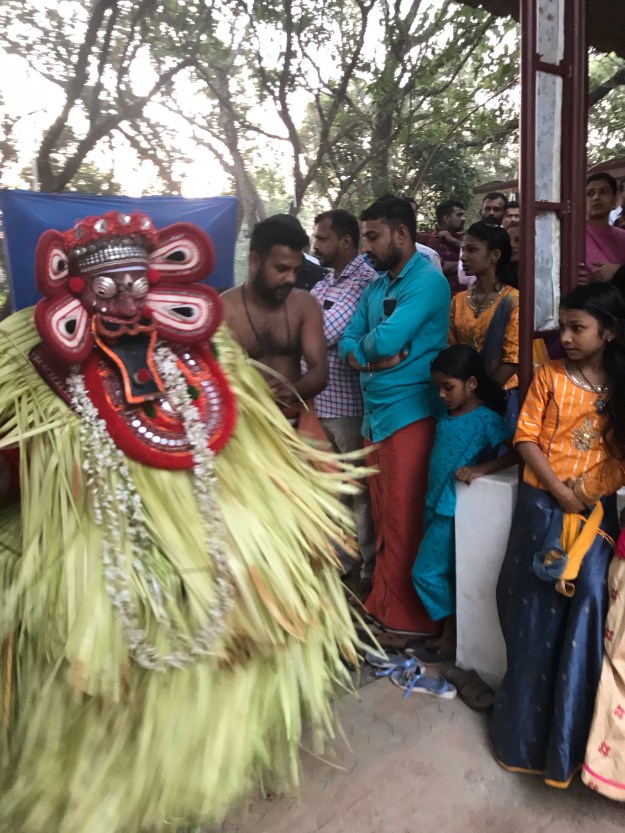
He runs around gleefully and mischievously displaying his prize, until he finally gives it to one of the drummers. The owner of the phone runs hurriedly to retrieve it.
By now the sun is rising and Vineeth has to bring his daughter to school and signals to me that it’s time to leave.
I arrive back at the guesthouse exhausted, exhilarated and unable to speak.
I will be forever grateful to my dear husband Gerald, who introduced me to India sixteen years ago. I could have never imagined what a profound impact it would make in my life.

 THE DREAM OF DISTANT LANDS