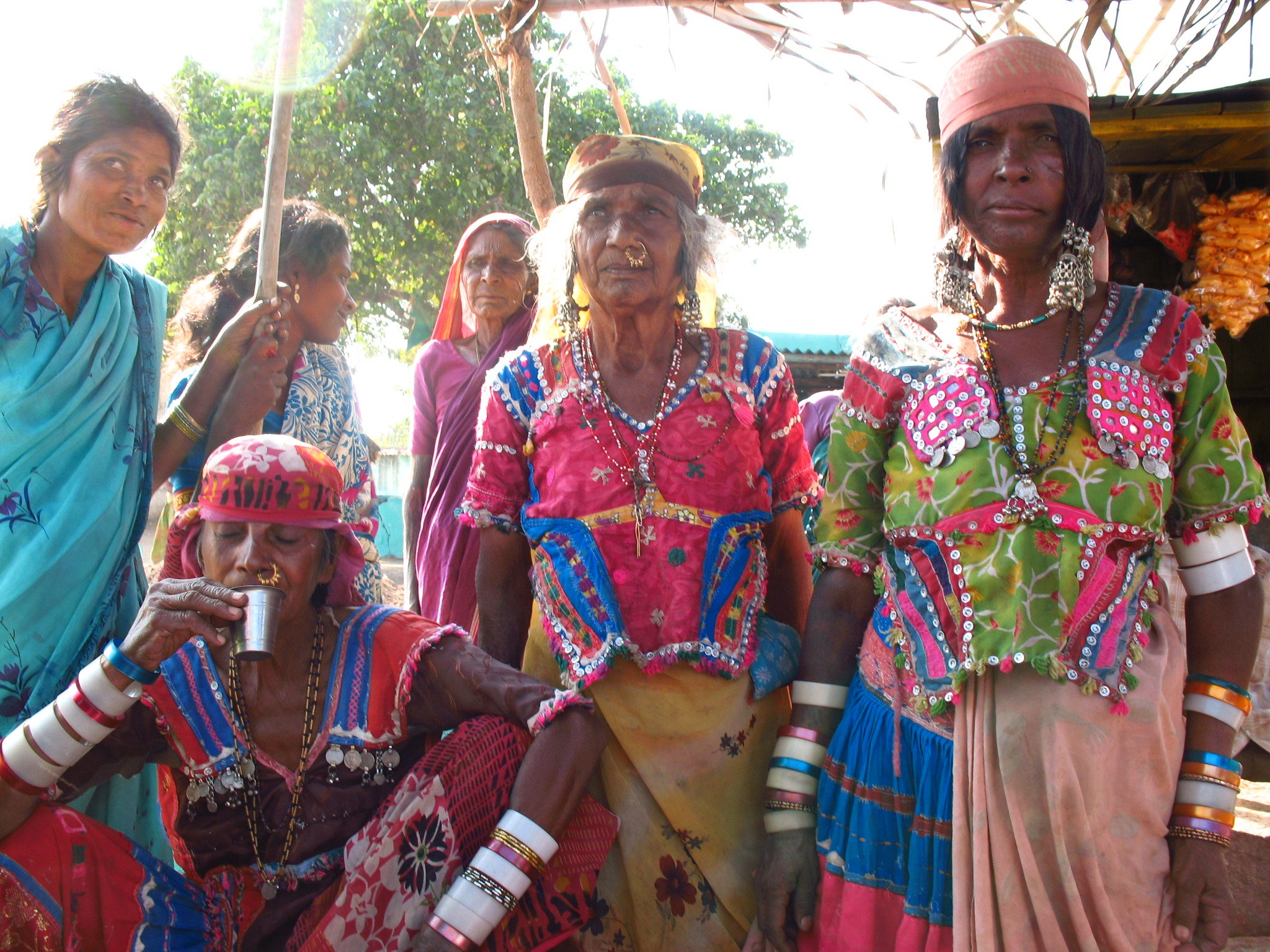

Shaikh and Shamim
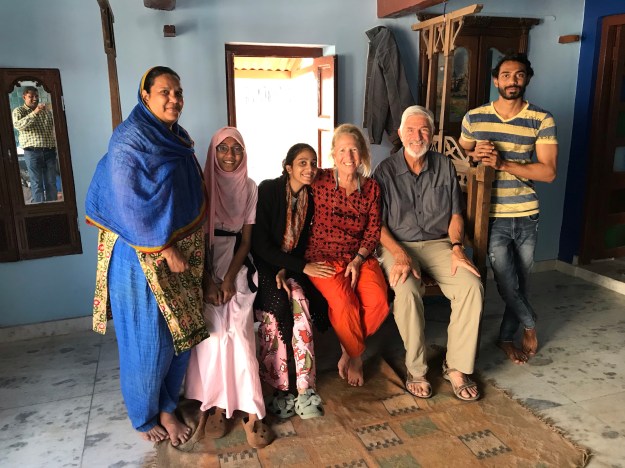
The Mukaram family
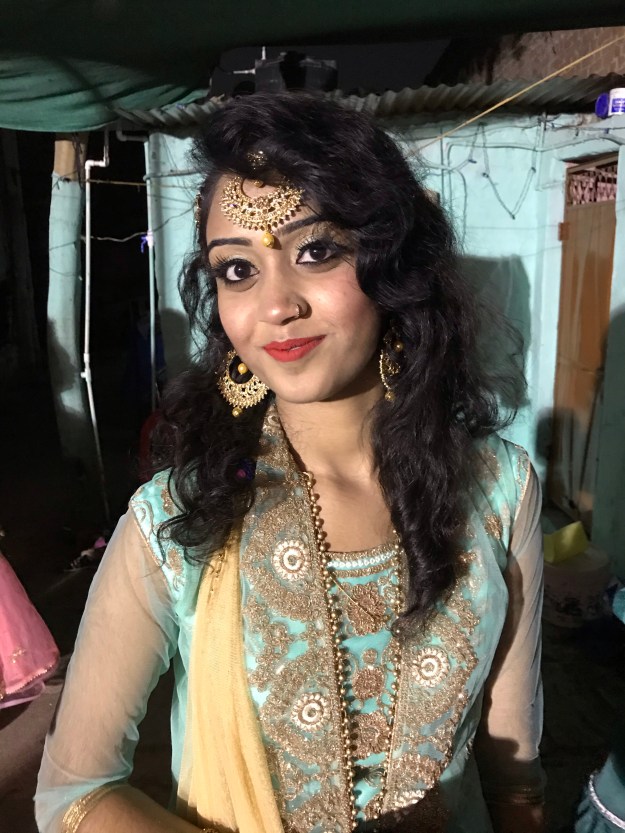
Rusda, Me, Tayba and Shamim
Yes, do buy a gown for the marriage, it’ll be so much fun! We’ll go shopping together.
Don’t buy a gown, you’ll only want it for one day, yes? I can bring you some to try on and see what you like.
You’ll be needing help with getting ready for the wedding, ma’am?
I can lend you jewelry and shoes if you like, ma’am. No worries.
Since arriving in India we have been “adopted” by numerous people and treated like members of the family. We are often asked, with a look of surprise, why we have not brought our children and their spouses with us. “Next time,” we reply sheepishly. Indians tend to travel in large family groups of eight or more, except when they go on a honeymoon. Grandparents on both sides as well as aunties,cousins and children go on vacation together. Two lone travelers are an unusual sight.
We were thrilled when our friend Shaikh Mukaram invited us to his niece’s marriage and that we would be part of the wedding party. Although we have attended many Hindu weddings, this would be our first Muslim one.
She is very poor, my sister, but there will be over 1500 people at the wedding.
Shaikh’s father has eleven brothers and three sisters and his mother has seven brothers and six sisters. He has one brother and four sisters and his wife has three brothers and three sisters. Ubed, his son, estimated that he has three hundred cousins!
Nilam, one of the teachers at Manav Gulzar Community Center,offered to find a dress for me to borrow.
I have so many sarees but no gowns, I don’t know if you’ll like what I have.

Nilam
After teaching the workshops with the children I am usually exhausted so the thought of going to shop for a dress, no matter how much fun it might be, seemed overwhelming. I said that I was sure anything she had for me would be fine.
You need jewelry too, right?
The next day a big bag with three beautiful gowns and masses of costume jewelry arrived.
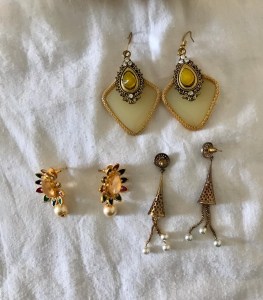




How to decide? Ask my friends on Facebook of course and have a vote! With opinions pouring in from India, Cambodia,Italy, France, Germany, England and the USA, the festivities started off with a bang.
The red is more striking
Quello in alto a destra,oro (Italy)
No need to choose,because you always beautiful (Cambodia)
Even pink is gorgeous…but I would suggest U go in Red it has a festive look in my opinion Best for the occasion. (India)
When the tally came in with more than one hundred and fifty votes counted, Red was the surefire winner. I felt like a princess with all the gold and sequins and glitter. Rusda, one of Shaikh’s daughters, agreed to come shopping with me for shoes and go together for the Heena hand painting the day before the wedding.
When Dhairya, one of the front desk managers at my hotel found out that I had no shoes she quickly piped in. “I have some shoes I can lend you. No worries. My Mummy and me have some pairs that we share for weddings. I’ll bring them by and you can see if they fit. “
Things were coming together quickly and it was the Friday before the wedding.
gown-check
earrings and bangles- check
gold sandal heels- check
Now it was time for the Heena.
Name and place where I will meet you tomorrow Rusda?
General hardas ngav nav lakhaa malek shaban ki dargah
Huh? Even with the Google map pinpoint I could tell it was complicated and I’d never find it.
I think maybe I won’t come. I’m afraid of getting lost.
Yaa it’s too far From your hotel.
I had resigned myself to not getting my hands painted and was commiserating with Jagat who runs the Earn and Learn program at Manav Sadhna.
Don’t worry. Nita can do it for you. I just have to send Kasturbhai to the market to get some Heena. Wait here.
I waited for forty five minutes until he returned from the market, as the first market had no more Heena. It is wedding season and there is a big rush for the Heena coloring. It is a tradition for women friends and family members to get their hands painted . Nita is an artist and in twenty minutes she had finished two beautiful traditional designs on both my hands while Jagat sang songs extolling the love between Gerald and I. Don’t ask me why he decided to do this, but he was enjoying himself so much I didn’t ask.

Before
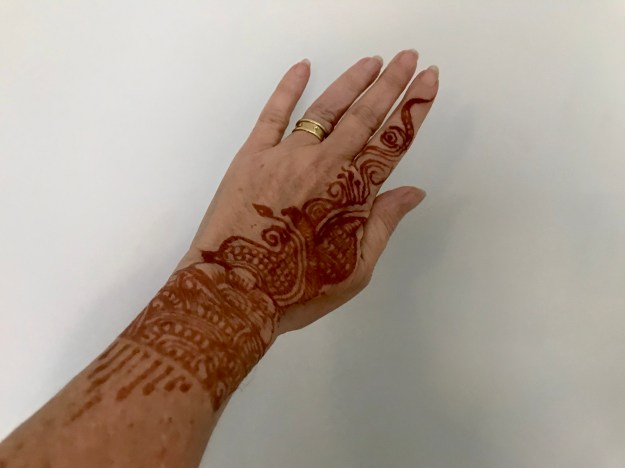
After

Jagat Bhai
Saturday arrived and Dhairya arranged her schedule to free up some time to help me get ready. She insisted on calling me ma’am and although it bothered me at first, like most things in India, I got used to it.
Ma’am you must wear the diamond earrings, more Indian, others too Western. And yes, the diamond jewels draped on your forehead.
I left everything for her to decide and reveled in the pampering-make-up, jewelry, perfumes, the works.Gerald didn’t have anything special to wear, especially on his feet, but he had a Kurta. No chance of borrowing anything his size from anyone here in India.

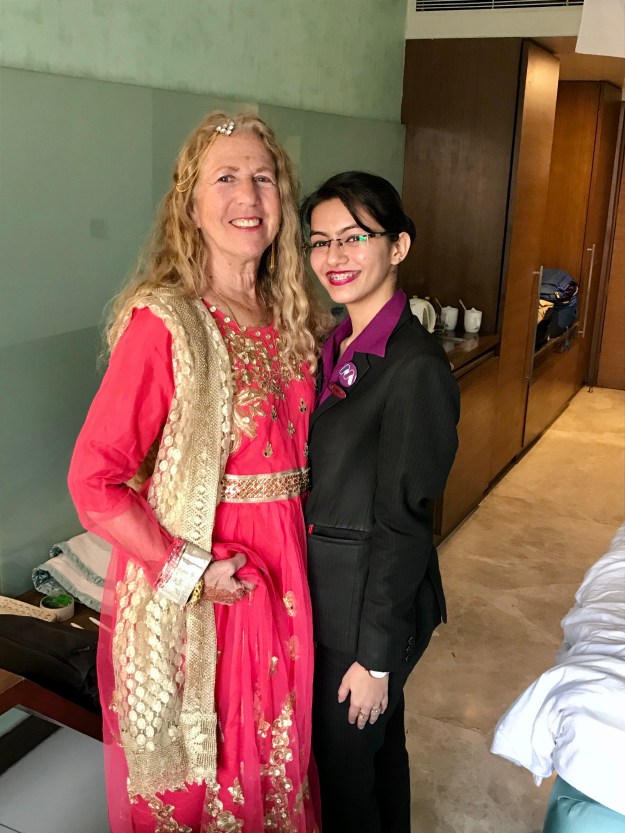
When I made my grand entrance in the lobby of the hotel, you would think a movie star had arrived. The Indians gave their thumbs up approval and insisted on taking endless selfies with me.

Since we had no idea what a Muslim wedding would be like, but had been told that it was a more restrained affair-without the exuberant music and dancing of the Hindus, we had no expectations.
The evening started off by going to the home of the bride’s mother to watch the last minute make-up preparation. It was in a poor section of town where in 2002 Hindu Nationalist riots were responsible for the burning of many homes in the Muslim quarter. Shaikh’s sister’s home was among those that were destroyed. The Indian government did nothing to quell the riots and did not pay to rebuild. It was the Muslim community that helped her.
A type of canopy had been set up in the small courtyard of the quarter, and many neighbors were milling around as well as young cousins who were already dressed for the wedding. The housing quarters were tiny, barely enough room for three women to dress the bride. We stayed outside near the mosque.
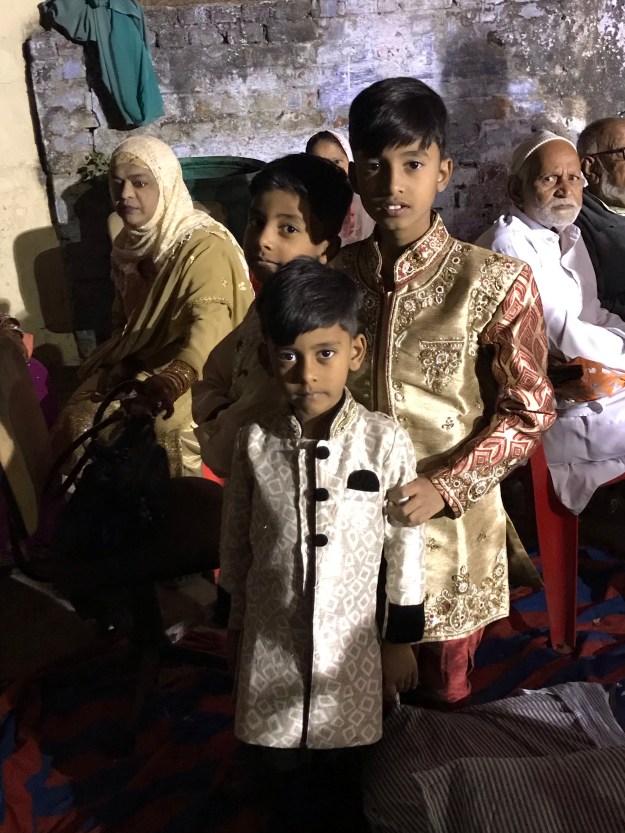
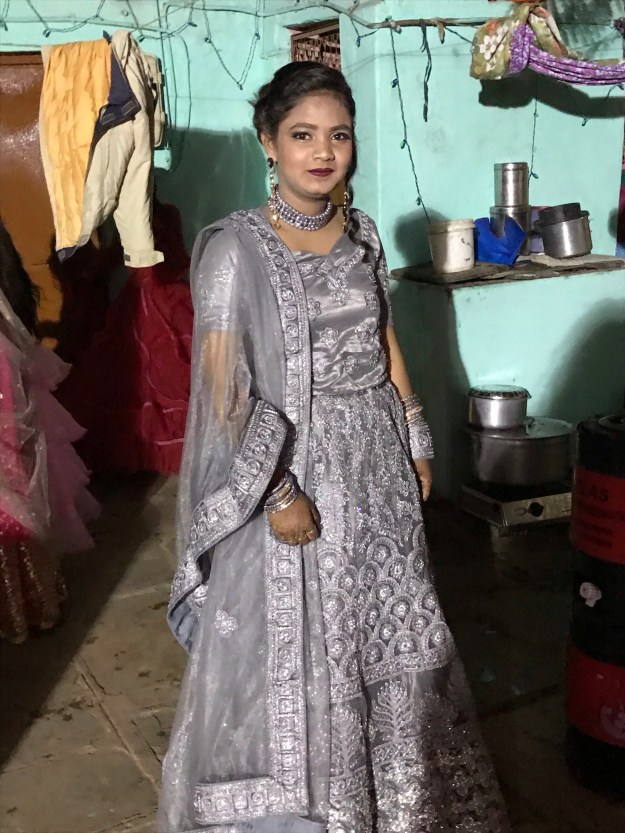

We then piled into Shaikhs car, leaving Rusda and her mother to come with the relatives. “It wouldn’t be nice if we didn’t stay with the family and go together with them. We will see you there.”
The earthen courtyard outside the mosque was dimly lit when we arrived, and it certainly did not look like a wedding venue. There was a stage set up with a throne, set against a blue and white striped curtain as back drop. The groom’s family (only about thirty five male members) sat below, looking glum and not talking to one another.We clabbered over the uneven dirt path with me holding my gown by the hem, trying not to trip over my heels while we crossed the courtyard into the bride’s section.
SPLAT! All of a sudden I felt the sole of one shoe detach from the heel. I limped awkwardly while lifting my gown off the ground in the futile hope of keeping it clean.
Shaikh’s brother to the rescue! When hearing of my dilemma he quickly appeared holding a tube of heavy duty glue. It just so happens he owns a clothing and shoe shop and was prepared for such emergencies.
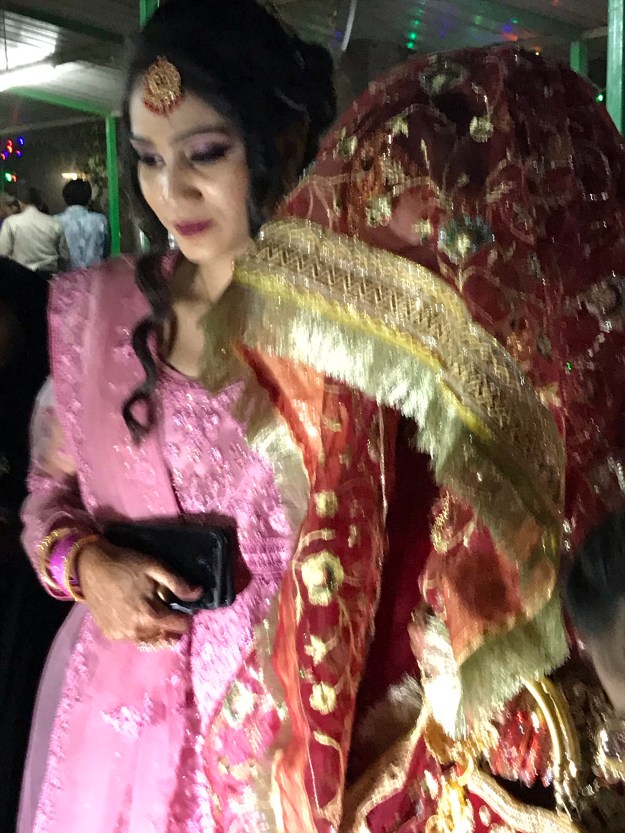
The bride’s section was a dazzling display of kitsch and bling, with women wearing earrings that looked like metal chandeliers , or sculptures that you might see hanging decoratively on a wall.

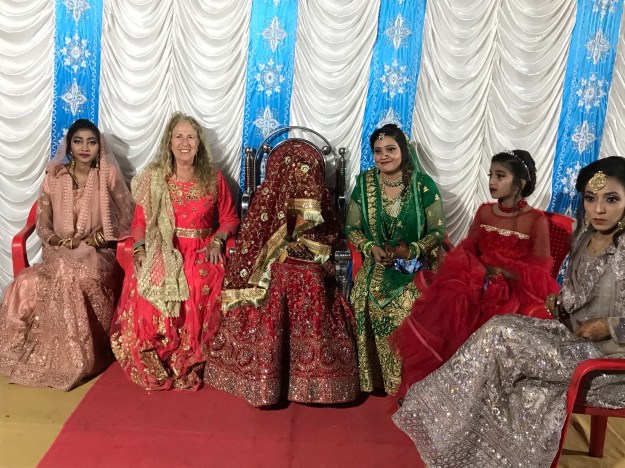
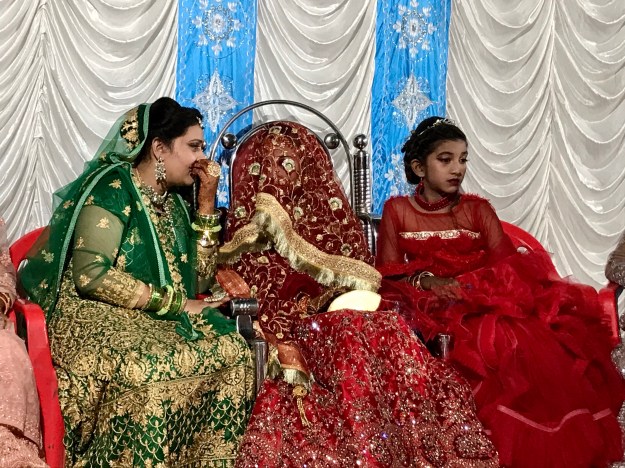
The bride arrived in a car, veil covering her face,and was immediately escorted by Rusda onto the stage where she remained for the next two hours. We were ushered onstage to sit next to her and have our photos taken, along with other relatives. At one point she started crying and her auntie leaned over and spoke soothing words and gave her a hankie. In India, after marriage the bride goes to live with the husband’s family and does not return to her family. It is a very emotional moment.
The groom arrived and took his place, far away from the bride.
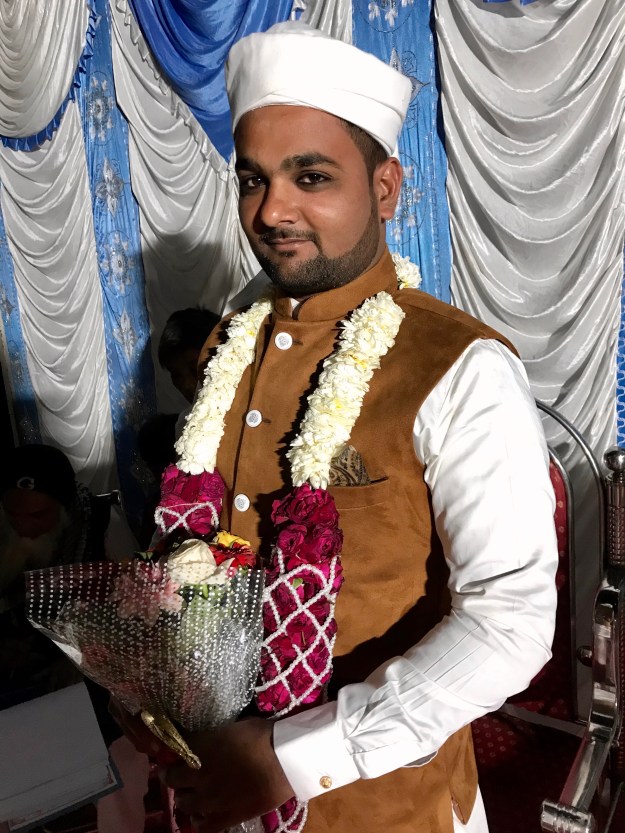
Food was served on large platters to be shared communally- rice, dal and a mutton curry.
There was no Imam (priest). Shaikh’s brother brought the marriage contract onstage first to the bride and then to the groom, still seated in different parts of the courtyard. The “ceremony” was now complete. The couple, officially married,would see each other for the first time only well after midnight at the groom’s house,when a mirror would be placed between them and the veil removed.
The wedding, rather than an elaborate celebration was more a large family reunion. As Westerners it is difficult for us to fully comprehend the complicated role that family plays in Indian society. It encompasses a strong sense of duty, devotion to tradition, and is an enormous source of happiness.


 THE DREAM OF DISTANT LANDS