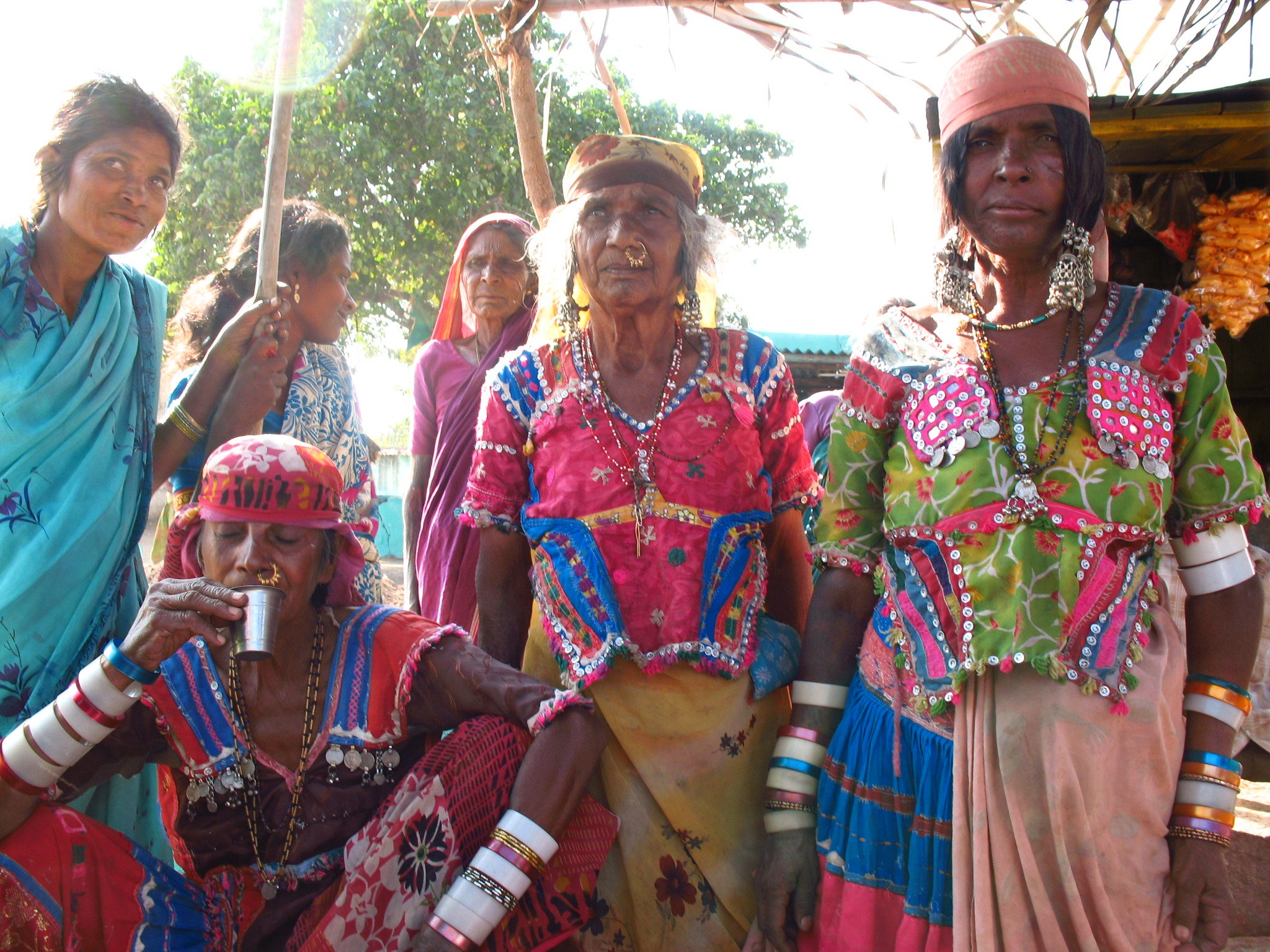
November 9
It is our last night in Udaipur and I am going to Noya Guda, where six years ago I witnessed a hair-cutting ceremony of seven year old Iswah, and stayed in the village for two days. (If you want to see some highlights from that ritual you can go on YouTube and look up “BHERU-haircutting Ceremony” by tembigirl)
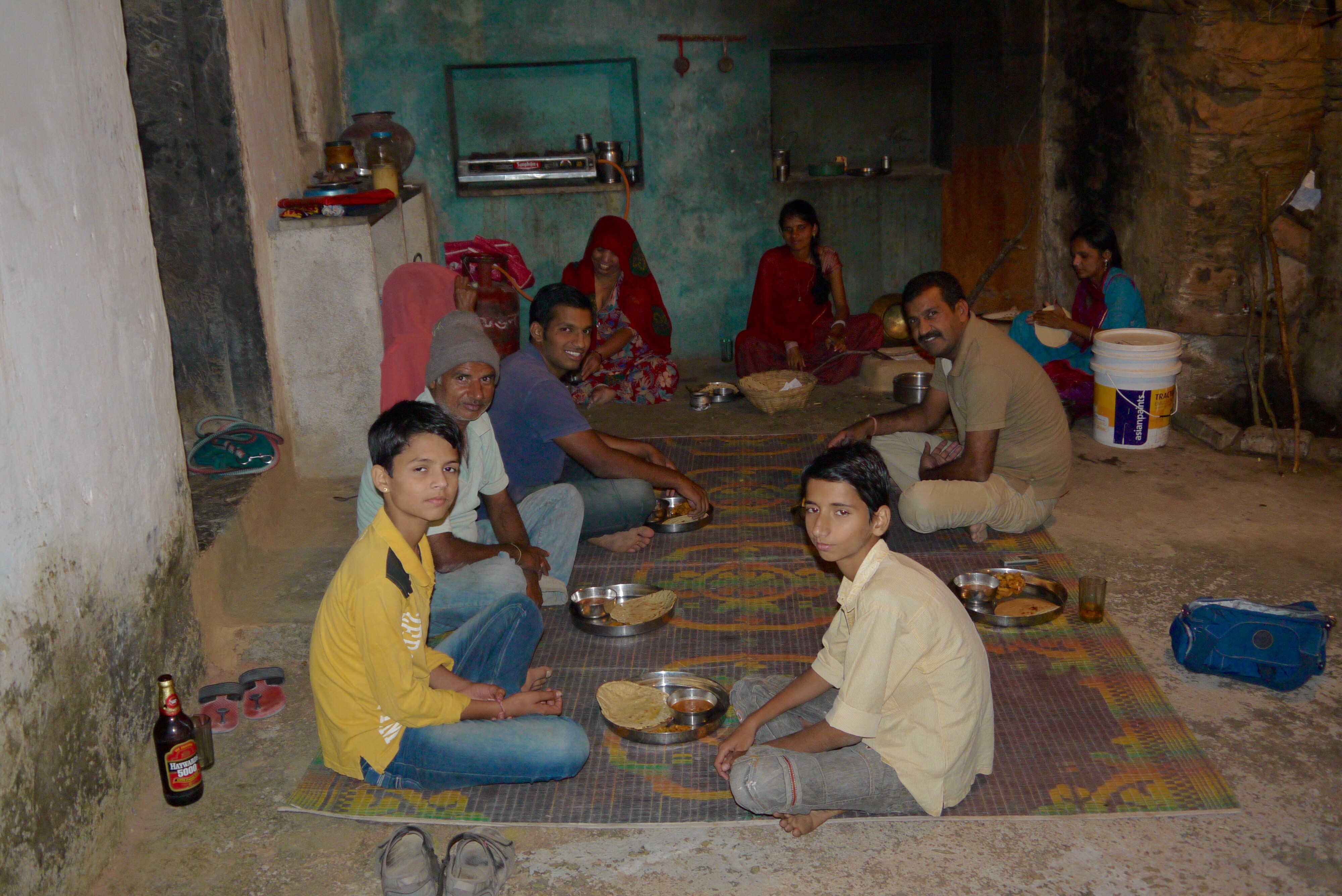
Iswah, in the front, left, now 13 yrs old
Preparations have to be made well in advance after my previous adventure. I have a large lunch, knowing that dinner in the village will be eaten very late, at 10 pm. Liquids must be consumed hours ahead of our departure, because there is no toilet,not even an Indian squatter. (Last time I visited, the headman drove me to his village where he had a toilet. Then someone waited outside the door until I finished!).
At 4:30 I go downstairs to Prem and Kesar and we load into the car. It wouldn’t be a proper Indian outing if there were only three people, so their 19 yr. old son, 13 yr. old nephew, and giant dog, Donny, come along as well.
It is only a forty five minute drive from Udaipur, but centuries away . We stop first at Prem’s village, where his family compound has an elaborate Bheru shrine, and with the help of the village priest, prepare offerings. The family joins in gathering wood branches for a small fire, pours ghee into a vessel, places incense and marigolds, and prostrate themselves in front of the god .

Priest doing puja in front of Bheru Shrine

Bheru Shrine
Meanwhile a camel, carrying a load of grasses passes by, led by a wizened, turbaned man. I feel as if I have been transported to another time zone a thousand years ago.
When we arrive at Noya Guda, I notice that nothing has changed since my last visit. There is no paved road, cattle roam in and out of stone houses, and the entry into Iswah’s home is inhabited by a water buffalo and some cows.
The two sisters, now 22 yrs and 19 yrs, are married and the eldest has a one year old son. They are here visiting the family for a week. One lives far away in Gujarat, and the other a few hours away. It is the custom for girls to live with their husband’s family. Prem tells me that the younger one, (who married at 16), is now six months pregnant, and asks if I can look at the medical record she got from her last doctor visit. I am not surprised to see that her hemoglobin is low, but the size of her fetus is only 11 weeks, and she is supposedly 24 weeks pregnant. I tell them that she needs to eat more and gain some weight. The daily diet of dal and chapattis is not enough for a healthy baby.
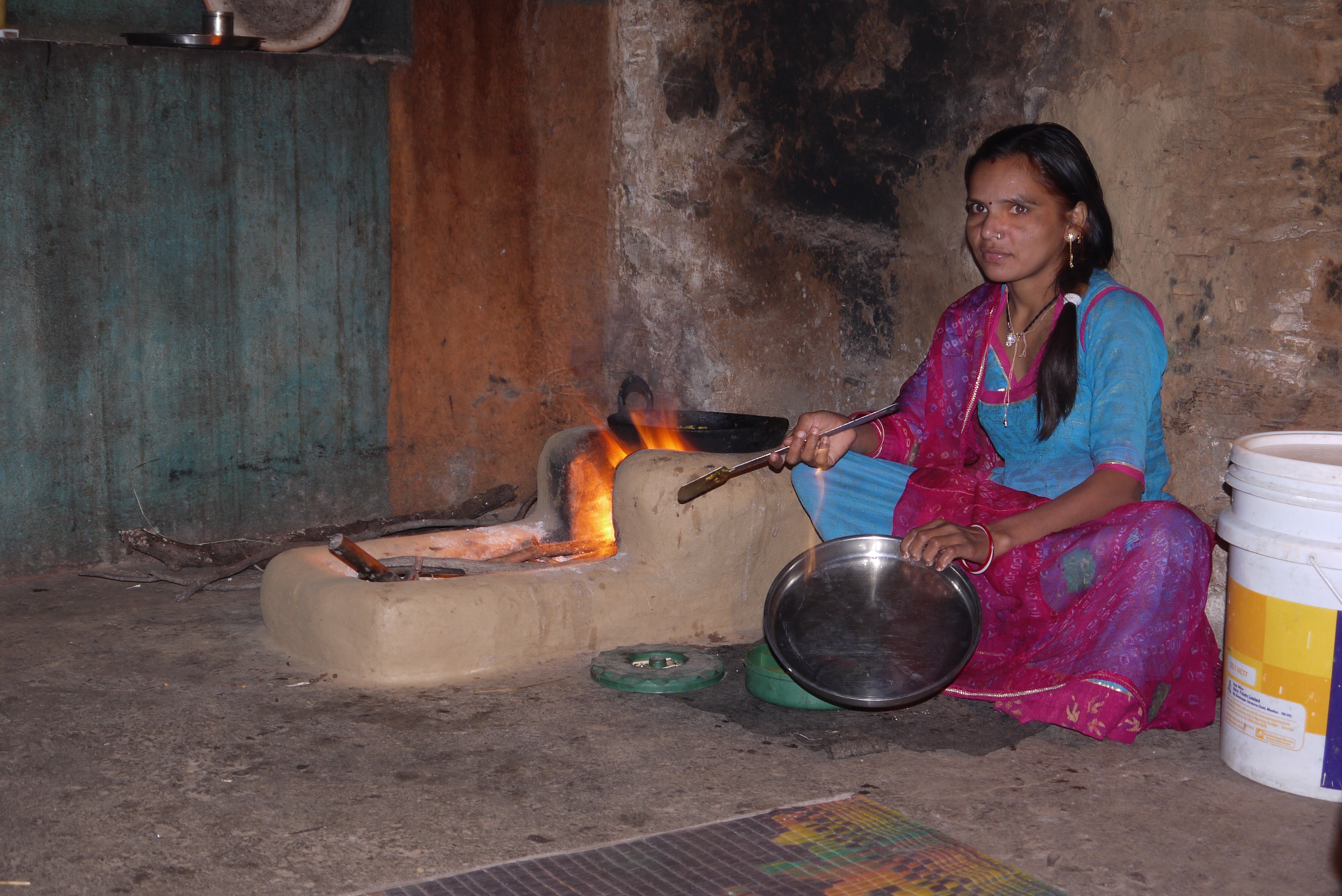
Making the roti for our dinner on a clay stove at the village

Dinner with Kesar and Prem and the family in the village
What concerns me more is a notation on her record. Last year she had a “voluntary termination of pregnancy”. India has 914 females to 1000 males. Although female infanticide has decreased, female fetuscide exists unofficially. The government has banned “sex determination” tests, but for baksheesh they are still available. I discreetly ask Prem about boy and girl babies, and he insists that it is illegal to abort and is considered a crime. I do not mention what I read. Girls are considered undesirable because their families must pay a considerable dowry at marriage, and since the bride always lives with the groom’s family, a valuable helper is also lost.
 THE DREAM OF DISTANT LANDS
Wow, Deborah, you’re sure getting into the nitty gritty of rural life in India–especially the gritty! 😉 Reminds me of our time in Papua New Guinea 38 years ago; I think I’m not quite up to such close and personal contact anymore!
LikeLiked by 1 person
it took some googling but I found this:
User Contributed Meanings for Bheru
The baby boy name Bheru comes from the Indian word which means, “Friend.”
Numerological Meaning (For Entertainment Purposes Only)
People with this name tend to be very inspired, intuitive, and creative. Their aim is to improve the world and can be quite altruistic. They strive to see the “Big Picture” and achieve their dreams.
Thank you for the informative post. Robert
LikeLiked by 1 person
Sad about the girl and the situation for so many. On another note, you must stay hydrated so drink fluids and use the great outdoor toilet!
LikeLiked by 1 person