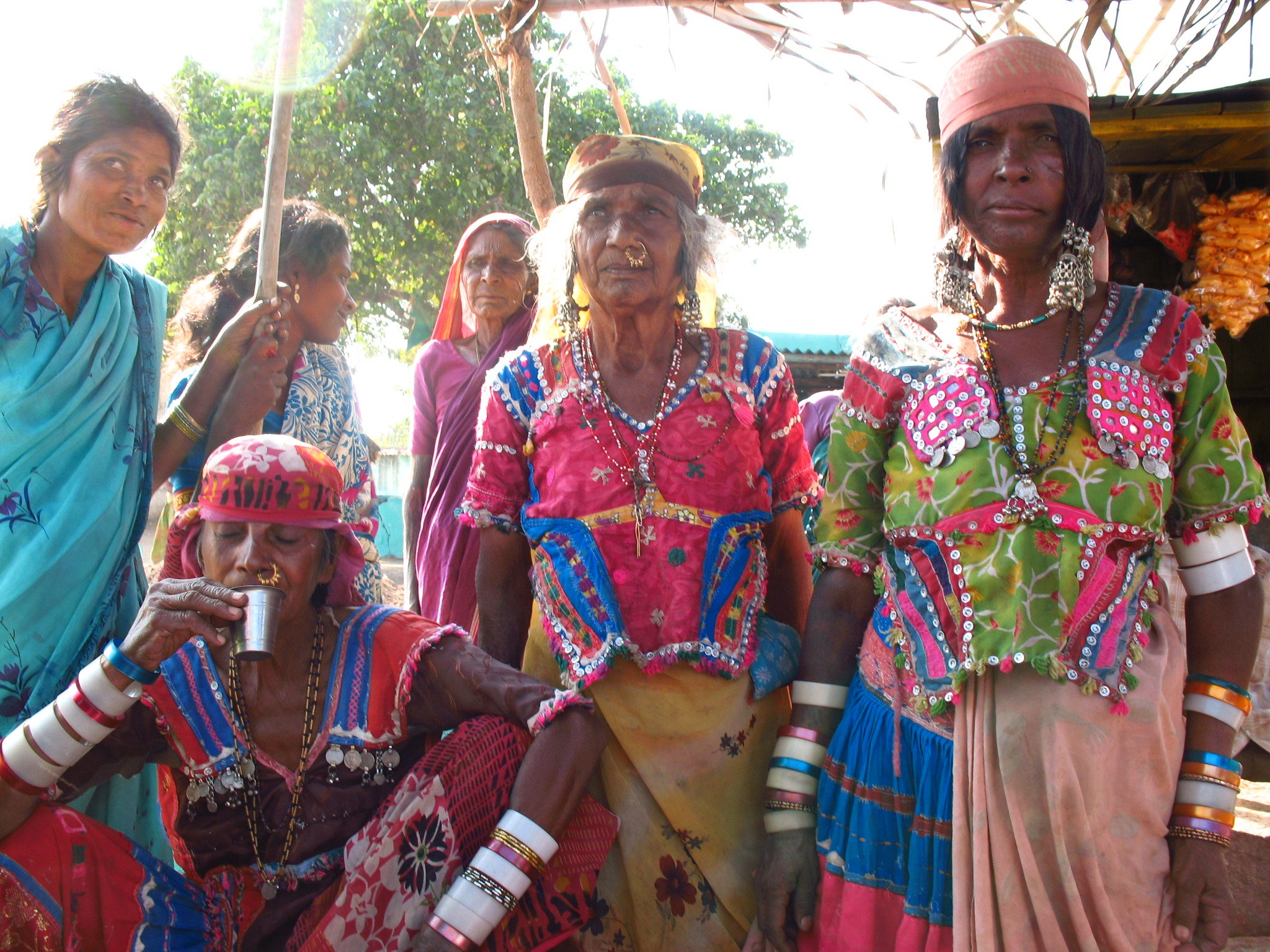
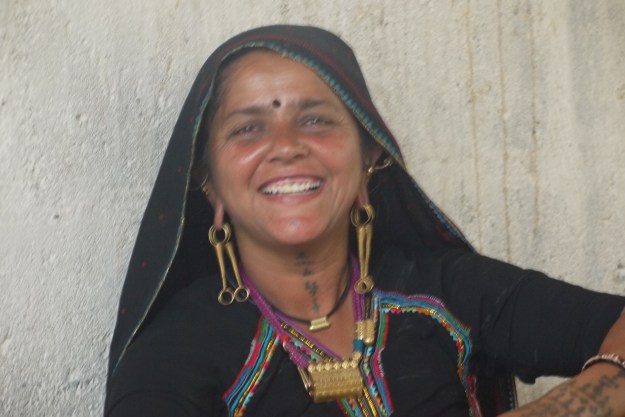
Rabari woman

Meghwal women in Ludyia
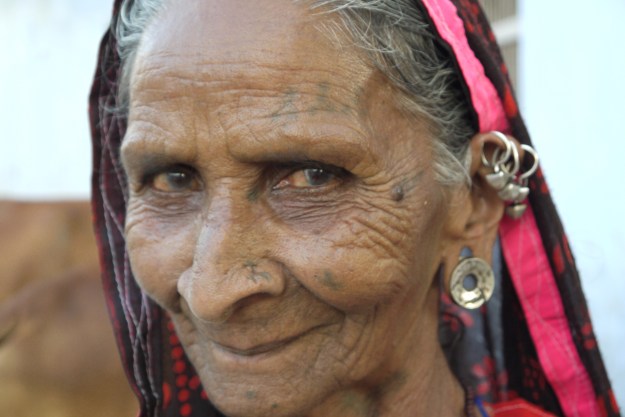
Ahir woman
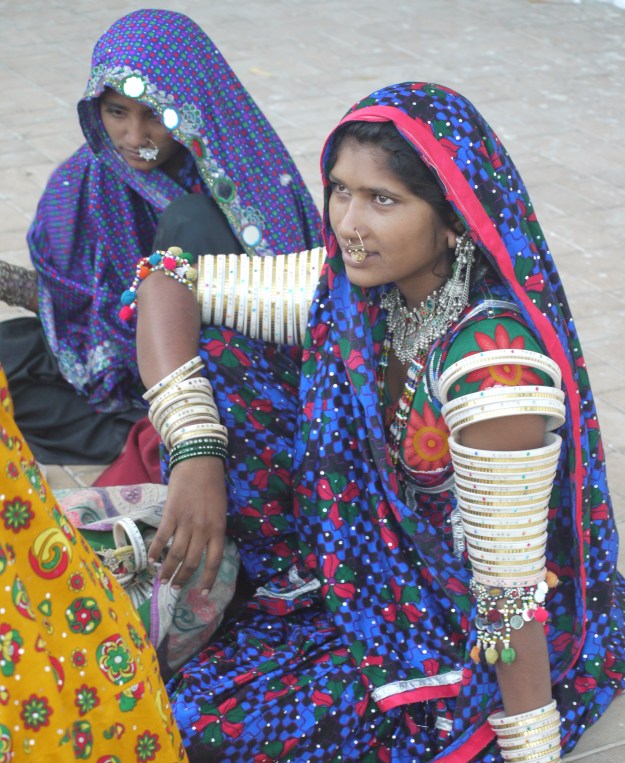
Meghwal girls
November 24
I smile and grunt as I point to the silver neck collars, ankle cuffs and earrings. And so the ritual begins.
We are now in Kutch-a remote area in the north of Gujarat, which emcompasses a 17,000 sq. km long salt desert and is the home to a variety of colorful ethnic groups. Known for their skills in the traditional crafts of weaving, embroidery, tie dye, woodwork and leather, they are alternately reclusive and outgoing.
Wealth is portable for many of these tribes, and a tangible sign of prosperity. Women wear ankle bracelets weighing over 2 kg, and the neck collars are no lighter. When we go into these villages I wear gaudy jewelry, bought specially for such occasions; and always my “mangal sutra” which is a sign of a married woman. A common bond is formed by comparing our “wealth” and they want to know if I am wearing real gold. As a wedding gift, Meghwal women receive enormous gold nose rings which they proudly display. Gandhi called these people “Harijans”, or “Children of God”, but to the Hindus they are “Untouchables” and relegated only to certain professions.
Originally from Rajasthan, Meghwal women are known for their intricate and colorful embroidery, embellished with small round mirrors and pom poms; the men work with leather. Meghwals usually live near Muslims so they can buy hides from their dead cows. Hindus are forbidden to work with leather. I find it ironic that these people are considered the lowest of the low, and yet their villages and homes are the most immaculate places I have seen in India.
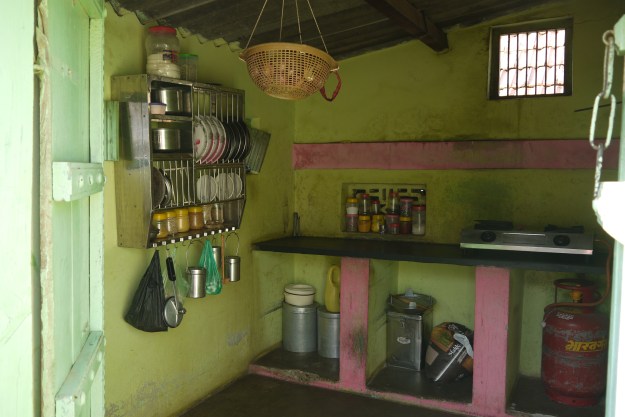
Kitchen
Rabaris are elusive and fascinating. Herders, and primarily nomadic, they came from the deserts of Jaisalmer. Women are dressed in black embroidered bodices and wear two long brass earrings in each ear, so heavy that sometimes they rip the ears apart. With cities encroaching on their grazing lands, the Rabari are forced to live in villages, and occasionally pack up their belongings to travel for several months.
We are with our resourceful driver/guide,Sheik, and like a good tracker, he is always on the lookout for my “women”. On the highway we suddenly see a long caravan of camels and carts. “Deborah, look up ahead, it’s Rabari on the move”. It’s a rare site to see them traveling, and we speed up, looking for a safe place where we can stop and get out. I am almost falling out of the car, trying to get my camera and myself out quickly before they are gone. No need, the caravan is about 20 camel carts long. I get a glimpse of the carts, filled with clothing, beds, suitcases and provisions. Small children are placed high atop bundles of cloths and furniture. As we get closer, the women signal that they don’t want any photos taken, so I put my camera away and try to soak in this amazing sight and stamp it into my memory. (These days no easy feat!)

Nomadic Rabari herdersI
At the silver market in Bhuj (the largest and only big city in Kutch) I notice that there is a very booming market for these weighty body adornments. I thought that many of these people were too poor to buy precious metals and had resorted to wearing plastic or nothing at all, but I’m very wrong. Each booth displays rows and rows of tribal silver jewelry. I sit down at one where a Rabari woman is trying on a heavy silver anklet. She motions to me to get one too, and the jeweler complies by placing one on my ankle. Alas, my ankles are too fat, and he offers to stretch it to fit me. The woman is beaming with joy as she gesticulates that this is definitely my style.
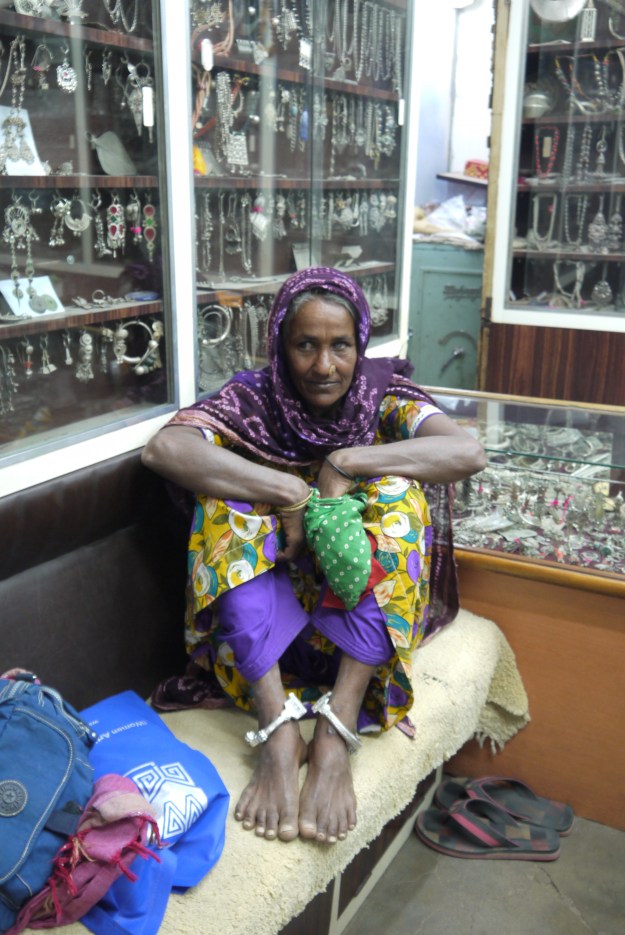
Buying silver ankle bracelets in Bhuj market
Older women tend to remove their jewelry and save it for their daughters, or just take a well earned break from being the familiy safe deposit box. Once they are married and have children, they no longer need to be beautiful.
 THE DREAM OF DISTANT LANDS
Just woke up, Happy Thanksgiving. Love, love your blog…..so very interesting. How did you get even one picture of the Caravan……fascinating? The interactions, especially the one where you are being fitted for your leg “wealth” is precious and I am sure, will never be forgotten. Hugs to you…..
LikeLiked by 1 person
Happy Thanksgiving!
We miss you and are happy that you and Gerald are having such a fascinating time!
LikeLiked by 1 person
Thanks Lena. The same to your whole family. We visited a synagogue in Ahmadebad. There are still 40 Jewish families there. It was from 1934 and in terrible shape, in the midst of a filthy Muslim neighborhood. I thought from the looks of it that it was no longer in use but we found the Jewish caretaker and he showed us around.
LikeLike