Theyyam– An individual attaining a divine state of existence as a living god and morphing into a power that provides solutions for mans mental and physical problems is something that sets Theyyam apart and above all the other ritual art forms in India. –Shreekanth Trikaripur
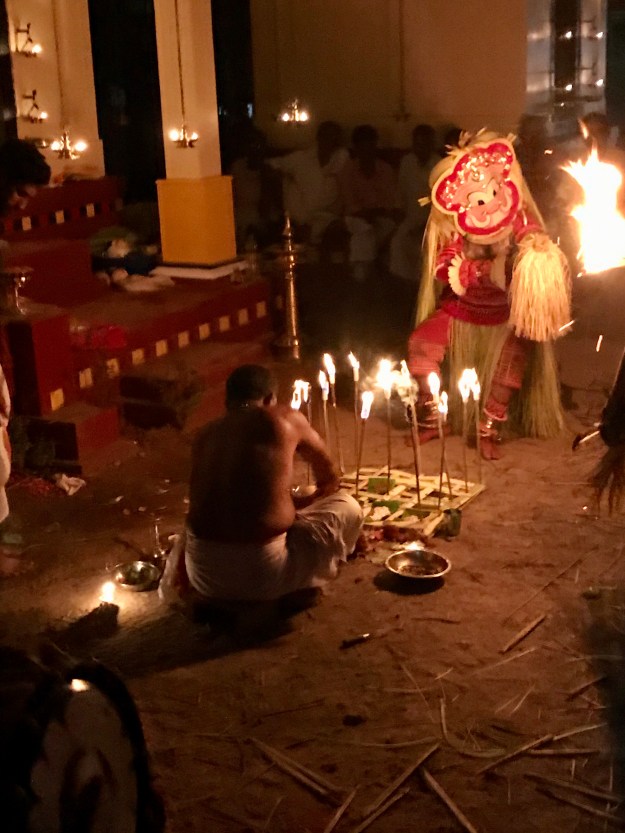
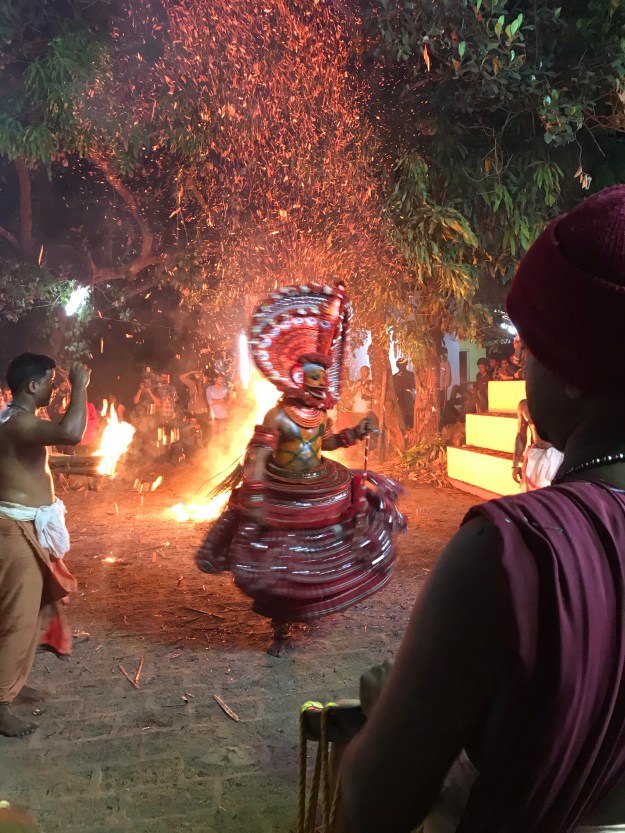
To say that I am obsessed with Theyyam would be grossly understating my relationship with this unique ritual, and the emotions that I experience in its presence. During a visit to Cochin on the Malabar Coast of India in 2014, I first became aware of this annual ceremony that takes place in northern Kerala between November and April .Since then I have been returning to Kannur every two years . What can explain the magnetic draw which compels me to leave my beautiful guest house before sunrise every morning at three-thirty and again at six in the evening.? The unspoiled stretches of deserted beaches which draw visitors to spend days on end lying in the sun, only vaguely aware that such a powerful event is happening so close to them, is not my first priority. (Although we do enjoy a long walk and swim after returning hot and sweaty from the morning Theyyam) Is it the intense drumming that pulsates through my body as six or seven drummers vigourously pound out the rhthms that will help induce the trance that the Theyyam will experience in order to inhabit the body of a deity? Or is it the depth of emotion that can be seen and felt as the villagers approach the deities for blessings and advice, truly believing with all their heart that they are speaking directly to a god? Or could it be the gracious welcome with which the locals accept strangers and non-believers to this very intimate and emotional observance? I think it is all of these.
The ceremonies are a way for villagers to receive blessings for their temples and to consult directly with a god who can answer their questions and offer advice. They take place before sunrise and sunset in the courtyard surrounding a village shrine. There is a strict regimen to be followed for the Theyyam performer,-the prayers, face and body painting and the costumes. I arrive early so I can watch the preparation of the performers and become immersed in the entire process. Enormous physical and mental stamina is required both to wear and dance in the costumes, which can easily weigh fifty pounds or more, and to withstand the heat of the fires that some of the deities will endure. This tradition is passed from father to son, and although some of the thirty-five deities represented are women,performers are always men.

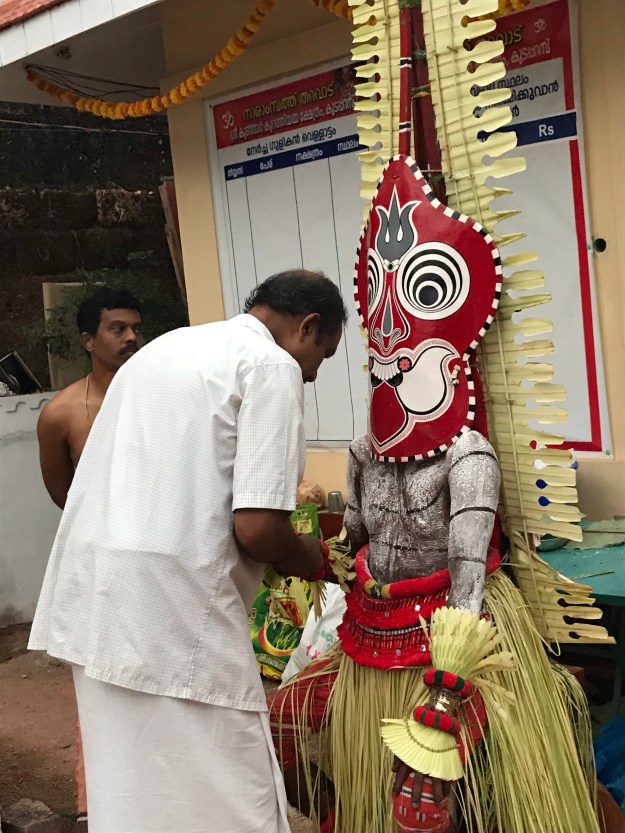


These rituals are being transformed with the changing times. At the weekend ceremonies there was a contingent of big city Indian tourists with expensive cameras around their necks, pushing and shoving their way to the front, blocking the view of others. They were more interested in getting that one “great shot” than the sacredness of the moment. A French woman held her selfie stick which went off with a flash in front of the eyes of one Theyyam in the midst of his deep concentration to achieve the trance like state necessary. Theyyam ritual is not a performance and should not be reagrded as such no matter how elaborate or spectacular it may be. I have heard talk of a tour company wanting to open a theater and bring in paying tourists to watch the “spectacle”. This purification and benediction ritual can only be experienced in its original venue with the local community. If it is isolated and performed out of context it loses its significance and power. True performers are dedicated to their roles as bearers of tradition and will perform only in kaavus (village temples).
Will the next generation of young men continue to have interest in maintaining this tradition or will they be lured into working in Abu Dhabi and Bahrain where many of their contemporaries go to earn high salaries?
My prayer as I leave Kannur is that this beloved ritual survives in its pure form for many years to come.
NB: For more information on Theyyam you can read some of my previous blog posts- Bonfire of the Deities, Burning Man Kerala and Seized by the Gods
 THE DREAM OF DISTANT LANDS
One can discern your love and respect for this fascinating spiritual event…..and fabulous photos…….you are right, a deep religious ceremony cannot be commercialized……your reverence for this ritual results in vivid reportage……I would also urge others to read (and/or re-read) the other postings ……..Brava!
LikeLiked by 1 person
Always my best commentator. I so appreciate your thoughts.
LikeLike
I absolutely love your descriptions and succinct way of expressing your thoughts and feelings about these events. Obviously, regular tour groups would hardly rise at 3 a.m. to experience the Theyyam like you and Gerald do, so I could see some tour operator wanting to put on a “canned” show, much like ethnic dance performances around the world. I’m sure the authenticity of the ceremony would survive among the local villagers who still require their spiritual connection to their deities. Some years ago, Joyce and I were in Bhutan and had to rise at 2:30 a.m. to witness the once-a-year unfurling of a ginormous thanka which had to be rolled up again before sunrise. We were among a scattering of Westerners there at that ungodly—but highly rewarding—time of day.
LikeLiked by 1 person
Graeme- thanks so much for your comment. I know you and Joyce have had many memorable similar experience through the years.
LikeLike