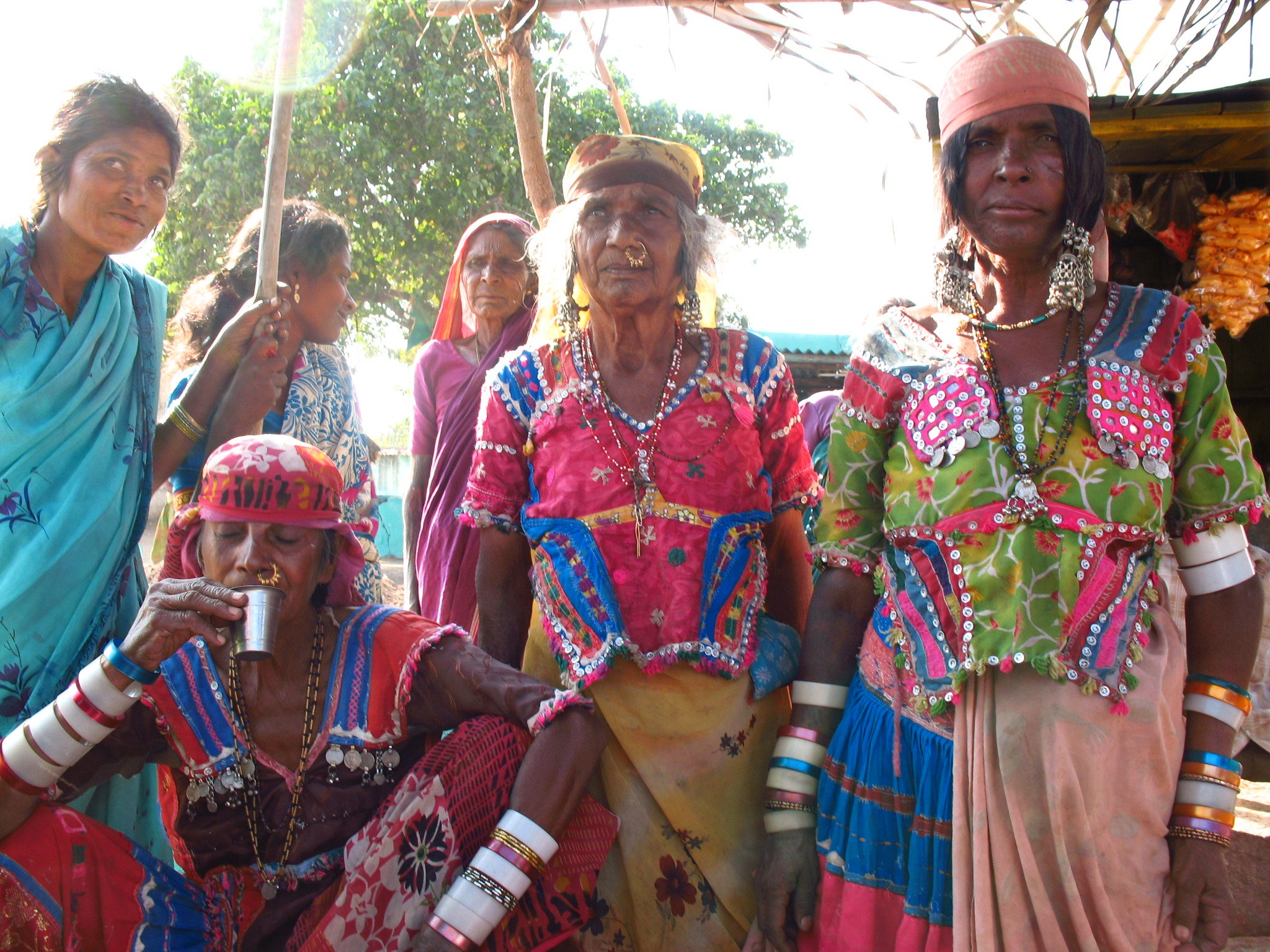
The more things change the more they remain the same


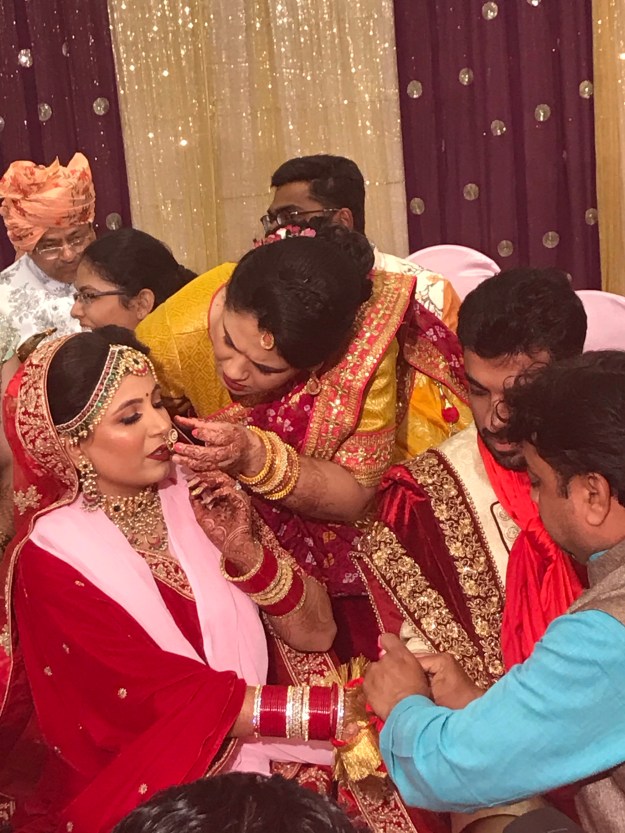

A gentle wind is blowing throughout India, it’s not yet a gust, but its effects can certainly be felt.
What do an architecture student from Gujarat, a chartered accountant from Kerala, and an illiterate villager from Rajasthan have in common? All are women and have or will be having an arranged marriage.
India is a fast growing economy with over one billion people and many are entering the growing middle class. Being thrust into the modern digital age has created new possibilities for work opportunities and social communication. But how has it affected one of the most important aspects of the society, marriage?
Ninety-five percent of all marriages in India are arranged, however the method in which this is accomplished has evolved dramatically. Traditions die hard and so these changes are mainly visible in urban areas.
Vineeth, our rickshaw driver/guide in Kerala has two daughters. Although he and his wife have been exposed to modern ideas and both his daughters have Masters degrees, his girls will only meet their husbands on the day of the wedding, not before. Attention is given to choosing a compatible spouse in terms of education, values, economic promise, and of course, horoscope. One daughter is already married,and her husband, like the majority of Keralan men, works in Abu Dhabi (a fertile ground for Indians to earn high salaries). The second daughter will be married once she completes her chartered accounting program. I asked her how she felt about not meeting her husband. “It’s the way I was brought up. We are accustomed to it since childhood and I accept the tradition. “
Marriage in India is about devotion, duty to the family, sacrifice and permanence. It is seen as a contract that needs to be fulfilled. Love is expected to develop and flourish only after marriage. I don’t have any statistics to back me up, but from casual observation it seems to work fairly well in many instances.
Shaikh, our Muslim driver/guide in Gujarat,also has two lovely daughters and one son. Many of his clients are highly regarded experts in Textiles or Cultural Anthropology and he is well versed in any number of academic subjects. Yet his wife and both daughters wear burquas, and his daughters also will not meet their husbands until the wedding day.
In both these instances although the marriages are arranged in a very traditional manner, the chosen husbands will be ones who will accept an educated woman as their equal. This is in stark contrast to the arranged marriage system in conservative Rajasthan. Prem Singh, our longtime Driver/friend in Udaipur has three sons. He too, is exposed to contemporary thoughts and leanings of the day, but his sons have married illiterate village girls who were promised from birth, all from the same village as his wife. Their roles are to take care of the household and have children(preferably males).
We have come to India just as the auspicious time for weddings has arrived, proclaiming itself with a flourish of loud roving brass bands and long processions of women in glittering gowns and dazzling sarees.

Our hotel is a magnet for such events and there has been a steady stream of wedding activities. This has given me an excellent opportunity to interview some couples from the most recent one which involved a betrothed pair in their early thirties from the cosmopolitan metropolis of Mumbai. Although in rural areas marriage takes place in the teens or early twenties, Indians from big cities tend to postpone marriage until they are well established in their chosen careers.
We watched the comings and goings for the preparation of day one of the marriage festivities and struck up conversations with friends and family members who all spoke English perfectly. They were smartly dressed and were obviously well educated. Immediately we were invited to participate.
I dove right in with my questions on marriage.
Hardik and Nainpreet proudly told me:
Ours is a love marriage. We’ve known each other for twelve years and have been married for six. He is Hindu and I am a Punjabi Sikh
I asked if this had caused any problem with their respective families.
One day Nainpreet rang to say that her family wanted to meet me. I asked when that would be so I could arrange for my parents to accompany me. She said “RIGHT NOW, and ALONE”. I quickly showered and changed clothes and went right over. I was very nervous, but I had prepared a small speech to win them over. When I arrived and opened the door, the room was covered like wallpaper with people. I was then ushered into another room where the important decision making elders were seated. I gave my speech. Your daughter was my first girlfriend and will be my last wife. I guess it worked because he we are!
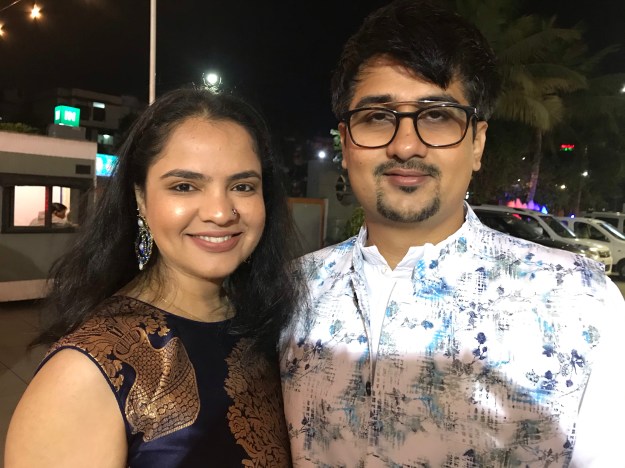
Hardik and Nainpreet
Nikhil and Deepali’s wedding had been arranged but they had a year to get to know each other. The parents had a list of eligible partners and both the prospective bride and groom had the right of refusal. They seemed well suited.
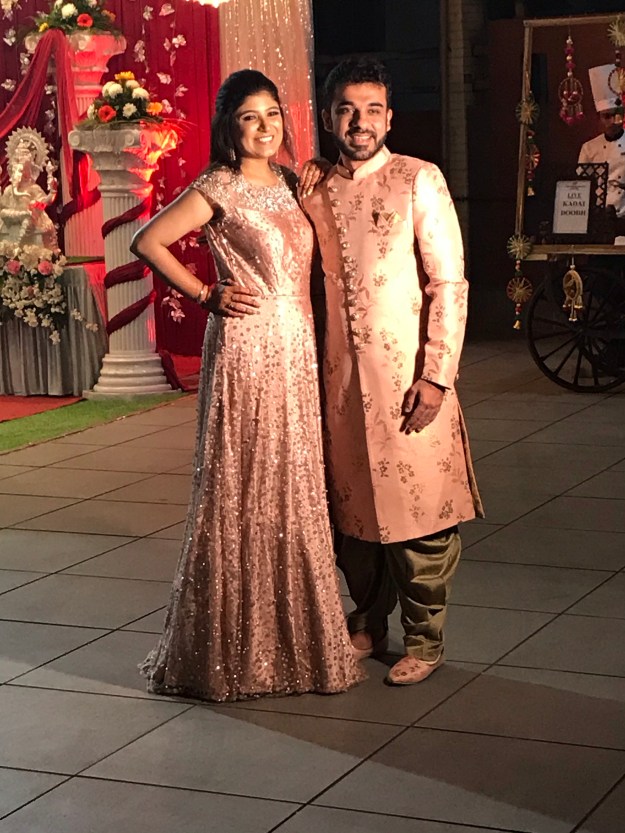
Nikhil and Deepali
I remember vividly the discussion I had some years back with two young people I had gotten to know at a travel agency I frequented in Udaipur. At the time I was doing casual research on the phenomenon of arranged marriage. Laxshmi was almost thirty and told me she would prefer not to marry at all, but the pressure was too great and she would have to give in soon. She had already refused several acceptable matches. Abishek was thirty two and had been unhappily married for ten years to an uneducated village woman. He only met her the day of the wedding.
We have nothing to talk about. I hate going home. She is not a bad woman. We have three children and she is a good mother, but I am bored.
I could tell that something was going on between him and Laxshmi although they were very discreet. It was a difficult and sad situation. I saw on Facebook, many years later that she did indeed get married and had a son.
The more contemporary version of arranged marriages is not so very different from online dating and matchmaking, except that in India the whole family is involved. Divorce is still rare but does exist and can be a way out for an abusive or particularly mismatched couple.
The institution of marriage in India, although constantly evolving, remains one of the most complex social systems in this beguiling country.
 THE DREAM OF DISTANT LANDS
I think you are painting way too rosy a picture. Social norms are, of course, relative. There is nothing to say that our system of trying to meet people in bars, or anonymously and deceptively online, is a great one. But one of the reasons that arranged marriages work so well in India is that men are free to whore around and beat their wives with impunity, while women are trapped in loveless and often dangerous marriages. You hint at this at the very end, but it is a huge problem that the “gentle wind blowing through India” has not put a dent in. And yes, some arranged marriages are done with the consent of the couple, but not many. Check out the classified ads in any Indian newspaper and you will find that the old criteria of religion and caste play a major part in which spouses the family will allow. And make no mistake; a marriage outside of the family arrangement can, and often will, result in complete estrangement from families . . . or worse! Yes, the urban educated and wealthy population is slightly more open to change; but most of India still live in the rural villages, or in virtual villages inside of urban settings. That “gentle wind blowing through India” might rustle a few isolated leaves, but not enough to notice unless you are really looking for them and are oblivious to the rest of the deeply rooted tree of ignorance, bigotry, and misogyny.
LikeLiked by 1 person
Steve, I think you missed the point. I was not writing a dissertation on Indian marriage. The “gentle wind” I was referring to is the slight but meaningful changes at the top of the ladder. I did say that in rural areas this was not the case yet. Also my observations are based on my personal interactions, which are not scientific, merely anecdotal. And yes change is coming- I think if you came to India now you would feel it, it is very palpable even from just a few years ago.
LikeLike